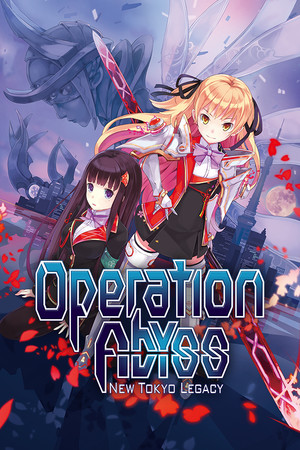
Operation Abyss: New Tokyo Legacy
A Wizardry-style dungeon crawler with a cyberpunk Tokyo skin that rewards patient grid-grinders but punishes anyone who came for the story.
Veredicto de GamerScout
Worth picking up only if you are already a first-person dungeon crawler fan and can tolerate obtuse jargon and thin storytelling.
Comparar precios(6 tiendas)
Todas las tiendas de esta tabla nos dan el precio en euros, así que la cifra en EUR es el precio que fijó el vendedor, no un cálculo nuestro, y por eso EUR es también la moneda en la que calculamos el ranking. Solo incluimos aquí una oferta cuando la tienda nos da su precio en euros, de modo que ninguna cifra de esta tabla es inventada por nosotros.
Elige USD, PLN, GBP, CAD o AUD en la cabecera y convertimos desde EUR con el tipo de cambio de referencia del Banco Central Europeo — los importes convertidos llevan el prefijo ~. Tu banco o la tienda pueden aplicar un tipo distinto al pagar. Nunca ocultamos ofertas según dónde estés: todo el mundo ve esta tabla completa.
We may earn a commission when you buy games through links on this page — at no extra cost to you. It never affects our rankings or verdicts.
Historial de precios
Capturas y multimedia
Acerca de Operation Abyss: New Tokyo Legacy
I went into Operation Abyss: New Tokyo Legacy hoping the sci-fi coat of paint would do what a good setting always does in an RPG: give the mechanics something meaningful to hang on. Partly it does. The premise drops a squad of specially equipped teenagers into a near-future Tokyo infested with genetically engineered monsters called Variants that pour through dimensional portals into a labyrinthine underworld called the Abyss. There is atmosphere here, in theory. The monster art is genuinely striking, with designs that feel like science experiments built for cruelty rather than combat, and the character portraits are sharp at 1080p. The problem is that the game is a combined remake of two older Japanese PC titles, Generation Xth: Code Hazard and Code Breaker, and it carries the structural DNA of something built in 2008 without always acknowledging the debt. The core loop is first-person grid movement through trap-heavy dungeon floors, turn-based combat against Variant sprites, and returning to base to synthesize loot into weapons and armor. Your party of six is built from 10 Blood Code classes, which is the game's jargon for what any other dungeon crawler would simply call jobs. Front row, back row, tank, healer, Wizard for disarming chasms and Academic for trap detection - these slots are not optional. The class system allows for a fair bit of customization on paper, but swapping a Blood Code resets that character to level one with nothing carrying over, so experimentation comes at a real cost. Unity Skills add some tactical texture: Brave, Magic, and Academy types can be triggered cooperatively for amplified effects, and they become genuinely necessary for the harder boss fights in the back half. That layering is where the game earns its goodwill among dungeon crawler fans. What earns it bad press is everything around those moments. The dungeons themselves are largely featureless corridors where tile variation substitutes for actual environmental design. Teleportation traps, one-way tiles, invisible doorways, and dispel squares that strip all active buffs accumulate into an experience that edges from challenging toward sadistic without much narrative reason to push through. The writing compounds the problem. Story scenes are delivered as static character art over text boxes, and the tonal whiplash between dismembered-corpse horror and cliche anime school banter never resolves into anything coherent. The UI is dense, the kerning on the PC port is noticeably broken in places, and the proprietary jargon (your inventory is a sub-disk, currency is Growth Points, buying something means issuing it) creates a double learning curve: figuring out the mechanics and figuring out what the tutorial is even calling them. For the right player, none of that is disqualifying. The hub-based Key Mission and side mission structure keeps progression focused, the crafting system using enemy drops to build and upgrade gear has enough depth to satisfy gear-chasers, and the Encounter Gauge adds a risk-reward pressure to how deep you push into each floor. The PC port also runs on practically anything, and a community memo system lets players leave map notes for each other, which in practice saves a lot of grief in the more labyrinthine floors. If you have finished Etrian Odyssey or Demon Gaze and want more first-person grid combat in a setting that swaps swords for near-future Tokyo weirdness, there is enough here to justify the time. If you need a dungeon crawler with storytelling that rewards re-reads or choices that actually matter, this is not that game, and you should know that going in.

RPGs
Etiquetas
Requisitos del sistema
Mínimos
- OS
- Windows 10/8.1/7
- Memory
- 2 GB RAM
- DirectX
- Version 9.0c
- Storage
- 5 GB available space
- Graphics
- GeForce 8600 GT
- Processor
- Core i3-2100 3.10 GHz
- Sound Card
- Onboard
Recomendados
- OS
- Windows 10/8.1/7
- Memory
- 4 GB RAM
- DirectX
- Version 9.0c
- Storage
- 5 GB available space
- Graphics
- GeForce GTX 650 Ti
- Processor
- Core i3-6100 3.70 GHz
- Sound Card
- Onboard
Sigue explorando
Community Discussion
Be the first to comment on Operation Abyss: New Tokyo Legacy.
Reseñas y valoraciones
No hay valoraciones disponibles
Información del juego
- Desarrolladora
- MAGES. Inc.
- Distribuidora
- NIS America, Inc.
- Fecha de lanzamiento
- 27 mar 2017