Compara los precios de One More Line en tiendas de claves de confianza y encuentra la mejor oferta. Desarrollado por SMG Studio. Publicado por SMG Studio. Lanzado el 28/8/2015. Disponible en PC, Mac, Linux. Géneros: Action, Casual, Indie.

One button, zero margin for error, and a space-disco soundtrack that makes you feel like you could do it forever, right up until you can't.

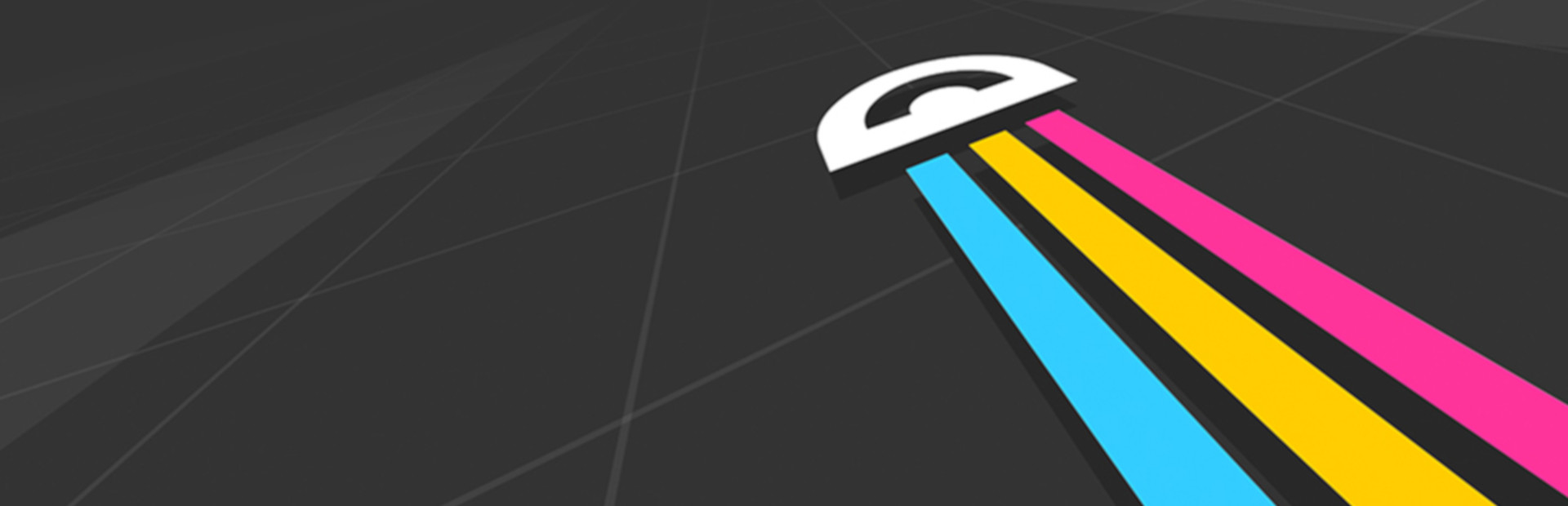
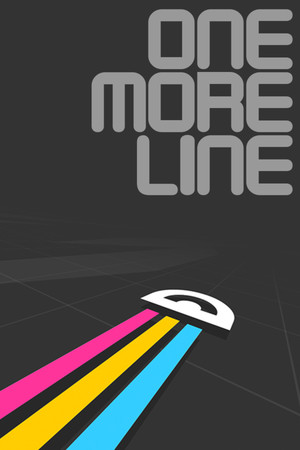
I have a soft spot for games built from a single mechanic so tight you can feel the intention in every frame. One More Line is exactly that kind of thing. You hold a button to grapple your little space creature onto the nearest orbital node, swing around it in a circle, then release at precisely the right angle to slingshot toward the next one without smashing into a wall. That is the entire game. It sounds thin until you play it, and then the next twenty minutes evaporate. The physics underneath are genuinely clever. Latching onto a node from far away puts you into a wide, slow arc, while hooking up close sends you into a tiny, violent spin. The real trick that makes the whole thing click is the wall-pass rule: while you are tethered and orbiting, you can swing clean through the corridor walls without dying. Let go mid-pass, though, and you are dead. That one design wrinkle turns what could have been a pure reflex test into something with actual spatial reasoning attached to it. You start reading the node layout ahead, planning your swing radius, gambling on whether a tight orbit buys you a better exit angle. The community has flagged a recurring frustration that the grapple can occasionally latch to a node further away than the obvious one, pulling you into an unintended arc. It happens, it is genuinely annoying, and it costs runs that felt earned. It is not frequent enough to break the loop, but it is real. The Steam edition strips the mobile version's ad structure entirely and adds local multiplayer for two to four players, a collection of hats, unlockable trails, and skins. The score-attack structure keeps things honest: a horizontal marker appears where you die, meaning your personal best line is always visible on screen, quietly daring you. The original space-disco soundtrack, composed by Sydney-based Batterie, does exactly what good arcade music should do. It sits at a tempo that pulls your body into rhythm with the swings, and the psychedelic, geometry-forward visuals pair with it well enough that the whole experience has a coherent atmosphere rather than just noise and shapes. Who is this for? Anyone who has ever enjoyed a hyper-casual score-chaser in the Flappy Bird lineage but wanted something with a higher mechanical ceiling and local multiplayer bragging rights baked in. The single-player mode can comfortably occupy a full evening of short, sharp sessions. The local co-op mode, while simple, turns the game into a genuinely funny couch competition. Where it falls short is depth beyond the core swing: there are no real unlockable stages, no variation in corridor design, and once the grapple mechanic is internalized the learning curve plateaus into pure execution. The Steam version does carry a small note worth knowing: a 2024 Steam client update dropped support for 32-bit builds, so older systems may warrant a check before jumping in. Kai, Scout Team

One More Line

One More Line

28 ago 2015SMG Studio
GamerScout opina

One button, zero margin for error, and a space-disco soundtrack that makes you feel like you could do it forever, right up until you can't.

PCMacLinux
Mejor precio disponible
0,25 €
en Kinguin
Mínimo registrado: 0,25 €
Sigue este precio

Veredicto de GamerScout

Best for score-chaser fans who want a couch-friendly arcade pick-up with a genuinely clever swing mechanic under its tiny hood.

Comparar precios(3 tiendas)

KinguinMejor precio
StandardGlobalSteam KeyClave
0,25 €
La tienda fija el precio en EUR
Comprar
StandardGlobalSteam KeyClave
0,47 €-84%
La tienda fija el precio en EUR
Comprar
StandardGlobalSteam KeyClave
0,55 €
La tienda fija el precio en EUR
Comprar

Todas las tiendas de esta tabla nos dan el precio en euros, así que la cifra en EUR es el precio que fijó el vendedor, no un cálculo nuestro, y por eso EUR es también la moneda en la que calculamos el ranking. Solo incluimos aquí una oferta cuando la tienda nos da su precio en euros, de modo que ninguna cifra de esta tabla es inventada por nosotros.

Elige USD, PLN, GBP, CAD o AUD en la cabecera y convertimos desde EUR con el tipo de cambio de referencia del Banco Central Europeo — los importes convertidos llevan el prefijo ~. Tu banco o la tienda pueden aplicar un tipo distinto al pagar. Nunca ocultamos ofertas según dónde estés: todo el mundo ve esta tabla completa.

We may earn a commission when you buy games through links on this page — at no extra cost to you. It never affects our rankings or verdicts.

Historial de precios

Mínimo registrado
0,25 €3 ago 2026
Mejor precio actual
0,25 €
El más bajo desde que lo seguimos
Tiendas de claves
0,25 €0,26 €0,27 €0,28 €7 Jun24 Jun12 Jul29 Jul15 Aug
7 jun — 15 ago
Crear alerta

Capturas y multimedia

Acerca de One More Line

I have a soft spot for games built from a single mechanic so tight you can feel the intention in every frame. One More Line is exactly that kind of thing. You hold a button to grapple your little space creature onto the nearest orbital node, swing around it in a circle, then release at precisely the right angle to slingshot toward the next one without smashing into a wall. That is the entire game. It sounds thin until you play it, and then the next twenty minutes evaporate. The physics underneath are genuinely clever. Latching onto a node from far away puts you into a wide, slow arc, while hooking up close sends you into a tiny, violent spin. The real trick that makes the whole thing click is the wall-pass rule: while you are tethered and orbiting, you can swing clean through the corridor walls without dying. Let go mid-pass, though, and you are dead. That one design wrinkle turns what could have been a pure reflex test into something with actual spatial reasoning attached to it. You start reading the node layout ahead, planning your swing radius, gambling on whether a tight orbit buys you a better exit angle. The community has flagged a recurring frustration that the grapple can occasionally latch to a node further away than the obvious one, pulling you into an unintended arc. It happens, it is genuinely annoying, and it costs runs that felt earned. It is not frequent enough to break the loop, but it is real. The Steam edition strips the mobile version's ad structure entirely and adds local multiplayer for two to four players, a collection of hats, unlockable trails, and skins. The score-attack structure keeps things honest: a horizontal marker appears where you die, meaning your personal best line is always visible on screen, quietly daring you. The original space-disco soundtrack, composed by Sydney-based Batterie, does exactly what good arcade music should do. It sits at a tempo that pulls your body into rhythm with the swings, and the psychedelic, geometry-forward visuals pair with it well enough that the whole experience has a coherent atmosphere rather than just noise and shapes. Who is this for? Anyone who has ever enjoyed a hyper-casual score-chaser in the Flappy Bird lineage but wanted something with a higher mechanical ceiling and local multiplayer bragging rights baked in. The single-player mode can comfortably occupy a full evening of short, sharp sessions. The local co-op mode, while simple, turns the game into a genuinely funny couch competition. Where it falls short is depth beyond the core swing: there are no real unlockable stages, no variation in corridor design, and once the grapple mechanic is internalized the learning curve plateaus into pure execution. The Steam version does carry a small note worth knowing: a 2024 Steam client update dropped support for 32-bit builds, so older systems may warrant a check before jumping in.

Kai
Kai · Scout Team

Indie & narrative

Etiquetas

singleplayermultiplayerlocal-coopachievementstrading-cardstier:sub-5Score AttackHyper-CasualGrapple MechanicSpace DiscoLocal VersusRhythm-AdjacentHigh Skill CeilingMinimalist Design

Requisitos del sistema

Mínimos

OS
Microsoft® Windows® XP/Vista or later
Graphics
Any from the last 4 years
Processor
1.4GHz or faster
Sound Card
All soundcards would work

Sigue explorando

Community Discussion

Be the first to comment on One More Line.

Reseñas y valoraciones

No hay valoraciones disponibles

Información del juego

Desarrolladora
SMG Studio
Distribuidora
SMG Studio
Fecha de lanzamiento
28 ago 2015

Alerta de precio

¡Recibe un aviso cuando el precio baje de tu objetivo!

Crear alerta
Mejor precio0,25 €
Ver oferta

En los 21.266 juegos que seguimos, una clave verificada fue más barata que la tienda oficial el 92% de las veces. Consulta el método y las cifras completas en nuestro informe de precios de juegos.

¿Sin tarjeta? Paga de otra forma

Recarga tu saldo de Steam o compra crypto con cualquier tarjeta — entrega instantánea, sin cuenta bancaria.

Más de SMG Studio

Compra mejor: guías útiles

¿Buscas más? Mira juegos como One More Line →

Preguntas frecuentes sobre One More Line

¿Cuánto cuesta One More Line?

A 15 de agosto de 2026, la oferta más barata disponible de One More Line es €0.25 en Kinguin, de entre 3 ofertas activas que seguimos en tiendas de claves verificadas. Los precios cambian a diario — la tabla de esta página se actualiza continuamente.

¿Dónde puedo comprar One More Line más barato?

El precio más bajo disponible que seguimos para One More Line es €0.25 en Kinguin (15 de agosto de 2026). Comparamos 3 ofertas activas de tiendas de claves verificadas — la tabla completa con cada tienda y su puntuación de confianza está en esta página.

¿En qué plataformas está disponible One More Line?

One More Line está disponible en PC, Mac, Linux.

¿Cuándo se lanzó One More Line?

One More Line se lanzó el 28 de agosto de 2015.

¿Quién desarrolló One More Line?

One More Line fue desarrollado por SMG Studio.