Compara los precios de NightSky en tiendas de claves de confianza y encuentra la mejor oferta. Desarrollado por Nicalis, Inc.. Publicado por Nicalis, Inc.. Lanzado el 1/3/2011. Disponible en PC, Mac, Linux. Géneros: Casual, Indie, Strategy. Puntuación Metacritic: 78/100.

Atmospheric physics puzzler from Nifflas that plays more like a lucid dream than a game - hypnotic when it clicks, frustratingly easy in Normal mode, brutally demanding in Alternative.

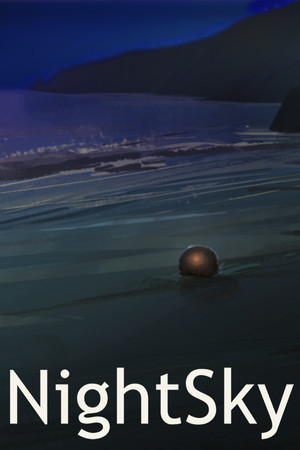
I'll be straight with you: NightSky is not a strategy game in any spreadsheet sense, and yet the decision-making it demands, puzzle by puzzle, scratches the same quiet analytical itch. The premise is spare - a boy finds a glowing sphere on a beach, takes it home, and begins having strange dreams. You are those dreams. No enemies, no timers, no jump button. Just a physics-driven orb, silhouetted landscapes, and the problem of getting from the left side of a three-screen level to the right side without rolling into oblivion. The core controls are deceptively simple. You accelerate and brake the sphere, and depending on the level, you may gain access to one or two special powers - a teal spin burst for raw speed, an orange traction grip for sticky surfaces, or a purple gravity inversion that flips your entire reference frame. The key word there is "depending on the level": powers are not permanent unlocks, they are contextual tools, granted and revoked by the world itself. That design choice is where NightSky reveals its actual intelligence. Each of the ten worlds across roughly 130 three-screen sections teaches you to read what the level is giving you, then use it precisely - riding orb-powered carts, threading cannons, and timing swinging platforms. The structure is less about a build order and more about reading the environment like a language. The difficulty split is honest but lopsided. Normal mode is tuned for atmosphere over challenge - some sections offer no obstacles at all on the third screen, leaving you to just roll forward into a reward scene of shadow trees and dusk sky. Reviewers and players consistently flag this as the game's sharpest flaw: Normal can feel like a moving screensaver. Alternative mode swings hard in the other direction, stripping instructions and demanding precise, sometimes unforgiving execution on the same level layouts. There is no middle ground. For newcomers, Normal is a relaxed introduction to the physics vocabulary; for anyone craving teeth, switch to Alternative as soon as you finish the first world rather than waiting for the credits. One further snag specific to PC: the Steam version reportedly does not display the ending cutscene on completion, which is a low-grade but genuine annoyance worth knowing about upfront. What never wavers is the presentation. Chris Schlarb's experimental jazz soundtrack is genuinely unusual in this space - ambient without being background noise, expressive without being intrusive. The silhouette art style, all black foreground against layered colour gradients, holds up well because it was never chasing technical fidelity to begin with. There are hidden stars scattered through the worlds that unlock a bonus area, and hunting them on a second pass through Normal adds the only real collectible layer the game provides. No level editor, no multiplayer, no mod support - the content is finite and the runtime on Normal sits around four to five hours. Steam user reception lands at 91 percent positive from around 320 reviews, which is a small but consistent signal that the audience who sought this out largely got what it promised. Metacritic sits at 78, with critics split between praising the atmosphere and criticising the gameplay's inconsistency - both positions are correct and neither cancels the other out. Who actually belongs in the target audience here? Players who find games like Limbo or World of Goo worth owning purely for mood and mechanics, rather than for runtime or replayability. If you need a complex decision tree or a deep meta to stay engaged, NightSky will run dry inside a single evening. If you are willing to treat a short, polished physics puzzle as a palate cleanser between heavier sessions - and are prepared to flip to Alternative mode for the real challenge - it earns its place in the library. Diego, Scout Team

NightSky

NightSky

1 mar 2011Nicalis, Inc.
GamerScout opina

Atmospheric physics puzzler from Nifflas that plays more like a lucid dream than a game - hypnotic when it clicks, frustratingly easy in Normal mode, brutally demanding in Alternative.

PCMacLinux
Steam Deck PlayableProtonDB Platinum
Mejor precio disponible
€0.00
en N/A
Mínimo histórico: €0.36

Comparar precios(0 tiendas)

Cargando precios...

We may earn a commission when you buy games through links on this page — at no extra cost to you. It never affects our rankings or verdicts.

Historial de precios

Historical low
€0.3622 Jun 2026
Keyshops
€0.34€0.40€0.45€0.519 Jun14 Jun19 Jun23 Jun28 Jun
Tracking prices since 9 Jun 2026
Create alert

Capturas y multimedia

Captura

Acerca de NightSky

I'll be straight with you: NightSky is not a strategy game in any spreadsheet sense, and yet the decision-making it demands, puzzle by puzzle, scratches the same quiet analytical itch. The premise is spare - a boy finds a glowing sphere on a beach, takes it home, and begins having strange dreams. You are those dreams. No enemies, no timers, no jump button. Just a physics-driven orb, silhouetted landscapes, and the problem of getting from the left side of a three-screen level to the right side without rolling into oblivion. The core controls are deceptively simple. You accelerate and brake the sphere, and depending on the level, you may gain access to one or two special powers - a teal spin burst for raw speed, an orange traction grip for sticky surfaces, or a purple gravity inversion that flips your entire reference frame. The key word there is "depending on the level": powers are not permanent unlocks, they are contextual tools, granted and revoked by the world itself. That design choice is where NightSky reveals its actual intelligence. Each of the ten worlds across roughly 130 three-screen sections teaches you to read what the level is giving you, then use it precisely - riding orb-powered carts, threading cannons, and timing swinging platforms. The structure is less about a build order and more about reading the environment like a language. The difficulty split is honest but lopsided. Normal mode is tuned for atmosphere over challenge - some sections offer no obstacles at all on the third screen, leaving you to just roll forward into a reward scene of shadow trees and dusk sky. Reviewers and players consistently flag this as the game's sharpest flaw: Normal can feel like a moving screensaver. Alternative mode swings hard in the other direction, stripping instructions and demanding precise, sometimes unforgiving execution on the same level layouts. There is no middle ground. For newcomers, Normal is a relaxed introduction to the physics vocabulary; for anyone craving teeth, switch to Alternative as soon as you finish the first world rather than waiting for the credits. One further snag specific to PC: the Steam version reportedly does not display the ending cutscene on completion, which is a low-grade but genuine annoyance worth knowing about upfront. What never wavers is the presentation. Chris Schlarb's experimental jazz soundtrack is genuinely unusual in this space - ambient without being background noise, expressive without being intrusive. The silhouette art style, all black foreground against layered colour gradients, holds up well because it was never chasing technical fidelity to begin with. There are hidden stars scattered through the worlds that unlock a bonus area, and hunting them on a second pass through Normal adds the only real collectible layer the game provides. No level editor, no multiplayer, no mod support - the content is finite and the runtime on Normal sits around four to five hours. Steam user reception lands at 91 percent positive from around 320 reviews, which is a small but consistent signal that the audience who sought this out largely got what it promised. Metacritic sits at 78, with critics split between praising the atmosphere and criticising the gameplay's inconsistency - both positions are correct and neither cancels the other out. Who actually belongs in the target audience here? Players who find games like Limbo or World of Goo worth owning purely for mood and mechanics, rather than for runtime or replayability. If you need a complex decision tree or a deep meta to stay engaged, NightSky will run dry inside a single evening. If you are willing to treat a short, polished physics puzzle as a palate cleanser between heavier sessions - and are prepared to flip to Alternative mode for the real challenge - it earns its place in the library.

Diego
Diego · Scout Team

Strategy & simulation

Etiquetas

singleplayertier:aaaPhysics PuzzlerSilhouette ArtAlternative ModeAmbient SoundtrackNo CombatShort PlaytimeGravity MechanicsCollectible Stars

Requisitos del sistema

Mínimos

OS
Windows XP or newer
Memory
512MB RAM
Graphics
3D graphics card
DirectX®
N/A
Processor
Intel Atom or above
Hard Drive
100MB

Sigue explorando

Community Discussion

Be the first to comment on NightSky.

Reseñas y valoraciones

Metacritic
78

Información del juego

Desarrolladora
Nicalis, Inc.
Distribuidora
Nicalis, Inc.
Fecha de lanzamiento
1 mar 2011

Alerta de precio

¡Recibe un aviso cuando el precio baje de tu objetivo!

Crear alerta

Más de Nicalis, Inc.

Compra mejor: guías útiles

¿Buscas más? Mira juegos como NightSky →

Preguntas frecuentes sobre NightSky

¿Cuánto cuesta NightSky?

El precio de NightSky cambia a menudo y varía según la tienda, la edición y la región. La tabla de precios en vivo de esta página compara las ofertas más baratas en stock de tiendas de claves de confianza como Eneba y Kinguin, para que siempre veas el precio más bajo actual antes de comprar.

¿Dónde puedo comprar NightSky más barato?

Compara los precios de NightSky en todas las tiendas verificadas en la tabla de precios de esta página. Listamos las ofertas de claves y tiendas más baratas en stock, actualizadas con frecuencia, para que siempre veas la mejor oferta actual antes de comprar.

¿En qué plataformas está disponible NightSky?

NightSky está disponible en PC, Mac, Linux.

¿Cuándo se lanzó NightSky?

NightSky se lanzó el 1 de marzo de 2011.

¿Quién desarrolló NightSky?

NightSky fue desarrollado por Nicalis, Inc..

¿Merece la pena comprar NightSky?

NightSky tiene una puntuación Metacritic de 78/100, lo que lo convierte en uno de los títulos destacados de Casual. Mira las reseñas completas, las valoraciones y los tiempos de duración en esta página para decidir.