
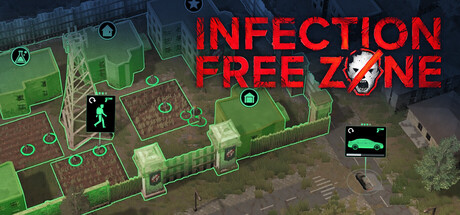
Infection Free Zone
Drop your own postcode into a zombie colony sim and suddenly 'optimal base placement' becomes very personal. A smart hook built around real-world map data, held back by Early Access roughness that the devs are actively sanding down.
Veredicto de GamerScout
Best for colony-sim fans who want a personal hook in their apocalypse and can tolerate Early Access squad AI that still needs work.
Comparar precios(5 tiendas)
Todas las tiendas de esta tabla nos dan el precio en euros, así que la cifra en EUR es el precio que fijó el vendedor, no un cálculo nuestro, y por eso EUR es también la moneda en la que calculamos el ranking. Solo incluimos aquí una oferta cuando la tienda nos da su precio en euros, de modo que ninguna cifra de esta tabla es inventada por nosotros.
Elige USD, PLN, GBP, CAD o AUD en la cabecera y convertimos desde EUR con el tipo de cambio de referencia del Banco Central Europeo — los importes convertidos llevan el prefijo ~. Tu banco o la tienda pueden aplicar un tipo distinto al pagar. Nunca ocultamos ofertas según dónde estés: todo el mundo ve esta tabla completa.
We may earn a commission when you buy games through links on this page — at no extra cost to you. It never affects our rankings or verdicts.
Historial de precios
Capturas y multimedia
Acerca de Infection Free Zone
I've tested a lot of colony sims that promise replayability through procedural generation, but Infection Free Zone takes a different angle entirely: it uses OpenStreetMap data to let you load any real city on the planet as your battlefield. Type in your home town, pick a headquarters, and the streets you actually walk become the grid you defend. That single design decision does more for immersion than a hundred hand-crafted maps could, and it's the honest reason this game has accumulated a Very Positive rating across thousands of Steam reviews rather than fading into the Early Access backlog. The core loop runs on a tight day-night rhythm. During daylight, workers fan out to scavenge resources - food, medicine, wood, metal, bricks - while builders convert ruins into Shelters, Warehouses, Research Centers, Cookhouses, and Hospitals. Squads armed with handguns early on (and automatic rifles once scavenging delivers them) handle both exploration and perimeter defence. When the clock ticks toward night, those same citizens can be reassigned as guards, creating a flexible workforce that doesn't lock you into rigid class choices. Production chains matter: crops feed morale, better food improves morale further, and morale affects efficiency in the mid-to-late game, so ignoring the Cookhouse in favour of raw fortification is a mistake that compounds slowly and then all at once. Walls, watchtowers, and gates form your hard perimeter, while vehicles speed up scavenging runs and double as combat assets once the hordes scale up. The research tree unlocks new buildings and upgrades, and a story layer introduces radio contacts, merchants, hostile factions, and eventual vaccine research as a win condition - meaning there is actually a late-game target beyond pure survival. For newcomers to the genre, the mechanics are accessible. The day-night pressure keeps things legible, worker reassignment is forgiving, and difficulty sliders let you adjust horde size and starting resources mid-run. The developers themselves maintain a list of recommended starter cities chosen for their defensive geometry, which is a sensible on-ramp. Experienced players who want to stress-test the systems should pick a dense urban area and watch the late-game horde scaling become a genuine resource puzzle. Location selection functions like a difficulty modifier all on its own: a small rural town is a hard-mode run with thin scavenging, a mid-size European city with a river boundary is something closer to a textbook defence problem. The weaknesses are real and worth naming. Squad AI requires more babysitting than it should - units occasionally abandon vehicles and walk home, and the micromanagement of multiple scavenging squads while also watching the perimeter is the most-cited frustration in the community. Horde pathing at night has drawn criticism for being too predictable, which flattens the tension once you learn the patterns. Early versions had significant stability issues and save-wipe events tied to major updates, though Major Update 6 - which introduced tanks, mortars, a priority worker system, and a bloomery for metal production - shows the development pace is consistent. The Early Access caveat is genuine here: this is a game you buy into a trajectory, not a finished product. If your usual frame of reference is They Are Billions or Project Zomboid, Infection Free Zone sits closer to the former in pace and further from the latter in complexity. It is not a deep simulation of survivor psychology or a sprawling faction web. The decision depth comes primarily from location choice, build order, and squad positioning rather than from branching systems. That is narrower than some strategy players will want, but it is executed with enough polish that the fundamentals feel solid even through the Early Access noise.

Strategy & simulation
Etiquetas
Requisitos del sistema
Mínimos
- OS
- Windows 10
- Memory
- 16 GB RAM
- Storage
- 5 GB available space
- Graphics
- NVIDIA® GeForce® GTX 680 / AMD Radeon HD 7970
- Processor
- Intel® Core i5-3570K
- Sound Card
- Recommended
Recomendados
- OS
- Windows 10
- Memory
- 16 GB RAM
- Storage
- 15 GB available space
- Graphics
- NVIDIA® GeForce® GTX 1060
- Processor
- Intel® Core i5-11600KF
- Sound Card
- Recommended
Sigue explorando
Community Discussion
Be the first to comment on Infection Free Zone.
Reseñas y valoraciones
No hay valoraciones disponibles
Información del juego
- Desarrolladora
- Jutsu Games
- Distribuidora
- Games Operators
- Fecha de lanzamiento
- 11 abr 2024