
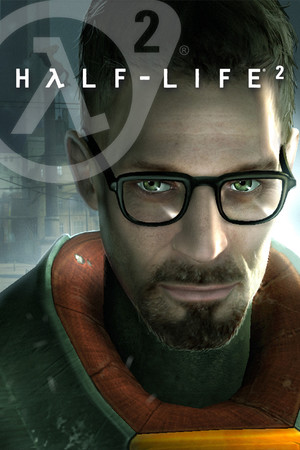
Half-Life 2
Twenty years on and the Gravity Gun still makes modern shooters look lazy. If you have never played Gordon Freeman's City 17 run, that gap in your library needs fixing today.
Veredicto de GamerScout
9.6/10Essential for any FPS player who values tight level design and physics-driven combat over open-world padding.
Comparar precios(4 tiendas)
Todas las tiendas de esta tabla nos dan el precio en euros, así que la cifra en EUR es el precio que fijó el vendedor, no un cálculo nuestro, y por eso EUR es también la moneda en la que calculamos el ranking. Solo incluimos aquí una oferta cuando la tienda nos da su precio en euros, de modo que ninguna cifra de esta tabla es inventada por nosotros.
Elige USD, PLN, GBP, CAD o AUD en la cabecera y convertimos desde EUR con el tipo de cambio de referencia del Banco Central Europeo — los importes convertidos llevan el prefijo ~. Tu banco o la tienda pueden aplicar un tipo distinto al pagar. Nunca ocultamos ofertas según dónde estés: todo el mundo ve esta tabla completa.
We may earn a commission when you buy games through links on this page — at no extra cost to you. It never affects our rankings or verdicts.
Historial de precios
Capturas y multimedia
Acerca de Half-Life 2
I've gone back to Half-Life 2 more times than I can honestly justify, and every revisit lands the same gut-punch realization: most of what this game figured out in 2004 still hasn't been matched cleanly. You play as Gordon Freeman, a silent scientist dropped into a dystopian City 17 under the iron boot of the alien Combine empire, and the game wastes almost no time before handing you its signature tool, the Gravity Gun (officially the Zero-Point Energy Field Manipulator, if you want to be precise about it). That one weapon defines the whole experience. It turns saw blades, oil drums, and even the game's most annoying enemy, the manhack drone, into improvised ammunition. The physics feel purposeful rather than decorative, and that distinction matters more than it sounds. The campaign moves through wildly varied settings without ever feeling like a random level grab. You start in the cramped streets of City 17, move through canal waterways on an airboat, hit the legitimately unsettling chapter Ravenholm where the Gravity Gun essentially becomes your only weapon against a zombie infestation, then open up onto coastal highways in a buggy before a final push back into the city. That variety keeps things fresh, though there is a legitimate criticism that the vehicle sections, especially the airboat run, drag on longer than they earn. Pacing dips when the game asks you to stand still for dialogue you cannot skip. Neither issue is crippling, but first-time players should know the opening two hours are slower than what follows. What holds up surprisingly well is the enemy AI. Combine soldiers take cover, toss grenades, and flank, which means you cannot just charge in with the shotgun. Battles reward positioning and resource awareness more than reflex alone. The weapon roster is compact but well-balanced: pistol, SMG, shotgun, crossbow, pulse rifle, rocket launcher, and the Gravity Gun cover most situations without bloat. Difficulty runs from Easy to Hard, with Normal sitting at the right balance for a first run. The story is told entirely through in-engine scenes with no cutscenes, so you never lose first-person control, which keeps immersion intact even when a lot of exposition is being delivered at once. The honest caveats for modern players: the Source engine graphics show their age, particularly character faces in close-up. Voice acting has a slightly wooden quality by today's standards. There is no new-game-plus, no side content, no branching path. This is a linear, roughly 12-15 hour single-player FPS and nothing else. If that framework sounds thin to you, fair enough. But if you can meet the game on its own terms, the level design, the physics interactivity, and the sheer density of clever moment-to-moment ideas make it one of the clearest examples in the genre of every system pulling in the same direction. A massive modding community also exists around the Source engine if you want to extend the experience well beyond the base game.

Catch-all
Etiquetas
Requisitos del sistema
Mínimos
- Processor
- 1.7 Ghz
- Memory
- 512 MB RAM
- Graphics
- DirectX 8.1 level Graphics Card (requires support for SSE)
- Storage
- 6500 MB available space
Sigue explorando
Community Discussion
Be the first to comment on Half-Life 2.
Reseñas y valoraciones
Información del juego
- Desarrolladora
- Valve
- Distribuidora
- Valve
- Fecha de lanzamiento
- 16 nov 2004