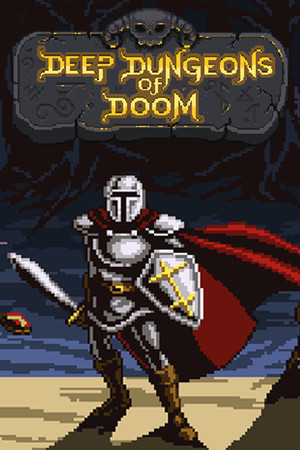
Deep Dungeons of Doom
Stripped down to two buttons and a death tax on your best loot, this Bossa Studios dungeon crawler earns its hooks through rhythm-combat tension, not story depth. Pick it up if you want a 30-minute session game, not an epic.
Veredicto de GamerScout
Worth picking up for short session dungeon runs, but don't expect narrative depth or build complexity past the early hours.
Comparar precios(8 tiendas)
Todas las tiendas de esta tabla nos dan el precio en euros, así que la cifra en EUR es el precio que fijó el vendedor, no un cálculo nuestro, y por eso EUR es también la moneda en la que calculamos el ranking. Solo incluimos aquí una oferta cuando la tienda nos da su precio en euros, de modo que ninguna cifra de esta tabla es inventada por nosotros.
Elige USD, PLN, GBP, CAD o AUD en la cabecera y convertimos desde EUR con el tipo de cambio de referencia del Banco Central Europeo — los importes convertidos llevan el prefijo ~. Tu banco o la tienda pueden aplicar un tipo distinto al pagar. Nunca ocultamos ofertas según dónde estés: todo el mundo ve esta tabla completa.
We may earn a commission when you buy games through links on this page — at no extra cost to you. It never affects our rankings or verdicts.
Historial de precios
Capturas y multimedia
Acerca de Deep Dungeons of Doom
My first instinct when I saw the two-button combat prompt was to write this off as a mobile port pretending to be a PC game. That instinct was half right. Deep Dungeons of Doom is absolutely a port from mobile, and it carries all the structural DNA that implies: no overworld exploration, no dialogue trees, no branching paths, no dragons with tragic backstories. What it does have is a surprisingly taut combat loop that kept me coming back floor after floor in a way I did not expect from something sitting in the casual tier. The core is almost aggressively simple. You attack, you block, you use one carried item. That is the full verb list. But underneath that sits a timing system that functions less like a traditional RPG and more like a rhythm game without a music track. Each enemy type telegraphs attacks with its own cadence, and the game rewards players who learn to strike a fraction of a second before the enemy winds up, dealing bonus damage in the process. Once that clicks, the combat develops a satisfying internal pulse. The three playable classes, Crusader, Witch, and Mercenary, each carry a seven-tier skill tree where you can slot one ability per tier simultaneously, giving you a modest but real number of build configurations to test. The Witch leans into mana regeneration and magic, the Crusader on healing sustainability, and the Mercenary on raw aggression, and they do play differently enough that swapping class for a stubborn dungeon is a genuine tactical option rather than cosmetic variety. The equipment layer adds a risk-reward wrinkle I genuinely respect: you carry one weapon or armor piece and one usable item, and if you die, you lose everything currently equipped. Find a rare sword on floor four of a ten-floor dungeon and suddenly every subsequent fight has real tension attached to it. Permanent progression comes from gold spent on upgrade altars and the persistent skill trees, so you never feel like a run was wasted, but you do feel the sting of a bad death. The dungeon structure itself is a spider-web world map where completing one dungeon unlocks adjacent ones, each with its own thematic premise and boss with specific weak points to discover. On-paper that is good design. In practice, once you have internalized enemy patterns, individual dungeons lose replay incentive fast. The infinite dungeon mode recycles enemies from the main content, which is fine as a score-chase outlet but nothing more. Here is where I have to be honest as someone who cares about narrative payoff: the story is thin and played for dry comedy rather than genuine worldbuilding. The cutscenes between dungeons are brief illustrated panels that sketch a generic demon-invasion plot with tongue planted firmly in cheek. It lands occasionally. It does not reward re-reads. If you came here for choices that matter or a cast of characters to get attached to, this is the wrong address entirely. What the game does offer is clean, legible pixel art with genuinely impressive boss death animations, a retro soundtrack that fits without demanding attention, and a session length that respects your time. Most dungeons run 15 to 30 minutes. That is the game's real pitch: a palate cleanser between longer RPGs, not a destination in itself. The PC port scales up acceptably, though a few players have noted the pixel grid looks chunky at higher resolutions, which is a fair criticism for a game born on a 4-inch screen. Recommend it to anyone who wants a quick, low-commitment dungeon fix with real mechanical bite in its combat timing. Warn away anyone expecting narrative depth, meaningful loot variety past mid-game, or build complexity that holds up past the tenth hour.

RPGs
Etiquetas
Requisitos del sistema
Mínimos
- OS
- Windows XP
- Memory
- 2 GB RAM
- DirectX
- Version 9.0
- Storage
- 150 MB available space
- Graphics
- Intel HD 4000
- Processor
- 1.8 GHz
- Sound Card
- DirectX9.0 compatible sound card
Recomendados
- OS
- Windows XP
- Memory
- 2 GB RAM
- DirectX
- Version 9.0
- Storage
- 150 MB available space
- Graphics
- Nvidia Geforce 7800 GT or better
- Processor
- 2.0 GHz or better
- Sound Card
- DirectX9.0 compatible sound card
Sigue explorando
Community Discussion
Be the first to comment on Deep Dungeons of Doom.
Reseñas y valoraciones
No hay valoraciones disponibles
Información del juego
- Desarrolladora
- Bossa Studios
- Distribuidora
- Bossa Studios
- Fecha de lanzamiento
- 14 oct 2014