
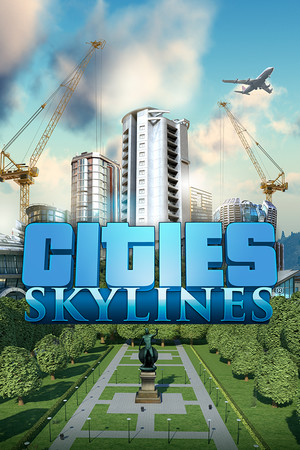
Cities: Skylines - Industries
If your industrial zones were just painted yellow blobs you ignored after zoning, Industries hands you the supply chain keys and refuses to let you look away.
Veredicto de GamerScout
Essential for Skylines veterans hungry for production-chain depth; skip until your traffic is under control if you are still learning the base game.
Comparar precios(3 tiendas)
Todas las tiendas de esta tabla nos dan el precio en euros, así que la cifra en EUR es el precio que fijó el vendedor, no un cálculo nuestro, y por eso EUR es también la moneda en la que calculamos el ranking. Solo incluimos aquí una oferta cuando la tienda nos da su precio en euros, de modo que ninguna cifra de esta tabla es inventada por nosotros.
Elige USD, PLN, GBP, CAD o AUD en la cabecera y convertimos desde EUR con el tipo de cambio de referencia del Banco Central Europeo — los importes convertidos llevan el prefijo ~. Tu banco o la tienda pueden aplicar un tipo distinto al pagar. Nunca ocultamos ofertas según dónde estés: todo el mundo ve esta tabla completa.
We may earn a commission when you buy games through links on this page — at no extra cost to you. It never affects our rankings or verdicts.
Historial de precios
Capturas y multimedia
Acerca de Cities: Skylines - Industries
I've spent more hours than I care to admit watching cargo trucks shuffle between sawmills and storage yards in Cities: Skylines - Industries, and that sentence alone should tell you whether this expansion belongs in your library. What Colossal Order built here is essentially a production-chain game bolted onto a city builder, one that drags the previously background process of industry into the foreground and makes you own every decision from raw extraction to finished goods export. The four industry types - farming, forestry, ore, and oil - each get their own dedicated area tool, headquarters building, and branching production tree. You paint an industry area over a matching natural resource, drop a main building, and then start placing extractors, storage yards, processing facilities, and eventually unique factories like bakeries, car plants, furniture workshops, and electronics manufacturers. The zone levels up as jobs are filled and production targets are hit, unlocking higher-tier buildings at each stage. Warehouses are not optional - they act as buffers between extraction and processing rates, and ignoring them will strangle your supply chain faster than a badly timed traffic jam. Speaking of traffic: the cargo airport is a genuine addition for high-volume export operations, and the new postal service layer adds another city-service loop to manage alongside water, power, and transit. The depth is real, but the rough edges are also real. The new industry system runs largely parallel to the base game's generic industrial zoning rather than replacing it, which means goods flows can get confusing when both systems are active simultaneously. Traffic pressure from heavy industrial vehicles is severe if you have not pre-planned dedicated road infrastructure using the new industrial road type. And the high-tech production chains that feed the unique factories are genuinely profitable once optimized, but the balancing act between supply rate and factory throughput will punish players who build first and plan later. This is not a passive DLC you drop into an existing city and forget about. For strategy-minded players, though, that friction is the point. There is a satisfying loop in diagnosing a choked forestry chain, identifying that your planed-timber processors are starved because the log storage yard is undersized, adding two more warehouse facilities, watching throughput normalize, and then seeing the zone tick over to the next level. It is closer in spirit to a light factory-builder than a traditional city sim, and if you have ever enjoyed the production logic in Anno or Tropico, the mental model will click fast. The mod ecosystem on Steam Workshop also extends the system considerably, with community-built unique factories and additional resource buildings that round out gaps Colossal Order left open. New players to the base game should treat Industries as a mid-to-late addition once core traffic and transit systems are stable - trying to run production chains on a city with chaotic roads is a reliable route to frustration. Veteran players who have already squeezed the base game dry will find this is the expansion that adds the most mechanical decision-making of any DLC in the lineup. It is not a flawless design, but the production-chain layer it introduces fundamentally changes how you read your city map.

Strategy & simulation
Etiquetas
Requisitos del sistema
Mínimos
- Processor
- Intel® Core™ I7 930 | AMD® FX 6350
- Memory
- 8 GB RAM
- Graphics
- Nvidia…
Recomendados
- OS
- Windows® 10 Home 64 bit
- Processor
- Intel® Core™ I7 2700K | AMD® Ryzen 7 2700X
- Memory
- 16 GB RAM
- Graphics
- Nvidia® GeForce™ GTX 580 (1.5 GB) | A…
Sigue explorando
Community Discussion
Be the first to comment on Cities: Skylines - Industries.
Reseñas y valoraciones
Información del juego
- Desarrolladora
- Colossal Order
- Distribuidora
- Paradox Interactive
- Fecha de lanzamiento
- 10 mar 2015