X-Com: UFO Defense
The 1994 grandfather of tactical strategy is still punishing, still brilliant, and still the reason half the genre exists.
GamerScout Verdict
Essential for strategy players willing to tolerate a 1994 interface in exchange for some of the genre's most consequential decisions.
Compare Prices(8 stores)
Every store in this table quotes us in euros, so the EUR figure is the price the seller actually set, not our arithmetic — which is why EUR is also the currency we rank in. We only list an offer here when the store gives us its price in euros, so nothing in this table is a number we invented.
Pick USD, PLN, GBP, CAD or AUD in the header and we convert from EUR at the European Central Bank reference rate — converted amounts are prefixed with ~. Your bank or the store may apply a different rate at checkout. We never hide offers based on where you are: everyone sees this whole table.
We may earn a commission when you buy games through links on this page — at no extra cost to you. It never affects our rankings or verdicts.
Price History
Screenshots & Media
About X-Com: UFO Defense
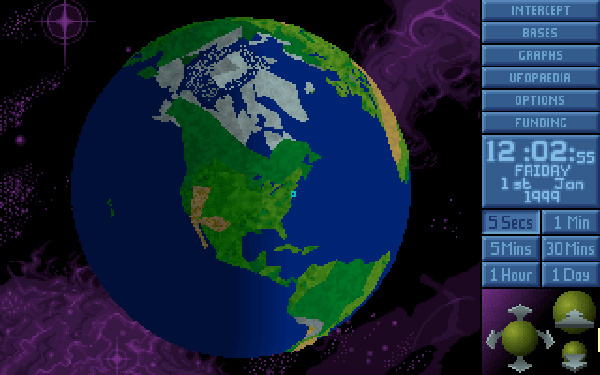
X-Com: UFO Defense is a turn-based tactical and base-management hybrid that asks you to run a paramilitary organization fighting a slow-burn alien invasion. On the tactical layer, you deploy squads on procedurally generated maps, moving soldiers one action point at a time, managing line of sight, suppression, and the very real possibility that a rookie named after your best friend just got vaporized by a plasma bolt. On the strategic layer, you are managing budgets, research queues, base placement across a world map, manufacturing schedules, and the political mood of every funding nation. Both layers feed each other constantly. Lose too many soldiers and your next mission is understaffed. Ignore the research tree and you will still be fielding rifles while aliens start fielding mind control. For strategy veterans, the depth here is genuine. The research tree has meaningful sequencing decisions. Do you rush Alien Alloys for better armor, or push toward Laser Weapons first? Base layout matters in ways most modern games have abandoned. Radar coverage, workshop adjacency, hangar access - these are real optimization problems with late-game consequences. The AI, by 2024 standards, is predictable, but it cheats just enough on higher difficulties to stay dangerous. And the Geoscape, the world map simulation running in real time while you scramble interceptors and watch UFO crash sites decay, still creates tension that a lot of modern successors fail to replicate. Here is the case for newcomers: yes, the interface is a product of its era, and the game will explain almost nothing to you with any warmth. But the underlying logic is coherent once you map it out. Spend one hour reading the in-game UFOpaedia plus a basic beginner guide from the community, and the core loop clicks fast. Early months are forgiving enough to let you find your footing. The game's famous difficulty spikes - Terror Missions, Chryssalid encounters, Psionic attacks in the late game - all arrive gradually enough that you have time to build toward them. Treat the first campaign as a learning run, not a serious playthrough, and the second campaign becomes a strategic puzzle you will actually want to solve. What does not hold up is the UX. Selling items requires clicking through menus that clearly were not designed with anyone's patience in mind. Soldiers have no persistent nicknames unless you rename them manually. The save system has no autosave, which is either a feature or a problem depending on how sadistic you are. The Steam release is a DOSBox wrapper, functional but barebones, with no widescreen support or quality-of-life patches baked in. The mod ecosystem around the original game is lighter than what grew around OpenXCOM, the free community remaster, so if you want mods you may want to investigate that separately. Still, 95 percent positive across nearly four thousand Steam reviews written decades after release tells you something real about staying power. If you have already played XCOM 2 or Chimera Squad and wondered where this franchise came from, this is the answer. It is rougher, colder, and considerably less forgiving, but the decisions carry more weight precisely because the game does not hold your hand through any of them.

Strategy & simulation
Tags
System Requirements
Minimum
- OS
- Microsoft® 2000/XP/Vista®
- Processor
- 80386 processor or better
- Memory
- 4Mb RAM Sound Cards Supported: AdLib compatible cards, SoundBlaster compatible cards and the Roland LAPC-1.
Keep exploring
Community Discussion
Be the first to comment on X-Com: UFO Defense.
Reviews & Ratings
Game Info
- Developer
- MicroProse Software, Inc
- Publisher
- Take 2 Interactive
- Release Date
- Sep 4, 2008


