Wo Long: Fallen Dynasty
Team Ninja's demon-soaked Three Kingdoms action RPG has flashy deflection combat and a brutal difficulty curve, but the story barely shows up to work.
GamerScout Verdict
Satisfying deflection combat and solid build variety, let down by a thin story and loot overload, best for Nioh fans and Soulslike regulars.
Compare Prices(7 stores)
Every store in this table quotes us in euros, so the EUR figure is the price the seller actually set, not our arithmetic — which is why EUR is also the currency we rank in. We only list an offer here when the store gives us its price in euros, so nothing in this table is a number we invented.
Pick USD, PLN, GBP, CAD or AUD in the header and we convert from EUR at the European Central Bank reference rate — converted amounts are prefixed with ~. Your bank or the store may apply a different rate at checkout. We never hide offers based on where you are: everyone sees this whole table.
We may earn a commission when you buy games through links on this page — at no extra cost to you. It never affects our rankings or verdicts.
Price History
Screenshots & Media
About Wo Long: Fallen Dynasty
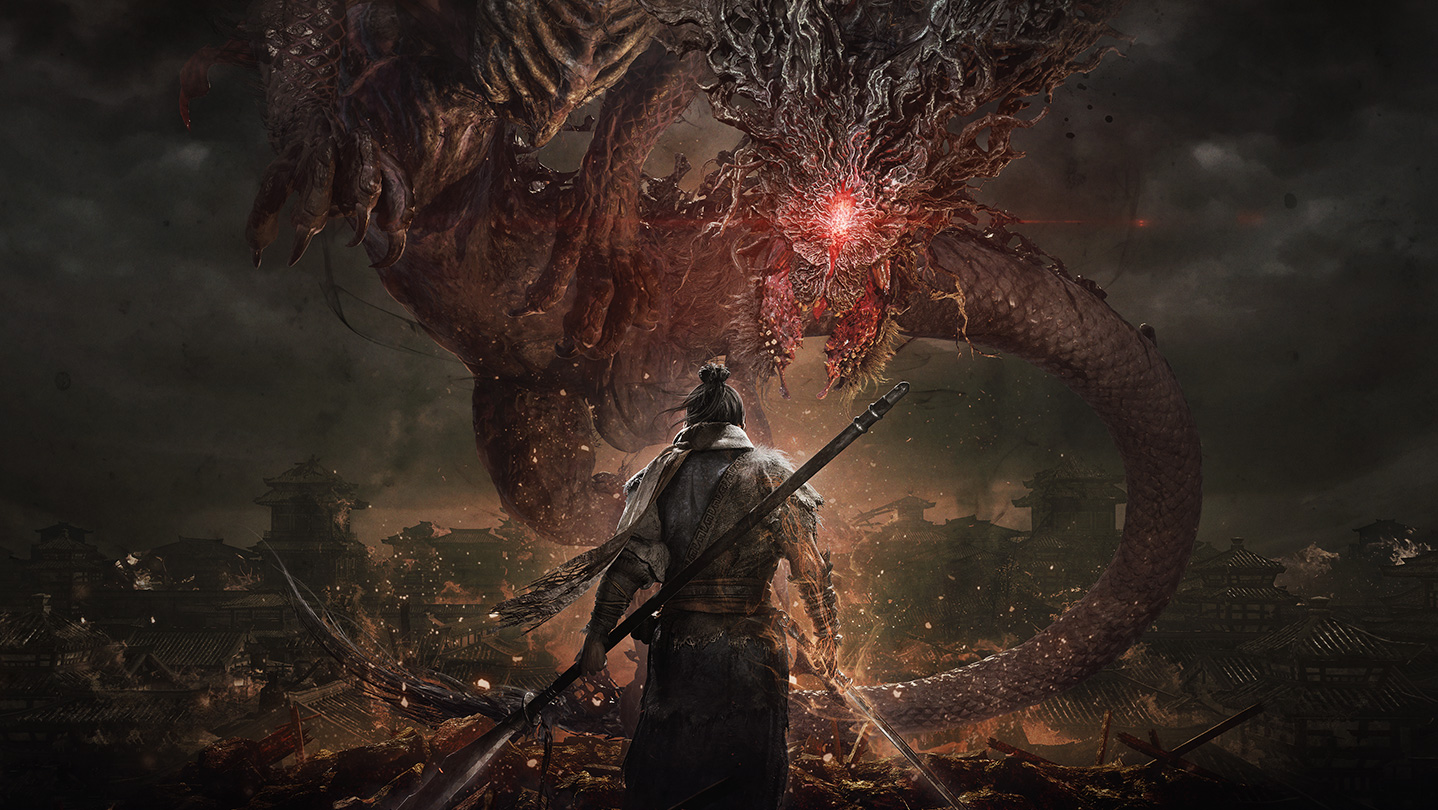
Wo Long: Fallen Dynasty is an action RPG from Team Ninja, the studio behind Ninja Gaiden and the Nioh series, set in a fantastical version of ancient China during the Three Kingdoms period. Demons have overrun the land, a mysterious elixir is corrupting warlords and peasants alike, and you play a nameless militia soldier clawing upward through one of history's most storied civil wars. On paper, that is a genuinely compelling setup. In practice, the narrative is thin enough to read through in one sitting, which is a shame because the historical figures, Cao Cao, Lu Bu, Zhang Liang, are all here and ripe for dramatic treatment. They just don't get much of it. The combat system is where Wo Long earns its keep, and it is worth understanding before you judge the game. The central mechanic is the Spirit Gauge: every action, offensive or defensive, shifts this meter. Deflecting enemy attacks at the right moment builds your spirit and drains theirs; taking hits or spamming spells does the opposite. Land enough pressure on a depleted enemy and you trigger a Fatal Strike, a high-damage execut that ends most regular encounters cleanly. It rewards aggression in a way that Nioh's ki-pulsing system did not quite manage, and the timing window on deflects feels tuned tighter than Sekiro's parry, so there is real skill expression here. The five Wizardry Spell schools, Wood, Fire, Earth, Metal, Water, double as your build skeleton, each governing a different mix of buffs, debuffs, elemental attacks, and passive bonuses. A Metal-heavy caster plays meaningfully differently from a Fire-and-sword hybrid, and experimenting across a second playthrough is genuinely rewarding. Where the wheels come off is everything surrounding the combat. Mission structure is linear and repetitive: you drop into a level, plant battle flags to set morale and act as checkpoints, kill a boss, collect loot, repeat. The loot system borrows Nioh's volume-obsessed approach, flooding you with gear that differs by fractions of a percentage point, which becomes tedious to manage around hour fifteen. Some players will appreciate the density; if you bounced off Nioh 2 for the same reason, nothing here will convert you. The companion system lets you bring NPC allies or other players into missions, but the AI companions are passive to the point of being furniture, and co-op balance tilts boss difficulty downward sharply enough to feel slightly broken. Performance on PC at launch was rough, with stuttering and frame-pacing issues that drew fair criticism in early reviews and contributed heavily to those mixed Steam scores. Patches have improved things considerably, but it is worth checking current community reports before committing on that platform. Controller play remains the recommended input method regardless. If you are a Nioh veteran or a Soulslike enthusiast specifically interested in seeing Team Ninja's take on deflection-based combat in a new setting, Wo Long delivers a focused, mechanically satisfying experience. If you are coming in hoping for a rich Three Kingdoms narrative with meaningful choices or character depth, you will walk away hungry. The world is gorgeous, Lu Bu is as terrifying as he deserves to be, and the Spirit system has genuine depth, but the game as a whole feels like a strong proof of concept that stopped one revision short of greatness.

RPGs
Tags
System Requirements
Minimum
- OS
- Windows® 10, Windows® 11, 64bit
- Processor
- Intel® Core™ i5-8400、AMD Ryzen™ 5 3400G
- Memory
- 8 GB RAM
- Graphics
- GeForce GTX 1650 4GB、Radeon RX 570 4GB
- DirectX
- Version…
Recommended
- OS
- Windows® 10, Windows® 11, 64bit
- Processor
- Intel® Core™ i7-8700、AMD Ryzen™ 5 3600XT
- Memory
- 16 GB RAM
- Graphics
- GeForce RTX 2060 6GB、Radeon RX 5700XT…
DLC & Add-ons for Wo Long: Fallen Dynasty2
Expansions, DLC packs and add-on content for this game. Click any item to see store offers.
Keep exploring
Community Discussion
Be the first to comment on Wo Long: Fallen Dynasty.
Reviews & Ratings
Game Info
- Developer
- KOEI TECMO GAMES CO., LTD.
- Publisher
- KOEI TECMO GAMES CO., LTD.
- Release Date
- Mar 3, 2023