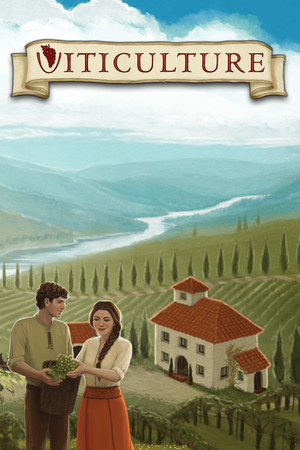
Viticulture Essential Edition
A worker-placement classic that has no business being this relaxing. If you keep losing sleep over Tuscany wine orders at midnight, this port is either your gateway drug or your confirmation that you already have a problem.
GamerScout Verdict
Best for board game fans who want a functional async multiplayer client, with caveats around known AI bugs and a slow-patch developer.
Compare Prices(2 stores)
Every store in this table quotes us in euros, so the EUR figure is the price the seller actually set, not our arithmetic — which is why EUR is also the currency we rank in. We only list an offer here when the store gives us its price in euros, so nothing in this table is a number we invented.
Pick USD, PLN, GBP, CAD or AUD in the header and we convert from EUR at the European Central Bank reference rate — converted amounts are prefixed with ~. Your bank or the store may apply a different rate at checkout. We never hide offers based on where you are: everyone sees this whole table.
We may earn a commission when you buy games through links on this page — at no extra cost to you. It never affects our rankings or verdicts.
Price History
Screenshots & Media
About Viticulture Essential Edition
I came here for the online mode, and I want to be upfront about that. Viticulture Essential Edition is not my usual stomping ground, but when the board game community keeps throwing a title in my face, I test it. So I loaded it up, ran through the tutorial, and put a few hours into solo and online play. Here is what I found. The core loop is a season-based worker-placement system where each round represents one year. Spring lets you jostle for turn order on the wake-up track, and where you place your rooster determines both your position and a small bonus for the year ahead. Summer and winter are where the actual work happens: you deploy your limited workers to action spaces to plant vines, harvest grapes, erect structures like tasting rooms and larger cellars, and fulfill wine orders. First worker to an action space usually gets the better end of it, and that tension is what keeps the table alive. The Grande worker, a special oversized piece that can muscle into a full action space, is the single most satisfying placement decision in the game. A well-timed Grande can completely flip a round. There is also a visitor card layer, summer and winter decks full of one-off effects that range from underwhelming to swing-the-whole-game powerful, and that inconsistency is a genuine criticism worth noting before you commit. The digital version supports one to six players across solo with three AI difficulty levels, local multiplayer, online multiplayer, and an asynchronous mode with push notifications. A single session runs around 30 minutes in solo, which is short enough to be a lunch break game. The cross-platform support is real and works. The interactive tutorial is competent, probably the best reason to try this before spending money on the physical board game. The Tuscany DLC adds an extended board, two additional seasons, eleven special workers, and 36 structure cards if you want a deeper system after the base game clicks. The criticisms are real and documented by the community. The Grande worker placement rules have a known digital bug where the game forces you to use a standard worker first, narrowing your options in ways the physical rulebook never intended. Visitor card text at normal zoom is genuinely difficult to read, and DIGIDICED has a reputation for slow patch turnaround. Steam reviews sit around 70 percent positive, which is a signal of "it works, I enjoy it, but there are rough edges" rather than a ringing endorsement. The UI is clean enough to follow, but it is clearly a mobile port and you will feel that on a large monitor. If you have already played Viticulture on BoardGameArena or Tabletopia and want a standalone client with AI opponents, this fills that gap reasonably well. If you are brand new to the game, the tutorial earns its keep. Bottom line from a multiplayer-first perspective: the asynchronous mode is the right way to play this with a group of busy adults, and it works well for that. The online synchronous mode has a small but functional player pool. Solo against the AI is fine for learning the game, but the AI is not going to challenge you once you understand the wake-up track timing and how to chain winter visitor cards into a points engine. The Tuscany DLC is worth grabbing if the base game clicks with you. The base game alone is a decent entry point to one of the more approachable worker-placement designs in the genre.

Shooters
Tags
System Requirements
Minimum
- OS
- Windows 7 (SP1+), Windows 10 and Windows 11
- Memory
- 2 GB RAM
- DirectX
- Version 10
- Storage
- 500 MB available space
- Graphics
- DX10, DX11, DX12 capable
- Processor
- x86, x64 architecture with SSE2 instruction set support
Keep exploring
Community Discussion
Be the first to comment on Viticulture Essential Edition.
Reviews & Ratings
No ratings available
Game Info
- Developer
- DIGIDICED
- Publisher
- DIGIDICED
- Release Date
- Jul 10, 2020