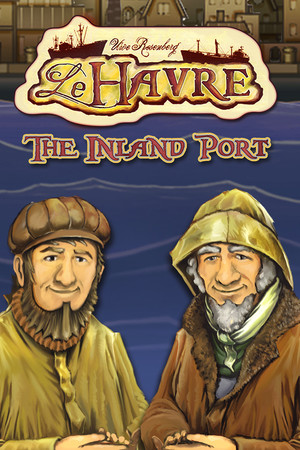
Le Havre: The Inland Port
A tight two-player Euro port that rewards anyone willing to push resource markers around a grid and out-think one opponent across 12 rounds - though the Steam community is split almost 50/50 on whether it earns that effort.
GamerScout Verdict
Best for Euro board game fans with a regular 1v1 opponent; solo players will hit the replay ceiling faster than expected.
Compare Prices(3 stores)
Every store in this table quotes us in euros, so the EUR figure is the price the seller actually set, not our arithmetic — which is why EUR is also the currency we rank in. We only list an offer here when the store gives us its price in euros, so nothing in this table is a number we invented.
Pick USD, PLN, GBP, CAD or AUD in the header and we convert from EUR at the European Central Bank reference rate — converted amounts are prefixed with ~. Your bank or the store may apply a different rate at checkout. We never hide offers based on where you are: everyone sees this whole table.
We may earn a commission when you buy games through links on this page — at no extra cost to you. It never affects our rankings or verdicts.
Price History
Screenshots & Media
About Le Havre: The Inland Port
I'll be straight with you: I came to Le Havre: The Inland Port the same way I come to most non-shooters - skeptical, slightly impatient, ready to tab out after twenty minutes. Stayed for three sessions. That tells you something. This is a digital conversion of Uwe Rosenberg's two-player-only board game, handled by DIGIDICED, and the concept is compact: you and one opponent spend 12 rounds acquiring four resource types (Wood, Clay, Grain, Fish), buying buildings out of a shared pool, and trying to end richer than the other person. Thirty-one different buildings are in the mix, each purchasable and usable as part of your engine. The wrinkle that actually makes it interesting is the resource tracking matrix - resources are managed on a grid-style board where moving counters left or right shifts totals by one, while vertical moves jump by three, and diagonal moves hit even harder. That means resource gathering is not mindless hoarding. You have to think about the position of your markers relative to what you need, several turns out. It is a small system that carries more weight than it looks like it should. Buildings also move along a track as the game progresses, gaining power over time but getting sold off automatically if they hit the end of the track - so timing when you use a building versus when you let it ride is a real decision. Late-game, anchor buildings and port tiles let you score off your accumulated resources, which adds a third strategic axis on top of the standard "buy expensive things" and "sell resources for cash" approaches. The three paths do not play cleanly in isolation; the game pushes you to blend them, which is where the back-and-forth with a live opponent actually gets tense. The problems are real, though. Steam reviews sit at a mixed 54% positive across a thin sample, and the frustrations are consistent: the tutorial walks you through motions without explaining why, so first-timers often finish it still confused. The AI is functional across difficulty tiers but reportedly plays out similarly regardless of the setting you pick - fine for learning patterns, not great for long-term solo play. The building pool is fixed, which means after enough games a sharp opponent can map out optimal lines and the puzzle starts to feel solved. The Mac version also carries a compatibility warning for macOS 10.15 Catalina and above, so Mac users should check that before committing. For the audience: Euro board game fans, Uwe Rosenberg fans specifically (Agricola, Bohnanza, Ora et Labora pedigree), and anyone who wants a focused two-player strategy session that runs in under an hour. Not for players who want breadth, long campaigns, or a solo experience with genuine replayability past the first dozen games. Cross-platform online play and hot-seat local mode give you options, and the asynchronous drop-in-drop-out structure means you can run multiple matches simultaneously, which is a genuinely practical feature for a game this length. If you have a regular opponent and you both like tight puzzle-style strategy, this punches above what the price tier suggests. If you're flying solo expecting depth to keep you busy long-term, the fixed building set will run dry faster than you'd hope.

Shooters
Tags
System Requirements
Minimum
- OS
- Windows XP SP2+
- Memory
- 512 MB RAM
- DirectX
- Version 9.0
- Storage
- 250 MB available space
- Graphics
- DX9 (shader model 3.0)
- Processor
- 1 GHz
Keep exploring
Community Discussion
Be the first to comment on Le Havre: The Inland Port.
Reviews & Ratings
No ratings available
Game Info
- Developer
- DIGIDICED
- Publisher
- Twin Sails Interactive
- Release Date
- Aug 29, 2016