Compare Patchwork prices across trusted key stores and find the best deal. Developed by DIGIDICED. Published by Twin Sails Interactive. Released on 12/6/2016. Available on PC, Mac, Linux. Genres: Casual, Indie, Strategy.

Tetris-brained strategy dressed up in cozy quilting clothes - if you sleep on Patchwork because of the theme, you are going to lose a ranked match to someone named Uwe and feel it.

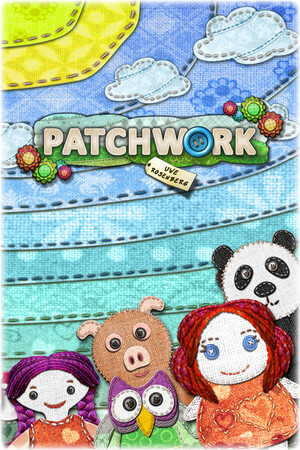
I will be straight with you: nothing in my shooter-specialist DNA was prepared to spend an evening caring deeply about polyomino fabric tiles. But here we are. Patchwork is a strict two-player, head-to-head abstract strategy game built on a single, clean mechanic - you and one opponent take turns picking from a rotating pool of three available fabric pieces along a shared time track, spending buttons as currency to claim them, then fitting those pieces onto your personal 9x9 grid. Every piece you take advances your token along the time track by however many spaces that tile costs, which determines what your opponent can see next turn. That is the whole engine, and it is nastier than it looks. The spatial puzzle element is where this game actually lives. Empty grid squares count against your final score, buttons score positive points, and whoever fills a complete 7x7 area inside their grid earns a bonus single-square patch. The result is a constant tension between grabbing button-heavy tiles that cost you big chunks of time versus snapping up cheap filler pieces to plug holes before the game ends. Advanced play involves deliberately starving your opponent of the pieces they need - something the harder AI opponent, named Uwe after the designer himself, does with quiet aggression by hoarding buttons and passing strategically rather than overextending. Once you notice it doing that, the whole game clicks into a different gear. On the digital side, DIGIDICED put in the work. The UI lets you see your opponent's board clearly, the interface is clean enough that piece rotation and flipping (yes, you can flip tiles - worth knowing before your first ranked loss) are handled without friction, and matchmaking for online cross-platform games connects quickly. There is a ranked ladder with a lobby system, casual unranked play, local pass-and-play, and five AI difficulty levels ranging from easy characters like Hoo and Lula up to the hard-mode Uwe bot. A Playback mode lets you review finished games, which is genuinely useful for understanding where your button economy fell apart. Cosmetic themes (including Halloween tile sets with rebalanced pieces) are available as paid extras but do not touch gameplay. The weaknesses are real but small. The tutorial skips some rules entirely - piece flipping is one omission that can quietly tank early games for newcomers. The UI for managing multiple simultaneous online matches has been noted as confusing, and the Steam player pool is thin enough that you may wait a moment for ranked games outside peak hours. The core loop also tops out at roughly 15-30 minutes per match, so if you are looking for a long-session single-player experience, the AI variety only takes you so far. Steam reviews sit at roughly 78 percent positive across 140 ratings, which feels accurate - it is a faithful, polished conversion of a legitimately sharp board game, not a padded-out digital product. If the theme is putting you off, ignore it. The quilting aesthetic is window dressing on what is effectively a two-player resource-and-placement puzzle with real bite. It received an Official Recommendation at the 2015 Spiel des Jahres, and the community of people who play this seriously think hard about buttons-per-time-unit ratios and optimal patch sequencing. That crowd will get value out of the digital version as a practice and matchmaking tool. Everyone else gets a surprisingly tense 20-minute match they can load up anywhere. Fred, Scout Team

Patchwork

Patchwork

Dec 6, 2016DIGIDICEDTwin Sails Interactive
GamerScout Says

Tetris-brained strategy dressed up in cozy quilting clothes - if you sleep on Patchwork because of the theme, you are going to lose a ranked match to someone named Uwe and feel it.

PCMacLinux
Steam Deck Playable
Best Price Available
€0.00
at N/A
Historical low: €0.90

GamerScout Verdict

Best for fans of abstract strategy and board game ports who want a quick, genuinely tactical 1v1 with a ranked ladder.

Compare Prices(0 stores)

Loading prices...

We may earn a commission when you buy games through links on this page — at no extra cost to you. It never affects our rankings or verdicts.

Price History

Historical low
€0.905 Jun 2026
Keyshops
€0.83€0.88€0.92€0.975 Jun16 Jun27 Jun8 Jul19 Jul
5 Jun — 19 Jul
Create alert

Screenshots & Media

About Patchwork

I will be straight with you: nothing in my shooter-specialist DNA was prepared to spend an evening caring deeply about polyomino fabric tiles. But here we are. Patchwork is a strict two-player, head-to-head abstract strategy game built on a single, clean mechanic - you and one opponent take turns picking from a rotating pool of three available fabric pieces along a shared time track, spending buttons as currency to claim them, then fitting those pieces onto your personal 9x9 grid. Every piece you take advances your token along the time track by however many spaces that tile costs, which determines what your opponent can see next turn. That is the whole engine, and it is nastier than it looks. The spatial puzzle element is where this game actually lives. Empty grid squares count against your final score, buttons score positive points, and whoever fills a complete 7x7 area inside their grid earns a bonus single-square patch. The result is a constant tension between grabbing button-heavy tiles that cost you big chunks of time versus snapping up cheap filler pieces to plug holes before the game ends. Advanced play involves deliberately starving your opponent of the pieces they need - something the harder AI opponent, named Uwe after the designer himself, does with quiet aggression by hoarding buttons and passing strategically rather than overextending. Once you notice it doing that, the whole game clicks into a different gear. On the digital side, DIGIDICED put in the work. The UI lets you see your opponent's board clearly, the interface is clean enough that piece rotation and flipping (yes, you can flip tiles - worth knowing before your first ranked loss) are handled without friction, and matchmaking for online cross-platform games connects quickly. There is a ranked ladder with a lobby system, casual unranked play, local pass-and-play, and five AI difficulty levels ranging from easy characters like Hoo and Lula up to the hard-mode Uwe bot. A Playback mode lets you review finished games, which is genuinely useful for understanding where your button economy fell apart. Cosmetic themes (including Halloween tile sets with rebalanced pieces) are available as paid extras but do not touch gameplay. The weaknesses are real but small. The tutorial skips some rules entirely - piece flipping is one omission that can quietly tank early games for newcomers. The UI for managing multiple simultaneous online matches has been noted as confusing, and the Steam player pool is thin enough that you may wait a moment for ranked games outside peak hours. The core loop also tops out at roughly 15-30 minutes per match, so if you are looking for a long-session single-player experience, the AI variety only takes you so far. Steam reviews sit at roughly 78 percent positive across 140 ratings, which feels accurate - it is a faithful, polished conversion of a legitimately sharp board game, not a padded-out digital product. If the theme is putting you off, ignore it. The quilting aesthetic is window dressing on what is effectively a two-player resource-and-placement puzzle with real bite. It received an Official Recommendation at the 2015 Spiel des Jahres, and the community of people who play this seriously think hard about buttons-per-time-unit ratios and optimal patch sequencing. That crowd will get value out of the digital version as a practice and matchmaking tool. Everyone else gets a surprisingly tense 20-minute match they can load up anywhere.

Fred
Fred · Scout Team

Shooters

Tags

singleplayermultiplayerpvponline-pvplocal-multiplayercross-platformachievementstrading-cardscloud-savestier:sub-5Digital Board GamePolyominoTurn-Based PvPAsynchronous MultiplayerTime Track MechanicButton EconomyAbstract StrategyPass-and-PlayRanked LadderBoard Game Adaptation

System Requirements

Minimum

OS
Windows XP SP2+
Memory
512 MB RAM
DirectX
Version 9.0
Storage
250 MB available space
Graphics
DX9 (shader model 3.0)

Keep exploring

Community Discussion

Be the first to comment on Patchwork.

Reviews & Ratings

No ratings available

Game Info

Developer
DIGIDICED
Publisher
Twin Sails Interactive
Release Date
Dec 6, 2016

Price Alert

Get notified when the price drops below your target!

Create Alert

No card? Pay another way

Top up your Steam Wallet or buy crypto with any card — instant delivery, no bank account needed.

More from DIGIDICED

Buy smarter: helpful guides

Looking for more? See games like Patchwork →

Frequently asked questions about Patchwork

How much does Patchwork cost?

Patchwork pricing changes often and varies by store, edition and region. The live price table on this page compares the cheapest in-stock offers from trusted key stores like Eneba and Kinguin, so you always see the current lowest price before you buy.

Where can I buy Patchwork cheapest?

Compare Patchwork prices across every verified store in the price table on this page. We list the cheapest in-stock key and store offers, updated regularly, so you always see the best current deal before you buy.

What platforms is Patchwork available on?

Patchwork is available on PC, Mac, Linux.

When was Patchwork released?

Patchwork was released on 6 December 2016.

Who developed Patchwork?

Patchwork was developed by DIGIDICED and published by Twin Sails Interactive.