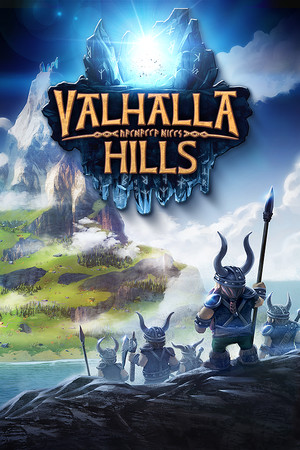
Valhalla Hills
Settlers DNA wrapped in a Norse mythology skin, but the build-order rigidity and a tutorial that explains almost nothing make this a game that rewards patience far more than it advertises.
GamerScout Verdict
Best for patient fans of the Settlers formula who can tolerate a self-taught learning curve and short, repeatable map sessions.
Compare Prices(0 stores)
Loading prices...
We may earn a commission when you buy games through links on this page — at no extra cost to you. It never affects our rankings or verdicts.
Price History
Screenshots & Media
About Valhalla Hills
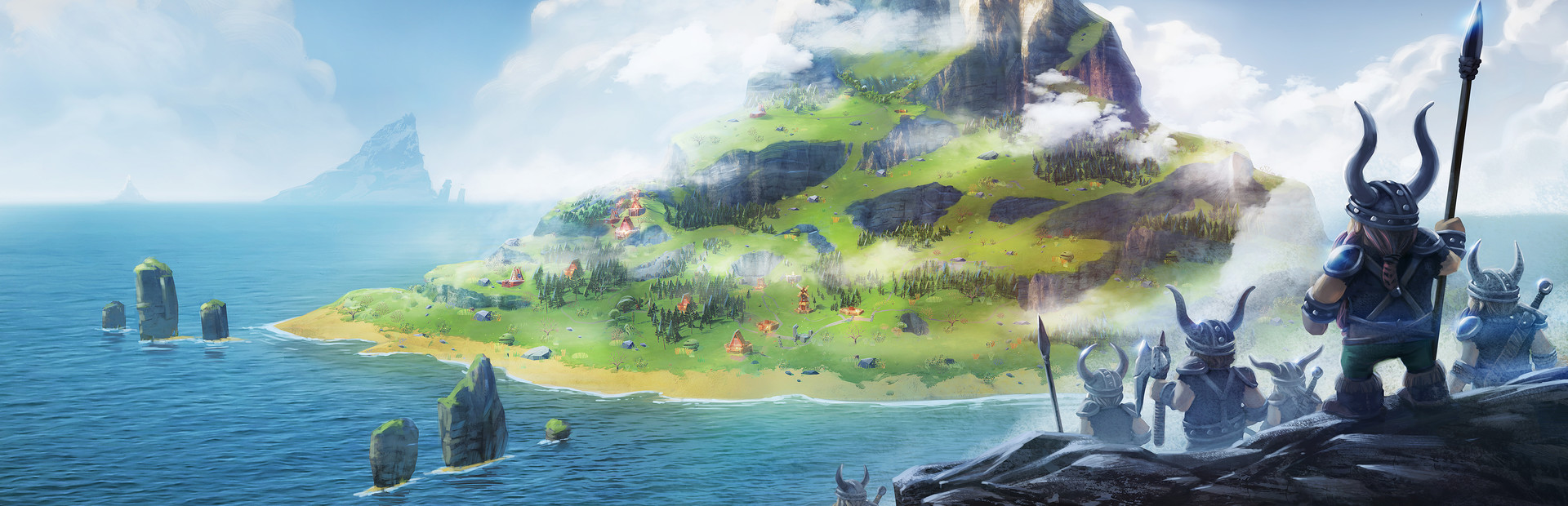
My spreadsheet instincts kicked in fast with Valhalla Hills, and within two maps I had mentally diagrammed every production chain the game would ever ask of me. That is both a compliment and a warning. Funatics built this as a spiritual heir to The Settlers II and their own Cultures series, and the lineage shows: you place buildings, watch autonomous Vikings ferry resources along pathfinding routes, and balance food, wood, weapons and manpower across procedurally generated islands while working toward a portal at the top of each map. The core loop is genuinely satisfying when the supply lines click. Watching a compact settlement hum, couriers sprinting between depots, a forge churning out axes for soldiers, a food chain keeping everyone upright, is exactly the kind of quiet optimization high that this genre promises. The design philosophy is pure indirect control: you cannot order a specific Viking to do anything. You place the right buildings in the right positions and trust the AI to respond. In practice the AI is functional but unforgiving about spatial layout. Each building has a fixed collection range, and if your lumberjack camp is one tile too far from your storehouse, logs simply stop flowing. Debugging a broken economy means eyeballing individual building radii until something clicks, and the game offers almost no diagnostic tools to speed that up. Critics and players alike flagged the tutorial as the game's single biggest failure: it walks you through placing a few structures and then vanishes, leaving production chains, courier logic, and the honor system entirely unexplained. The community-written Steam handbook is genuinely more useful than anything shipped in the box. There are two modes worth knowing. Classic Mode is the structured campaign path, unlocking new building types, enemy variants and map sizes as you clear levels, which makes it the correct starting point for anyone new to this style of game. Open Game mode drops all unlocks immediately and raises the difficulty ceiling, aimed at veterans who want full sandbox access from the first minute. On the enemy side, you can either fight your way through portal guardians using a military production chain, woodcutter to forge to armory to soldiers, or appease them with resource sacrifices, which is a small but welcome fork in how each map can play out. The honor system tracks individual Vikings across runs, and a warrior who reaches 100,000 honor ascends to Valhalla but returns even stronger, which is a nice persistent-progression thread that the rest of the design somewhat underserves. The longer you play, the more repetitive the structure feels. Procedurally generated maps shuffle the terrain, but the strategic problem set barely changes from island to island. Late-game Open maps do expand the canvas and make military rushes harder to execute cheaply, but the fundamental optimization puzzle remains the same one you solved in the first hour. The two DLC packs, Fire Mountains and Sand of the Damned, add new biomes and enemy types and are bundled in the Definitive Edition, which is the version worth picking up if you are buying at all. Presentation is charming throughout: the storybook art style, the Unreal 4 lighting on tiered mountain terrain, and a Viking-flavored soundtrack all do their jobs. The game lands at a 69 on Metacritic and sits at Mixed on Steam, which is an honest score. It is not broken, but it is a title that peaked as a genre comfort meal rather than a genre push forward. For strategy-sim newcomers, the Cultures and Settlers formula is worth experiencing, and Valhalla Hills is an accessible entry point if you supplement the tutorial with a community guide from day one. For genre veterans, the lack of a scenario editor, the absence of multiplayer, and the shallow late-game progression will feel like missing furniture. Approach it as a low-stakes session game, one map at a sitting, and the pacing works. Demand more than that and the seams show quickly.

Strategy & simulation
Tags
System Requirements
Minimum
- OS
- Windows 7/8 32-bit
- Memory
- 4 GB RAM
- DirectX
- Version 9.0c
- Storage
- 3 GB available space
- Graphics
- NVIDIA GeForce 8800 GT or Radeon HD2900 series card or better (DirectX10 card or better)
- Processor
- Dual-core Intel or AMD, 2.5 GHz or faster
- Sound Card
- Onboard
Recommended
- OS
- Windows 7/8 32-bit or higher
- Memory
- 8 GB RAM
- DirectX
- Version 9.0c
- Storage
- 3 GB available space
- Graphics
- NVIDIA GeForce 470 GTX or AMD Radeon 6870 HD series card or better (DirectX10 card or better)
- Processor
- Quad-core Intel or AMD, 2.5 GHz or faster
- Sound Card
- Onboard
DLC & Add-ons for Valhalla Hills1
Expansions, DLC packs and add-on content for this game. Click any item to see store offers.
Keep exploring
Community Discussion
Be the first to comment on Valhalla Hills.
Reviews & Ratings
Game Info
- Developer
- Funatics Software
- Publisher
- Daedalic Entertainment
- Release Date
- Dec 2, 2015