GamerScout Verdict
Functional and oddly charming, but unless your PC can't run the modern version, the current Universe Sandbox makes this one hard to justify.
Compare Prices(0 stores)
Loading prices...
We may earn a commission when you buy games through links on this page — at no extra cost to you. It never affects our rankings or verdicts.
Screenshots & Media
About Universe Sandbox Legacy
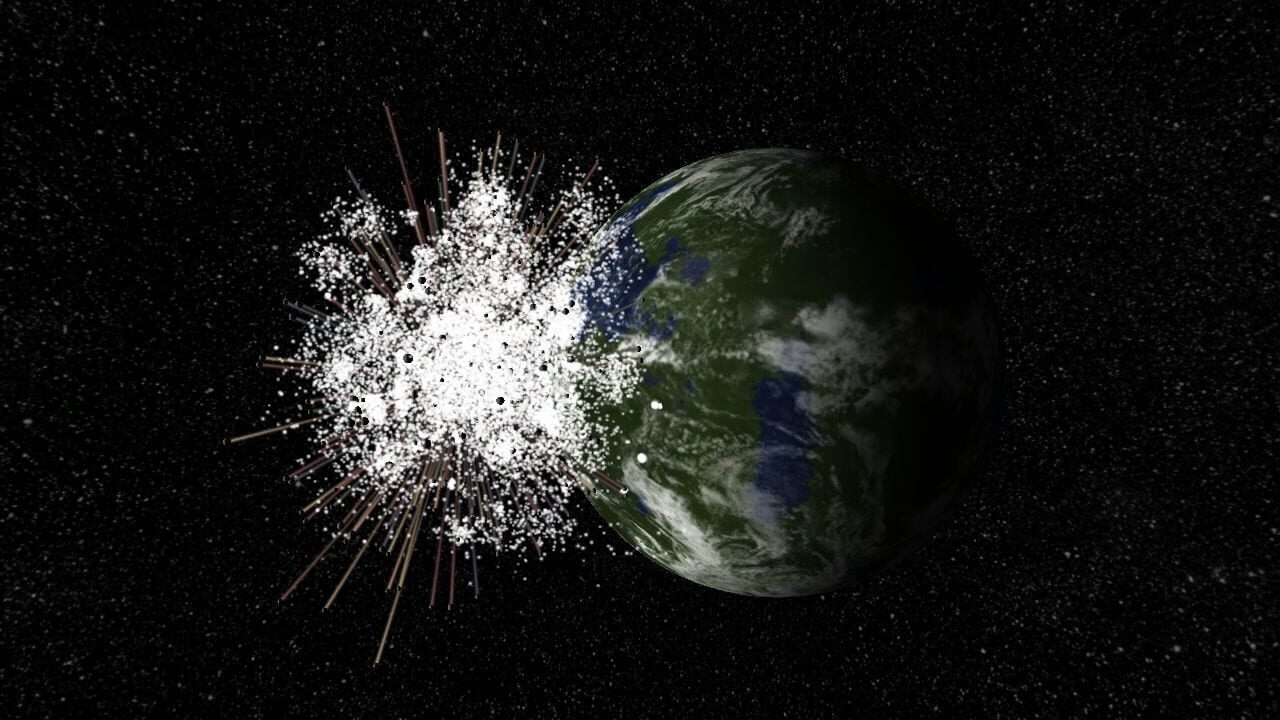
I've spent time with both ends of the Universe Sandbox family tree, and the Legacy label here isn't just a name - it's a warning. This is the original physics-based space simulator from Giant Army, first released on Steam in 2011, that lets you pull planets out of orbit, crash moons into the Earth, fling galaxies at each other, and generally act like an irresponsible god at cosmological scale. It is, in its own quiet way, the game that proved a sandbox gravity sim could be genuinely compelling to people who never took an astronomy class. The core loop is pure what-if experimentation. You load one of over 70 included simulations - the solar system, Saturn's rings, historical spacecraft trajectories like Voyager and Pioneer, hypothetical galaxy collisions - and then start tweaking. Mass, velocity, density, orbital radius: all of it is editable in real time. Nudge Jupiter a little closer to the sun and watch the inner planets destabilize over simulated millennia. Freeze Earth by moving it past the frost line. The sim tracks density, spin, heat, and velocity for every object, and the feedback loop of cause-and-effect is satisfying in a way that no amount of reading about orbital mechanics quite matches. But Legacy's limits are real and you should know them before buying. The physics engine is primarily a gravity simulator, and not a particularly modern one. It uses Euler integration by default, which means long-running stable orbits can drift or behave erratically in ways that feel like bugs rather than physics. The visuals are plain. Collisions produce a small visual mark on a surface and not much else - no shockwaves, no fragmenting debris, no boiling oceans. Compare that to what the current Universe Sandbox does with the same Moon-hitting-Earth scenario and the gap is significant. The interface also shows its age, with controls that take some patience to learn on your first session. Who should actually consider this version? The honest answer is a narrow group. If your machine genuinely cannot handle the modern Universe Sandbox and you want the base gravity-sandbox experience at lower hardware cost, Legacy delivers that. It is a finished, stable product, which is worth something. Students or younger players experimenting with orbital mechanics for the first time will find the tutorial system approachable and the included simulation variety generous. The achievement list - Snowball Earth, Heat Wave, Startup Kilo - does a good job of nudging newcomers toward the fun experiments they might not think to try. For anyone else, the modern Universe Sandbox is the obvious choice. It simulates climate, temperature, stellar evolution, material composition, and detailed collision physics that Legacy simply cannot touch. The Legacy version exists as a historical artifact now, preserved for existing owners and low-spec machines rather than as an active recommendation for new buyers. If you are comparison-shopping and your PC can run the current title, the upgrade is not a close call.

Catch-all
Tags
System Requirements
Keep exploring
Community Discussion
Be the first to comment on Universe Sandbox Legacy.
Reviews & Ratings
No ratings available
Game Info
- Developer
- Giant Army
- Publisher
- Unknown
- Release Date
- TBA