Unavowed
Wadjet Eye's finest hour sneaks up on you: a compact urban-fantasy mystery where your party composition rewrites the puzzle solutions, and the mid-game twist lands harder than anything in the genre this decade.
GamerScout Verdict
Best for narrative-first players who want a short, replayable mystery with genuine emotional craft and smart companion mechanics.
Compare Prices(5 stores)
Every store in this table quotes us in euros, so the EUR figure is the price the seller actually set, not our arithmetic — which is why EUR is also the currency we rank in. We only list an offer here when the store gives us its price in euros, so nothing in this table is a number we invented.
Pick USD, PLN, GBP, CAD or AUD in the header and we convert from EUR at the European Central Bank reference rate — converted amounts are prefixed with ~. Your bank or the store may apply a different rate at checkout. We never hide offers based on where you are: everyone sees this whole table.
We may earn a commission when you buy games through links on this page — at no extra cost to you. It never affects our rankings or verdicts.
Price History
Screenshots & Media
About Unavowed
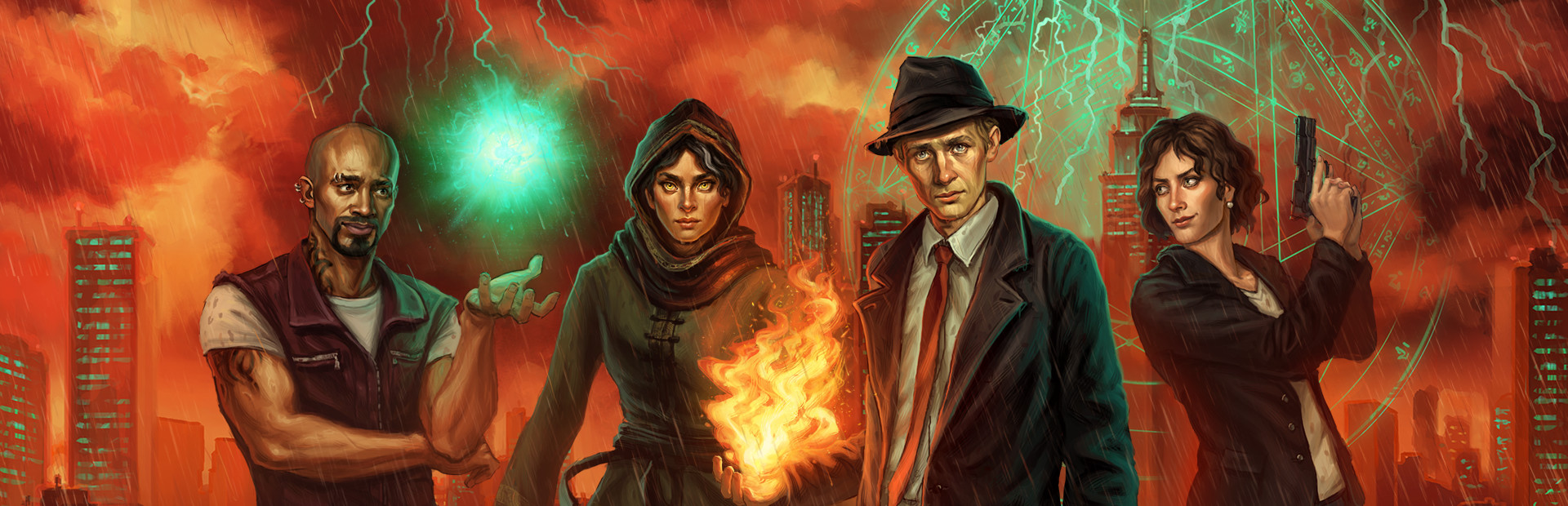
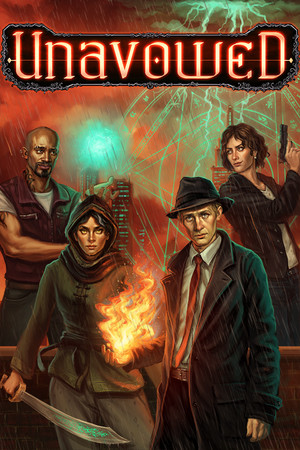
I went into Unavowed expecting a tight Wadjet Eye point-and-click with nice pixel art and a moody soundtrack. What I did not expect was to spend two evenings leaning forward in my chair, genuinely unsettled by where the writing was going. That gap between expectation and delivery is the best thing this game has going for it, and it earns that gap honestly. The mechanical hook is something the genre has rarely attempted this cleanly. You pick a gender and one of three pre-possession backgrounds, actor, bartender, or cop, and each opens distinct dialogue options and puzzle paths throughout the whole game. Then, for each chapter-length case across locations like Chinatown, Brooklyn, and Wall Street, you choose two companions from a roster of four: Eli, an accountant-turned-fire-mage with a dad-joke warmth that masks real grief; Mandana, a half-djinn warrior who is exactly as formidable as she appears; Logan, a newly sober spirit medium who can converse with the dead and unlock puzzle solutions nobody else can reach; and Vicki, a cop who saw too much. Those companions sit in your inventory alongside your found objects, and you use them on the environment the same way you would use a key on a lock. It sounds mechanical on paper. In play it makes the cast feel genuinely present in every scene. Take Logan somewhere a ghost is waiting and the whole puzzle layer changes. Leave him behind and you solve the same problem through a different set of interactions entirely. The tone sits in that rain-soaked urban-fantasy register that The Dresden Files perfected in prose, and Unavowed replicates it in pixel art with surprising confidence. Thomas Regin's score shifts between jazzy, introspective, and quietly urgent in ways that amplify pivotal moments without announcing themselves. Ben Chandler's backgrounds carry a darkness that never tips into grimness for its own sake. Each chapter is a self-contained tragedy: the Unavowed almost always arrive after the damage is already done, and the work becomes less about heroic prevention and more about understanding what happened and living with whatever mitigation is possible. That framing gives the game a bittersweet emotional register that sticks with you well past the credits. The companions do not judge your choices. They absorb them, process them through their own histories, and show up again the next morning. It is a quietly radical design decision. The weaknesses are real but bounded. Puzzle difficulty is low across the board; if you want the genre at its most cerebral, this will feel too gentle. The episodic chapter structure means inventory from one location does not carry to the next, which keeps things accessible but also limits the kind of sprawling multi-location puzzle chains that defined the LucasArts golden era. A few reviewers found certain companions thinner than others, and that critique has some validity, though the writing quality overall stays well above the genre average. The game runs eight to ten hours on a first pass, with three origin story variants and six companion-pairing combinations providing legitimate reasons to replay. For players who usually bounce off point-and-clicks because the puzzles feel arbitrary or the characters feel decorative, Unavowed is the one to try. The mid-game twist, which I will not spoil, recontextualises everything that came before it in a way that one critic named the best plot twist of 2018, and I am not prepared to argue with that.

Indie & narrative
Tags
System Requirements
Minimum
- OS
- Windows XP or higher
- Memory
- 2 GB RAM
- DirectX
- Version 5.2
- Storage
- 3 GB available space
- Graphics
- 640x360, 32-bit colour: 700 Mhz system minimum
- Processor
- Pentium or higher
- Sound Card
- All DirectX-compatible sound cards
Recommended
- OS
- Windows XP or higher
- Memory
- 64 MB RAM
- DirectX
- Version 5.2
- Storage
- 3 GB available space
- Graphics
- 640x360, 32-bit colour: 700 Mhz system minimum
- Processor
- Pentium or higher
- Sound Card
- All DirectX-compatible sound cards
Keep exploring
Community Discussion
Be the first to comment on Unavowed.
Reviews & Ratings
Game Info
- Developer
- Wadjet Eye Games
- Publisher
- Wadjet Eye Games
- Release Date
- Aug 8, 2018