Trek to Yomi
Few games look this good and fight this poorly, Trek to Yomi is a Kurosawa-inspired art piece that somehow got shipping as an action game.
GamerScout Verdict
Worth it for atmosphere-first players who appreciate Kurosawa; frustrating for anyone prioritising tight, varied swordplay.
Compare Prices(6 stores)
Every store in this table quotes us in euros, so the EUR figure is the price the seller actually set, not our arithmetic — which is why EUR is also the currency we rank in. We only list an offer here when the store gives us its price in euros, so nothing in this table is a number we invented.
Pick USD, PLN, GBP, CAD or AUD in the header and we convert from EUR at the European Central Bank reference rate — converted amounts are prefixed with ~. Your bank or the store may apply a different rate at checkout. We never hide offers based on where you are: everyone sees this whole table.
We may earn a commission when you buy games through links on this page — at no extra cost to you. It never affects our rankings or verdicts.
Price History
Screenshots & Media
About Trek to Yomi
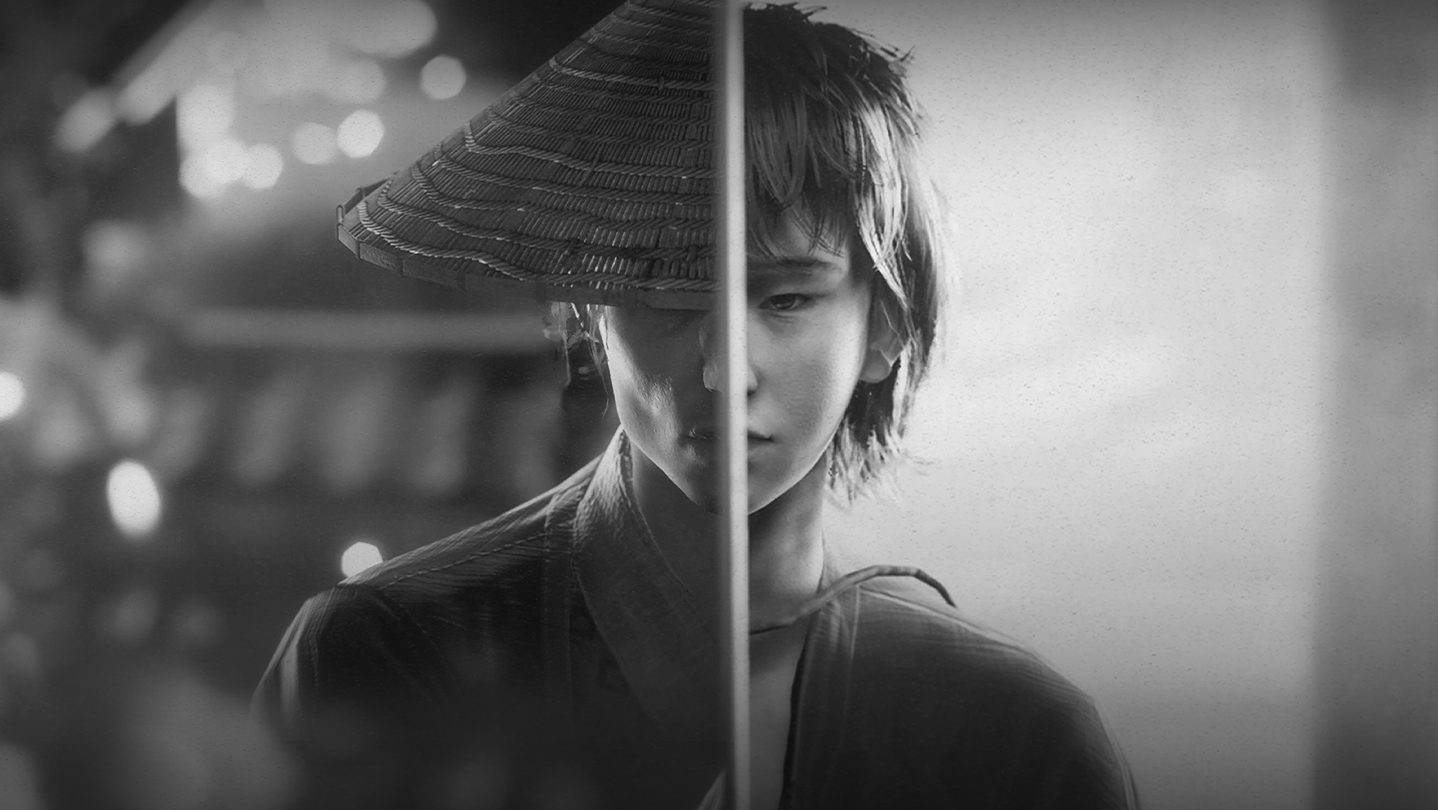
My first few minutes with Trek to Yomi felt like booting up a lost film reel: grainy black-and-white grain, pre-set camera angles that frame burning villages like establishing shots, traditional Japanese score bleeding through the speakers. The visual direction is genuinely exceptional. Devolver and Flying Wild Hog committed to a Kurosawa-era jidaigeki aesthetic from the ground up, not a filter slapped on at the end, and it shows in every carefully composed screen. If you ever wondered what Onimusha would look like if a cinematographer ran the project, Trek to Yomi answers that question with confidence. The trouble is you also have to play it. Combat is a 2.5D affair where samurai Hiroki faces enemies coming from his left or right on a single horizontal plane. The system has real bones: stamina governs attacks, blocks, and parries; timing a well-placed parry opens enemies to counter-attacks; light and heavy strikes combine with directional inputs to build a growing combo list, supplemented by ranged tools like shurikens, arrows, and an ozutsu. On paper, it sounds like a tight, deliberate sword-fighting loop. In practice, the controls feel stiff, turning around to face enemies approaching from behind requires a dedicated input that does not always register cleanly, and one early stun combo has a habit of trivialling almost everything the game can throw at you. The combat wants to be a patient, rhythm-based duel, a handful of players do click with it and find that groove, but for most people it settles into repetition faster than a five-to-six hour game has any right to allow. The structure around combat does not do much to compensate. Puzzles are largely token obstacles: reading a few characters off a wall and entering them on a dial, or shoving a cart aside. Exploration splits into branching paths, but because descending off one path often cuts off the return route, finding all the health and stamina upgrades hidden through the levels means save-scumming rather than genuine curiosity. Enemy variety thins out quickly, and some players have reported a late-game bug that strips accumulated skills and upgrades, a problem documented since launch that patches have not reliably resolved. That last point is worth knowing before you invest time in a hard-mode run. Where does that leave Trek to Yomi in 2025? There are three ending paths built around choices of Love, Duty, or Hatred, plus a secret fourth outcome, which gives completionists a reason for a second pass. A post-game Kensei mode, one-hit kills, for those who want the punishment version, adds real replay value for players who enjoy the combat on its own terms. And to be clear, if you come in treating this as an interactive samurai film first and an action game second, the gap between expectation and reality narrows considerably. The cinematography, the full Japanese voice cast (strongly recommended over the English dub), and the atmosphere can carry the experience for the right audience. For players who need the swordplay to feel as sharp as the visuals, the Mixed Steam score tells the honest story.

Catch-all
Tags
System Requirements
Minimum
- OS
- Windows 7
- Processor
- Intel Core i5-8250U / AMD Phenom II X4 965
- Memory
- 8 GB RAM
- Graphics
- GeForce MX150 (2048 VRAM) / Radeon R7 260X (2048 VRAM)
- Storage
- 11 GB avail…
Recommended
- OS
- Windows 10
- Processor
- Intel Core i7-4770S / AMD FX-9590
- Memory
- 8 GB RAM
- Graphics
- GeForce GTX 970 (4096 VRAM) / Radeon R9 390X (8192 VRAM) Storage…
Keep exploring
Community Discussion
Be the first to comment on Trek to Yomi.
Reviews & Ratings
Game Info
- Developer
- Leonard Menchiari
- Publisher
- Devolver Digital
- Release Date
- May 5, 2022