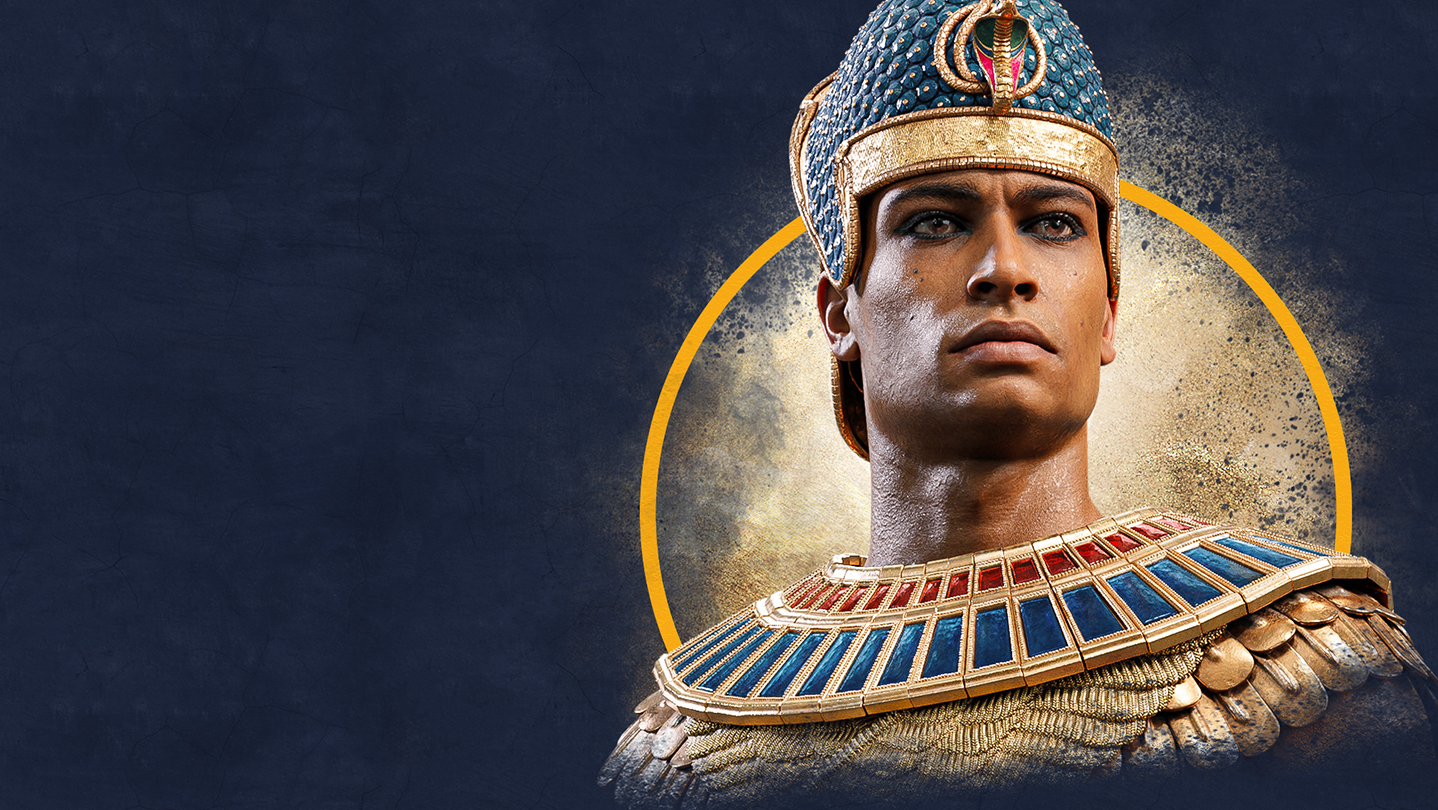
Total War: Pharaoh Standard Edition
Bronze Age Egypt meets Total War's signature blend of turn-based empire and real-time battles, ambitious setting, uneven execution, currently split audience.
GamerScout Verdict
Best for historical strategy fans who want political depth over roster spectacle and can look past a rocky launch history.
Compare Prices(0 stores)
Loading prices...
We may earn a commission when you buy games through links on this page — at no extra cost to you. It never affects our rankings or verdicts.
Price History
Screenshots & Media
About Total War: Pharaoh Standard Edition
Total War: Pharaoh drops you into the collapsing world of the Late Bronze Age, roughly 1200 BCE, when Egypt, the Hittites, and the Canaanites were all scrambling to survive the so-called Bronze Age Collapse. Creative Assembly picked one of history's most genuinely interesting pressure-cooker moments and built a campaign around political legitimacy, dynastic succession, and environmental disasters like sandstorms and floods that physically reshape the battlefield. On paper, that is a strong strategic foundation. In practice, the depth is real but unevenly distributed. The campaign layer is where Pharaoh earns attention. Each of the playable factions -- Egyptian, Canaanite, Hittite -- has distinct mechanics. Egyptian rulers chase Pharaonic legitimacy points, managing court politics and ritual obligations alongside military expansion. Hittite leaders work a different set of levers around clan loyalty and resource control. These are not cosmetic differences. Your opening build priorities change completely depending on faction, and the mid-game economic decisions -- when to push a war, when to consolidate, how to manage the Seasons system that limits campaign movement -- reward players who think several turns ahead. The Seasons mechanic in particular is underrated: a harsh winter or a drought year is not just flavour, it actively forces you to recalculate supply lines and garrison costs. Battle-side is more complicated. The weather and terrain disruption effects that carry over from the campaign layer are genuinely interesting in combat. A battle fought during a sandstorm has real visibility and morale implications. Unit rosters are smaller than something like Warhammer III or Three Kingdoms, which reflects historical reality but can feel thin if you are coming from those titles expecting roster variety. The AI competence in battle is roughly on par with the broader Total War series -- adequate rather than impressive. It will not embarrass you with brilliant flanks but it will not completely fall apart either. Late-game sieges can drag. The mixed Steam review score largely reflects a launch period that was rough. Performance issues and a content volume that felt light compared to the asking price drove early negative sentiment. Updates and patches have addressed some of the stability complaints, and the Dynasties expansion added faction content and mechanical depth that arguably should have shipped at launch. If you are evaluating this today rather than at release, the current build is meaningfully better than what reviewers initially experienced. That said, if your Total War benchmark is the sheer content density of Three Kingdoms or the absurd replayability of Warhammer III, Pharaoh will feel more conservative. It is a focused, historically grounded design in a series that has been stretching toward fantasy spectacle, and not every player will prefer that direction. For strategy players specifically interested in the Bronze Age period, the political collapse framing, or historical grand strategy with a tighter scope than something like Imperator or a Paradox title, Pharaoh offers genuine decisions and a campaign that can run long if you let the faction mechanics breathe. It is approachable for Total War newcomers because the tutorial covers the essentials and the faction-specific mechanics are introduced gradually. Veterans will find less novelty but more historical texture than they might expect.

Strategy & simulation
Tags
System Requirements
Minimum
- OS
- Windows 10 64-Bit
- Processor
- Intel i3-2100 / AMD FX-4300
- Memory
- 6 GB RAM
- Graphics
- Nvidia GeForce GTX 660 / AMD R9 270
- DirectX
- Version 11
- Storage
- 50 GB available space
Recommended
- OS
- Windows 10 64-Bit
- Processor
- Intel i5-6600/Ryzen 5 2600X
- Memory
- 8 GB RAM
- Graphics
- Nvidia GeForce GTX 1660 Ti / AMD RX 480
- DirectX
- Version 11
- Storage
- 50 GB available space
Keep exploring
Community Discussion
Be the first to comment on Total War: Pharaoh Standard Edition.
Reviews & Ratings
Game Info
- Developer
- CREATIVE ASSEMBLY
- Publisher
- SEGA
- Release Date
- Oct 11, 2023