Tinytopia
A bite-sized city-builder where toy blocks combine into megastructures and adorable disasters test everything you built. Chill sandbox meets physics chaos.
GamerScout Verdict
Best for casual players wanting a breezy spatial puzzle with city-building flavor, not a deep simulation grind.
Compare Prices(6 stores)
Every store in this table quotes us in euros, so the EUR figure is the price the seller actually set, not our arithmetic — which is why EUR is also the currency we rank in. We only list an offer here when the store gives us its price in euros, so nothing in this table is a number we invented.
Pick USD, PLN, GBP, CAD or AUD in the header and we convert from EUR at the European Central Bank reference rate — converted amounts are prefixed with ~. Your bank or the store may apply a different rate at checkout. We never hide offers based on where you are: everyone sees this whole table.
We may earn a commission when you buy games through links on this page — at no extra cost to you. It never affects our rankings or verdicts.
Price History
Screenshots & Media
About Tinytopia
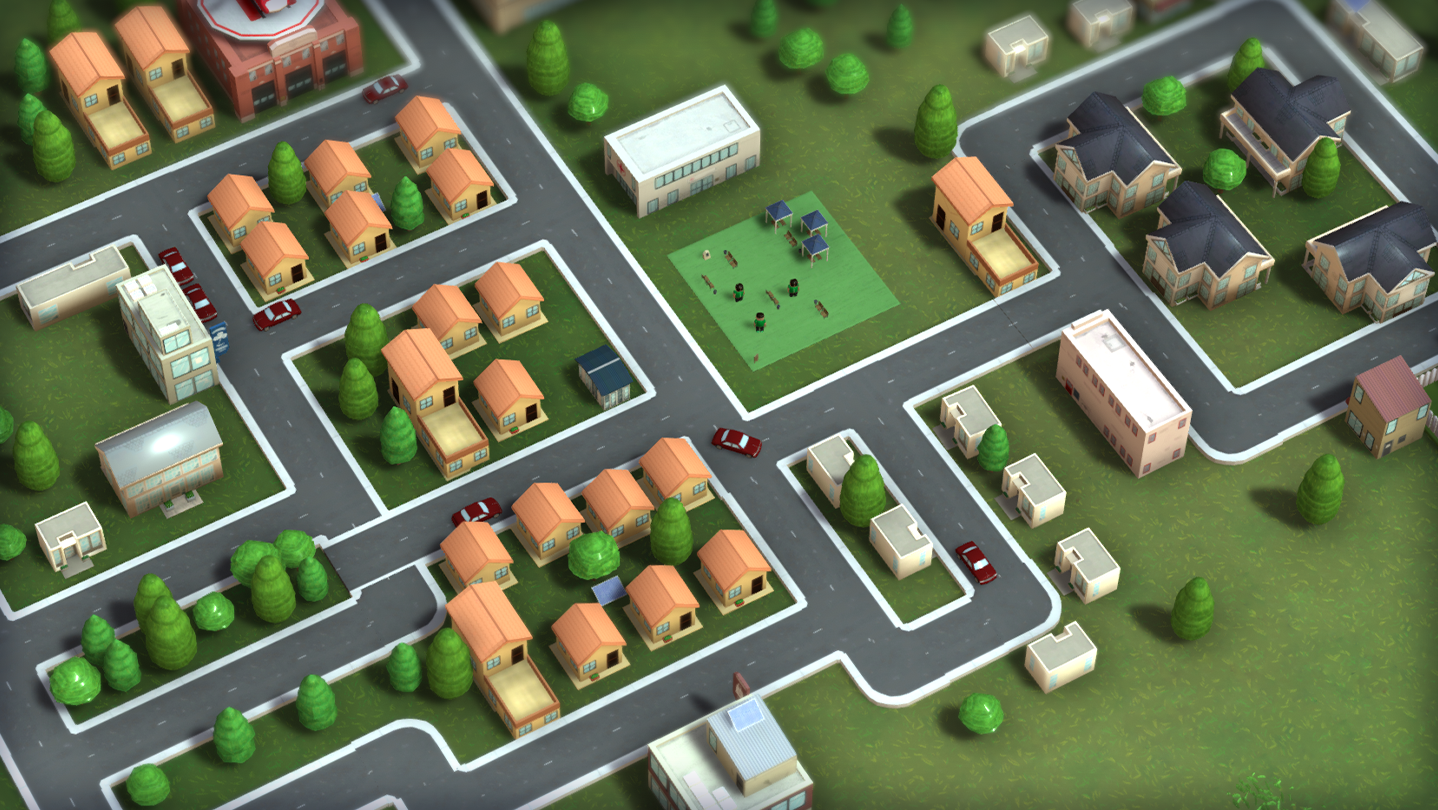
Tinytopia is a compact city-builder with a gimmick that actually works: place basic toy-scaled buildings next to each other in the right configuration and they merge into larger megastructures. It sounds like a novelty, but that combination mechanic quietly becomes the spine of every decision you make. Where you place a house matters not just for adjacency bonuses, as in most city-builders, but because the physical footprint of what might spawn matters too. That is a small but real layer of spatial planning that most casual builders skip entirely. The game splits into two modes. The sandbox Free Build lets you lay out toy towns across varied terrain chunks without pressure, which is genuinely pleasant if you want something low-stakes to think through. The Challenge stages are the meatier offering: they hand you specific goals, constrained resources, and physics-based tests where you need structures to survive earthquakes, monster stomps, and a handful of other cartoon catastrophes. These stages are short, usually under thirty minutes each, and they respect your time. The difficulty curve is gentle enough that newcomers will not bounce off immediately, but there is enough variety in the challenge pool to keep you iterating on layouts rather than just copying the same template. From a strategic depth perspective, I will be honest: this is not Tropico or Anno. The economic simulation is shallow. Population numbers tick up, happiness meters exist, but you are not managing import-export routes or balancing tax brackets. The depth here is spatial and combinatorial, not systemic. If you come in expecting a deep city sim with late-game complexity, you will exhaust the interesting decisions faster than you expect. The AI is not a factor since there are no opponents. The mod ecosystem is minimal. What you see is mostly what you get. What it does well is nail a specific feeling: the toy aesthetic is cohesive and visually readable, the merge animations are satisfying in the same way a good puzzle click is, and the disaster tools are genuinely fun to deploy after you finish a stage. Throwing a tornado at your meticulously arranged town feels like a reward rather than an afterthought. For newcomers to the genre, this is actually a reasonable entry point precisely because it strips away the spreadsheet complexity and isolates the core spatial logic of city-building. Understanding why building placement matters, why density creates problems, and why you need to think three placements ahead are habits Tinytopia builds without overwhelming you. The 84% positive Steam rating reflects a playerbase that found exactly what they were looking for. The Metacritic score of 76 is fair. There are rough edges: the terrain variety is limited across the campaign stages, some megastructure unlock conditions feel arbitrary rather than logical, and there is no meaningful late-game escalation in sandbox mode. Session length is short by design, which suits commute gaming but may frustrate players who want to sink deep uninterrupted time into something. If you can calibrate your expectations to a light, clever puzzle-builder with city-sim dressing rather than a full simulation, the hours you get will be consistently enjoyable ones.

Strategy & simulation
Tags
System Requirements
Minimum
- OS
- Windows 7 64 Bit
- Processor
- Intel Core i3 2100 (3.10 GHz) / AMD FX 6300 (3.5 GHz)
- Memory
- 4 GB RAM
- Graphics
- Intel HD 4000 (1GB) or Equivalent
- DirectX
- Version 11
- Storage
- 4 GB available space
Recommended
- OS
- Windows 10 64 Bit
- Processor
- Intel i3 8100 (3.6 GHz) / AMD Ryzen 3 2200G (3.5 GHz)
- Memory
- 4 GB RAM
- Graphics
- NVIDIA GeForce GTX 670 (2 GB) / AMD R7 260X (2GB)
- DirectX
- Version 12
- Storage
- 4 GB ava…
Keep exploring
Community Discussion
Be the first to comment on Tinytopia.
Reviews & Ratings
Game Info
- Developer
- MeNic Games
- Publisher
- Mastiff
- Release Date
- Aug 30, 2021