BalanCity
If your city-builder instincts have been gathering dust waiting for something low-stakes and weird, BalanCity will scratch that itch in ten-minute bursts, then quietly steal an hour from you.
GamerScout Verdict
Worth it for casual city-builder fans who want a physics toybox with short sessions, not for players seeking deep strategy systems.
Compare Prices(3 stores)
Every store in this table quotes us in euros, so the EUR figure is the price the seller actually set, not our arithmetic — which is why EUR is also the currency we rank in. We only list an offer here when the store gives us its price in euros, so nothing in this table is a number we invented.
Pick USD, PLN, GBP, CAD or AUD in the header and we convert from EUR at the European Central Bank reference rate — converted amounts are prefixed with ~. Your bank or the store may apply a different rate at checkout. We never hide offers based on where you are: everyone sees this whole table.
We may earn a commission when you buy games through links on this page — at no extra cost to you. It never affects our rankings or verdicts.
Price History
Screenshots & Media
About BalanCity
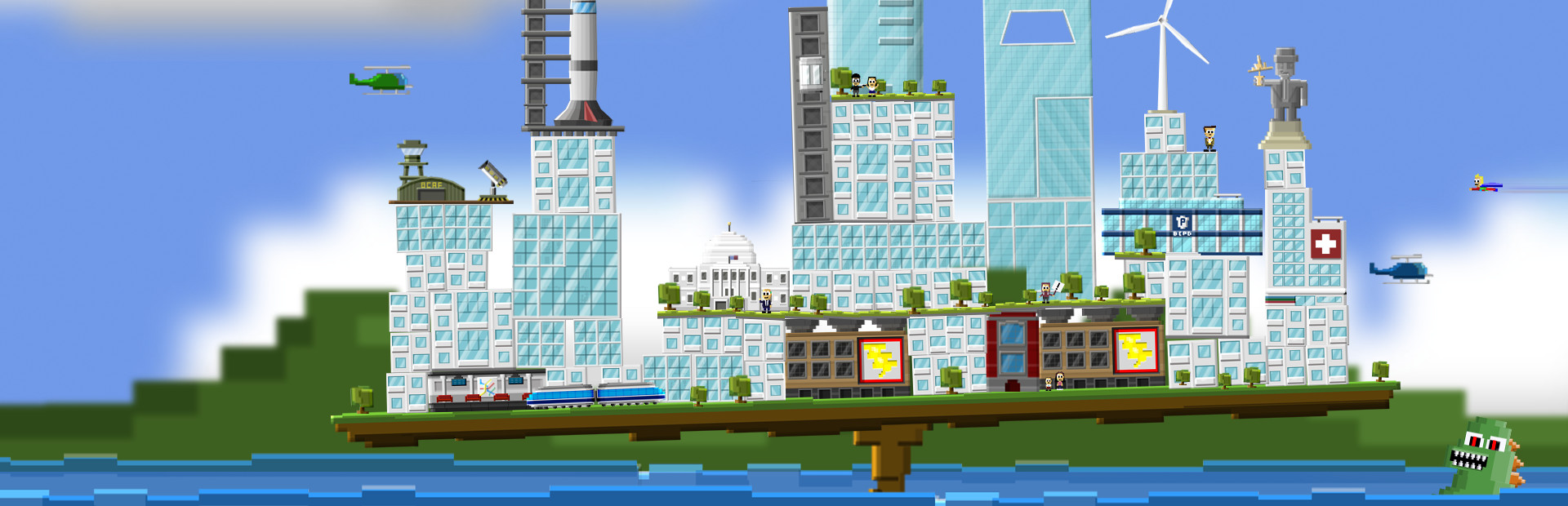
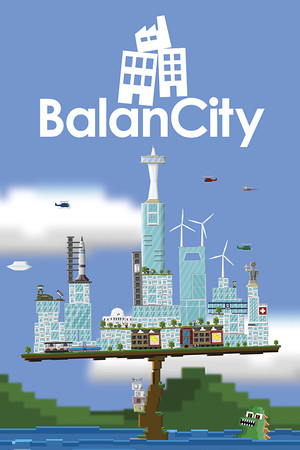
I have a folder on my desktop called 'Short Session Games' for when a Paradox campaign feels like too much of a commitment, and BalanCity has lived in it for a while. The premise sounds absurd on paper: you are a mayor whose entire city sits on a platform balanced on a single pillar, and every building you place shifts the physical weight of that platform in real time. Drop a coal power plant too far to the left without counterbalancing it with apartments on the right, and you watch your carefully arranged tower of offices slide off the edge into the sea. The physics are honest and immediate, and the first few collapses genuinely make you laugh before the spatial logic clicks in. The build loop is accessible but has more texture than the 'casual' genre tag suggests. You start by placing apartments for residents and offices to give them jobs, then immediately run into the weight problem: a power plant is much heavier than a stack of housing blocks, so your first instinct to cluster it on one side will punish you fast. Once you understand weight distribution, you start thinking about the megablock system, where four apartments or offices grouped together merge into a larger, sturdier unit, and three of those stacked next to an elevator tower combine into a full skyscraper. Getting that merge to trigger reliably is its own small puzzle, and players have noted that the merge condition can occasionally fail to fire even when everything looks correct, which is genuinely irritating when you are mid-run trying to push your population ceiling. Height limits unlock as your population grows, requiring you to place civic buildings like stadiums or government halls, which are irregularly shaped, heavy, and genuinely tricky to slot in without tipping the platform. The three modes give the game its replay structure. Free Build is a sandbox where you experiment without pressure. Missions drop you into constrained scenarios, including one with reversed gravity, which is as chaotic as it sounds. Scenarios are the standout: each one is modeled on a real city, London, Rio de Janeiro, Tokyo, Berlin, and others, each with its own landmark buildings to construct and its own disaster flavour, Berlin apparently gets muggings and riots at a higher rate, while American city scenarios apparently attract UFO invasions with suspicious regularity. The humor is consistent and low-key, and it works. As cities grow, you also have to manage services: police, fire, and hospital each give you a helicopter you dispatch in real time to handle crimes, fires, and injuries. That micro-interruption loop is the most divisive part of the game. Some players find it a fun break in rhythm; others find it cuts into the spatial thinking at exactly the wrong moment. I fall in the second camp. On depth and longevity, I want to be honest with strategy-minded players: this is not a systems-heavy game. There is no budget to balance, no road layout to optimize, no tech tree worth planning around. Individual runs clock in around ten to fifteen minutes, and the strategic layer is essentially a weight-distribution puzzle with a citizen-satisfaction sub-objective. Community reception lands at Very Positive on Steam, with the concept and physics clarity praised and the visual style and limited depth cited as the main friction points. The pixel art reads as functional rather than characterful, and a lack of granular volume controls in the audio settings is a small but annoying omission. If you are looking for the next four-hundred-hour grand strategy, keep walking. But if you want something that builds real spatial intuition, delivers a genuine physics toybox, and fits into a lunch break, BalanCity earns its place.

Strategy & simulation
Tags
System Requirements
Minimum
- OS
- Windows XP
- Memory
- 2 GB RAM
- Storage
- 150 MB available space
- Processor
- 1.8 GHZ
Recommended
- OS
- Windows 7 64bit
- Memory
- 2 GB RAM
- Storage
- 300 MB available space
- Processor
- 2.4 GHZ
Keep exploring
Community Discussion
Be the first to comment on BalanCity.
Reviews & Ratings
No ratings available
Game Info
- Developer
- MeNic Games
- Publisher
- MeNic Games
- Release Date
- Sep 21, 2016