The Wizards - Dark Times
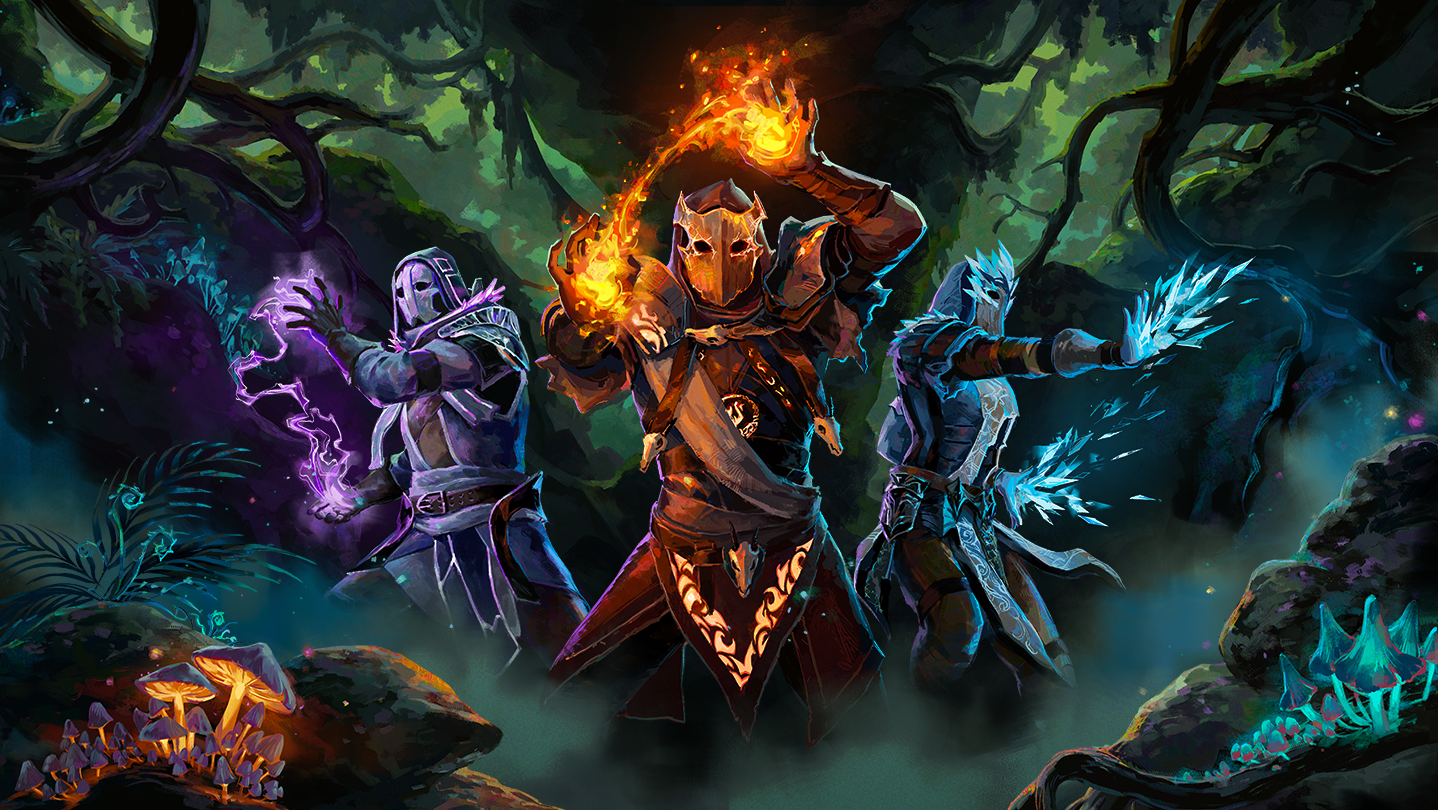
Gesture-casting fireballs and ice bows at corrupted fantasy creatures is genuinely one of the best things you can do in a VR headset right now. The repetition catches up with you, but the core magic holds.
GamerScout Verdict
Best for VR players hungry for physical spellcasting magic who can accept a repetitive structure and imperfect gesture recognition.
Compare Prices(3 stores)
Every store in this table quotes us in euros, so the EUR figure is the price the seller actually set, not our arithmetic — which is why EUR is also the currency we rank in. We only list an offer here when the store gives us its price in euros, so nothing in this table is a number we invented.
Pick USD, PLN, GBP, CAD or AUD in the header and we convert from EUR at the European Central Bank reference rate — converted amounts are prefixed with ~. Your bank or the store may apply a different rate at checkout. We never hide offers based on where you are: everyone sees this whole table.
We may earn a commission when you buy games through links on this page — at no extra cost to you. It never affects our rankings or verdicts.
Price History
Screenshots & Media
About The Wizards - Dark Times
I've tried a lot of VR combat systems that promise to make you feel powerful, and most of them deliver for about twenty minutes before the novelty runs dry. The Wizards - Dark Times is one of the rare exceptions where the core mechanic - physically gesturing to conjure spells - stays satisfying long enough to carry the whole game. Twisting your wrist summons a fireball, snapping both hands together produces an ice bow, and building up the muscle memory until you are chaining spells mid-fight produces something genuinely hard to get from a flatscreen game. That physical loop is the reason to be here, and Carbon Studio clearly knew it. The campaign is set in Meliora, a fantasy world overrun by a dark plague that has sent everything from corrupted elves to elemental acolytes into a frenzy. The story itself is thin but functional - enough to push you from one striking environment to the next. You will wade through boggy swamps, navigate cave tunnels lit only by the glow of your own fireball, and climb to mountain tops, and the Unreal Engine 4 environments look impressive in a headset. Over the course of the campaign you unlock eleven spells spanning fire, frost, and storm elements. Elemental acolyte minibosses specifically require the opposite element to defeat, which is one of the smarter bits of mechanical design in the game - it forces you to vary your toolkit rather than defaulting to the most comfortable gesture all session. There is no mana bar, no skill tree, no potions. You simply cast, adapt, and push forward. For players who find VR RPG-lite systems fussy, that stripped-back design is a genuine relief. That said, the cracks are real. Gesture recognition is imperfect, and misreading an ice bow as a fireball mid-fight is a frustration that carries over from the first game. Certain gestures share enough physical overlap that under pressure your hands will lie to you. The structure itself is linear and repetitive - dialogue, combat set piece, light puzzle, repeat - and the novelty curve means the back half of the campaign demands more patience than the first hour does. A post-launch update called Brotherhood added co-op and reworked visuals, but Steam community feedback has been pointed: the graphical changes stripped out dynamic shadows, lowered texture quality, and divided the player base. That controversy is a chunk of what keeps the Steam review score sitting at Mixed, even as critics landed at 83 on Metacritic. Audio has its own rough edges too - footstep volume conflated with spell sound effects, occasional voice crackle, and a subtitle font that will genuinely bother you if you leave it on. Who should buy it: VR players who want a showcase experience that leans into what motion controllers actually do well, and who can forgive a game that peaks early and coasts on charm for its second half. Skip it if you need a deep narrative, meaningful enemy variety, or a combat system that never miscasts you at the worst possible moment.

Catch-all
Tags
System Requirements
Minimum
- OS
- Windows 10
- Processor
- Intel i7-4790 / AMD Ryzen 5 1600 or greater (only Oculus Rift, for Vive see Recomended spec)
- Memory
- 8 GB RAM
- Graphics
- NVIDIA GTX…
Recommended
- OS
- Windows 10
- Processor
- Intel i7-7700K equivalent or greater
- Memory
- 16 GB RAM
- Graphics
- NVIDIA GTX 3060 / AMD Radeon RX 5700 or greater
- Storage
- 20 G…
Keep exploring
Community Discussion
Be the first to comment on The Wizards - Dark Times.
Reviews & Ratings
Game Info
- Developer
- Carbon Studio
- Publisher
- Carbon Studio
- Release Date
- Jun 4, 2020
