Compare The Suffering prices across trusted key stores and find the best deal. Developed by Warner Bros. Interactive Entertainment. Published by Midway Games. Released on 1/1/2004. Available on Gog, PC. Genres: Horror, Third-Person Shooter, Survival. Metacritic score: 80/100.

A 2004 horror shooter with one of the most inventive monster rosters ever put in a game, let down slightly by clunky controls that two decades haven't smoothed out.

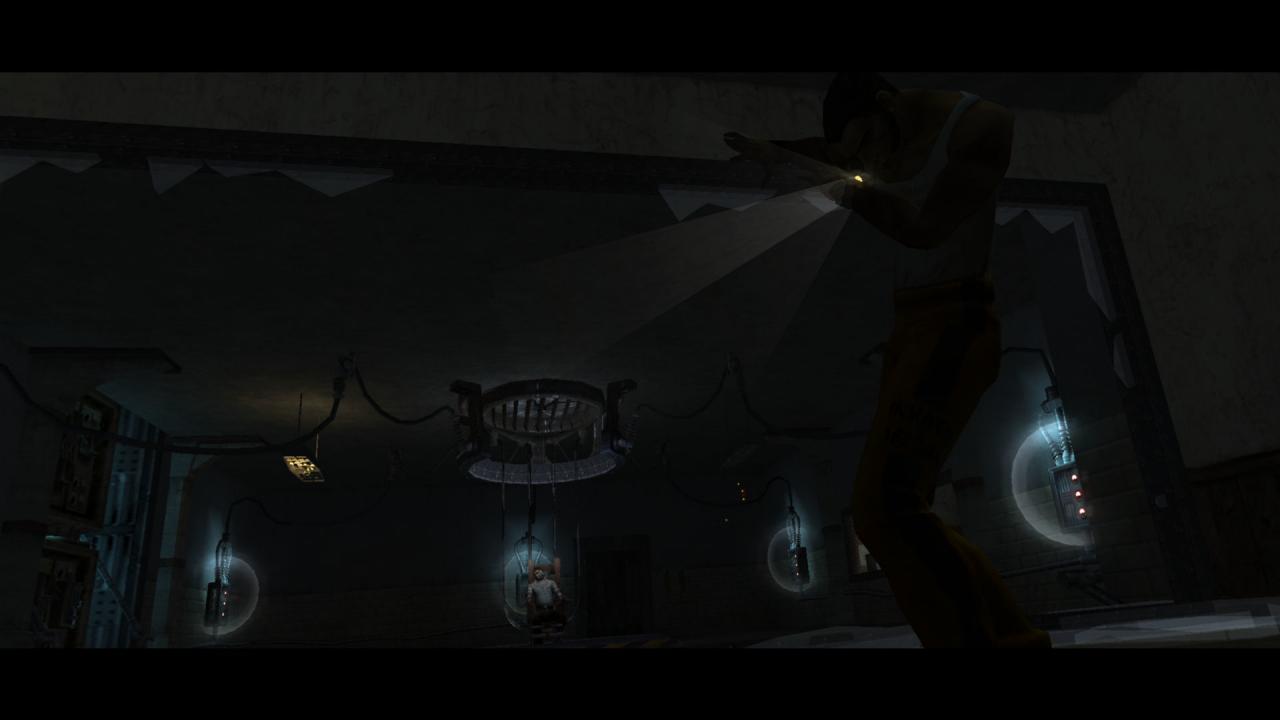
I went in expecting a mid-tier early-2000s action game and came out genuinely rattled by how much creative ambition Surreal Software packed into a prison setting. The premise is deceptively simple: you are Torque, a death-row inmate on Carnate Island who may or may not have killed his own family, and on your first night there an earthquake tears the facility open and unleashes every atrocity the island's history has ever produced. That history is the game's secret weapon. Each enemy type is a walking execution method. Slayers are decapitation made flesh, bladed limbs where arms should be. Mainliners skitter toward you with syringes jutting from their bodies like spines. Noosemen drop from the ceiling on their own rope. Festers drag chains behind bloated bodies, representing slave traders who left their cargo to drown. The creature roster was designed with Stan Winston Studios, the special effects house behind Aliens and Jurassic Park, and the craft shows in every grotesque silhouette. Gameplay sits between a third-person shooter and a first-person shooter because it is literally both. You toggle between the two perspectives at will. Third-person gives you situational awareness but adds a slight stiffness to the movement; first-person handles faster enemies better but makes navigating tight corridors awkward. Neither mode is quite as clean as contemporary shooters managed, and that friction is real twenty years on. The weapon selection is prison-plausible: shivs, revolvers, a shotgun, molotov cocktails, tommy guns. Nothing exotic, which is a deliberate design choice, but it means variety is modest. The combat surprise comes from Torque's insanity meter. Kill enough enemies and it fills; trigger the transformation and Torque becomes a hulking beast that tears through crowds, performs a shockwave attack, and grows more powerful the longer you chain kills in that form. The catch is that the form drains your health continuously, so you are always gambling on how much carnage you can squeeze out before you need to switch back. It is one of the better risk-reward loops in the genre for that era. Where the game earns its Metacritic 80 is the moral system and the atmosphere it feeds. Encounter NPCs, guards, or prisoners and you choose: help them, kill them, or walk past. Those choices are not tracked on a visible meter but register in the tone of the experience. Torque's dead wife appears in brief flash visions, her commentary shifting in warmth or accusation depending on your behavior. Three distinct endings branch from the cumulative weight of those decisions, with the good, bad, and neutral outcomes each resolving the central mystery of whether Torque actually murdered his family in completely different ways. For a third-person shooter in 2004, that is genuinely unusual design territory. The sound direction is the other standout: the score leans on ambient industrial texture rather than traditional horror stings, and voices in Torque's head narrate the chaos in a way that blurs diegetic and non-diegetic audio effectively. Play this through headphones in a dark room and the atmosphere still works. The honest weaknesses are enemy variety (the roster thins out in the back half), boss encounters that lean too heavily on solve-a-puzzle-while-being-hit, and controls that were already rough by 2004 standards and have not aged into charm. Enemy animations are stiff, which actually undercuts the fear a little when a Nooseman glides toward you looking more mechanical than menacing. The PC version now lives on GOG, which is the right format for revisiting it, and the roughly ten-to-fifteen hour runtime means a single playthrough does not overstay its welcome. Anyone who runs through it once on neutral morality should consider a second pass on opposite choices just to see the ending shift. Alex, Scout Team

The Suffering
HorrorThird-Person ShooterSurvival

The Suffering

Jan 1, 2004Warner Bros. Interactive EntertainmentMidway Games
GamerScout Says

A 2004 horror shooter with one of the most inventive monster rosters ever put in a game, let down slightly by clunky controls that two decades haven't smoothed out.

GogPC
Best Price Available
€0.00
at N/A

GamerScout Verdict

Best for horror fans who can tolerate aged controls in exchange for genuinely inventive creature design and a moral-choice system that still surprises.

Compare Prices(0 stores)

Loading prices...

We may earn a commission when you buy games through links on this page — at no extra cost to you. It never affects our rankings or verdicts.

Screenshots & Media

Screenshot

About The Suffering

I went in expecting a mid-tier early-2000s action game and came out genuinely rattled by how much creative ambition Surreal Software packed into a prison setting. The premise is deceptively simple: you are Torque, a death-row inmate on Carnate Island who may or may not have killed his own family, and on your first night there an earthquake tears the facility open and unleashes every atrocity the island's history has ever produced. That history is the game's secret weapon. Each enemy type is a walking execution method. Slayers are decapitation made flesh, bladed limbs where arms should be. Mainliners skitter toward you with syringes jutting from their bodies like spines. Noosemen drop from the ceiling on their own rope. Festers drag chains behind bloated bodies, representing slave traders who left their cargo to drown. The creature roster was designed with Stan Winston Studios, the special effects house behind Aliens and Jurassic Park, and the craft shows in every grotesque silhouette. Gameplay sits between a third-person shooter and a first-person shooter because it is literally both. You toggle between the two perspectives at will. Third-person gives you situational awareness but adds a slight stiffness to the movement; first-person handles faster enemies better but makes navigating tight corridors awkward. Neither mode is quite as clean as contemporary shooters managed, and that friction is real twenty years on. The weapon selection is prison-plausible: shivs, revolvers, a shotgun, molotov cocktails, tommy guns. Nothing exotic, which is a deliberate design choice, but it means variety is modest. The combat surprise comes from Torque's insanity meter. Kill enough enemies and it fills; trigger the transformation and Torque becomes a hulking beast that tears through crowds, performs a shockwave attack, and grows more powerful the longer you chain kills in that form. The catch is that the form drains your health continuously, so you are always gambling on how much carnage you can squeeze out before you need to switch back. It is one of the better risk-reward loops in the genre for that era. Where the game earns its Metacritic 80 is the moral system and the atmosphere it feeds. Encounter NPCs, guards, or prisoners and you choose: help them, kill them, or walk past. Those choices are not tracked on a visible meter but register in the tone of the experience. Torque's dead wife appears in brief flash visions, her commentary shifting in warmth or accusation depending on your behavior. Three distinct endings branch from the cumulative weight of those decisions, with the good, bad, and neutral outcomes each resolving the central mystery of whether Torque actually murdered his family in completely different ways. For a third-person shooter in 2004, that is genuinely unusual design territory. The sound direction is the other standout: the score leans on ambient industrial texture rather than traditional horror stings, and voices in Torque's head narrate the chaos in a way that blurs diegetic and non-diegetic audio effectively. Play this through headphones in a dark room and the atmosphere still works. The honest weaknesses are enemy variety (the roster thins out in the back half), boss encounters that lean too heavily on solve-a-puzzle-while-being-hit, and controls that were already rough by 2004 standards and have not aged into charm. Enemy animations are stiff, which actually undercuts the fear a little when a Nooseman glides toward you looking more mechanical than menacing. The PC version now lives on GOG, which is the right format for revisiting it, and the roughly ten-to-fifteen hour runtime means a single playthrough does not overstay its welcome. Anyone who runs through it once on neutral morality should consider a second pass on opposite choices just to see the ending shift.

Alex
Alex · Scout Team

Catch-all

Tags

tier:no-steam-match:aaa-pricedenriched-from-kinguinMorality SystemMultiple EndingsMonster DesignPerspective ToggleInsanity MeterPrison SettingPsychological HorrorGOG Classic

System Requirements

Minimum

Processor
1.8 GHz
Memory
512 MB RAM
Graphics
3D graphics card compatible with DirectX 7 (compatible with DirectX 9 recommended)
Storage
1GB available space

Keep exploring

Community Discussion

Be the first to comment on The Suffering.

Reviews & Ratings

Metacritic
80

Game Info

Developer
Warner Bros. Interactive Entertainment
Publisher
Midway Games
Release Date
Jan 1, 2004

Price Alert

Get notified when the price drops below your target!

Create Alert

No card? Pay another way

Top up your Steam Wallet or buy crypto with any card — instant delivery, no bank account needed.

More from Warner Bros. Interactive Entertainment

Buy smarter: helpful guides

Frequently asked questions about The Suffering

How much does The Suffering cost?

The Suffering pricing changes often and varies by store, edition and region. The live price table on this page compares the cheapest in-stock offers from trusted key stores like Eneba and Kinguin, so you always see the current lowest price before you buy.

Where can I buy The Suffering cheapest?

Compare The Suffering prices across every verified store in the price table on this page. We list the cheapest in-stock key and store offers, updated regularly, so you always see the best current deal before you buy.

What platforms is The Suffering available on?

The Suffering is available on Gog, PC.

When was The Suffering released?

The Suffering was released on 1 January 2004.

Who developed The Suffering?

The Suffering was developed by Warner Bros. Interactive Entertainment and published by Midway Games.

Is The Suffering worth buying?

The Suffering holds a Metacritic score of 80/100, making it one of the standout Horror titles. See the full reviews, ratings and how-long-to-beat times on this page to decide.