
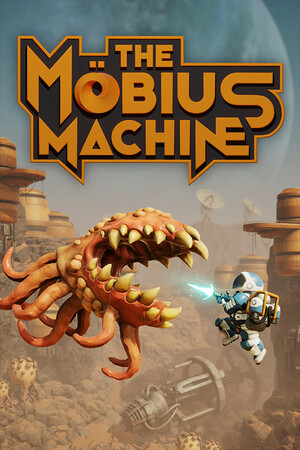
The Mobius Machine
A Metroid-flavored metroidvania with gorgeous 2.5D visuals and tight twin-stick shooting - but its sprawling map and slow upgrade drip will test your patience before they reward it.
GamerScout Verdict
Best for genre loyalists who miss Metroid's shooting emphasis and can tolerate a slow mid-game before the traversal upgrades click.
Compare Prices(5 stores)
Every store in this table quotes us in euros, so the EUR figure is the price the seller actually set, not our arithmetic — which is why EUR is also the currency we rank in. We only list an offer here when the store gives us its price in euros, so nothing in this table is a number we invented.
Pick USD, PLN, GBP, CAD or AUD in the header and we convert from EUR at the European Central Bank reference rate — converted amounts are prefixed with ~. Your bank or the store may apply a different rate at checkout. We never hide offers based on where you are: everyone sees this whole table.
We may earn a commission when you buy games through links on this page — at no extra cost to you. It never affects our rankings or verdicts.
Price History
Screenshots & Media
About The Mobius Machine
My first instinct when I saw the credits roll on The Mobius Machine was that Madruga Works - a studio better known for city-builders like Planetbase and Dawn of Man - had quietly built one of the more atmospheric sci-fi metroidvanias of 2024, and almost nobody noticed. That disparity between quality and attention feels unfair. You crash-land on Isolaria, an industrial moon that is equal parts hostile biome and industrial ruin, and the visual craft immediately does its job. The 2D movement-on-3D-geometry approach gives the world a tactile weight you rarely feel in the genre, and the seamless interconnected layout - Crash Site to Spaceship Graveyard to Mining Grounds to Floating Forests, all without a loading screen - lets the atmosphere accumulate the way a good score does. Where The Mobius Machine distinguishes itself most clearly is in its deliberate lean toward the Metroid side of the genre. Most modern metroidvanias hand you a sword; this one hands you a blaster and asks you to aim in any direction while staying mobile. The twin-stick combat schema works on gamepad and mouse-keyboard alike, and the blueprint-and-Scraps crafting loop adds real incentive to comb corners: find a Scatter Module blueprint, haul it to a workbench, and the short-range burst changes how you approach tight corridors. You can carry two weapons at once, swapping on the fly, and later pickups - the climbing axe for wall traversal, a jetpack for high-altitude sections, underwater dive gear - each meaningfully expand the geometry available to you. The low-gravity feel of Isolaria even replaces the genre-standard double-jump with floatier, higher single leaps, which is a small but considered design choice. The frustrations are real, though, and worth naming. The map demands you find download terminals before it reveals a zone, which sounds atmospheric but in practice leaves you genuinely lost across a world that critics and players alike have called oversized for what it contains. Biome variety leans on color filters more than structural differences - the environmental palette shifts but the layout logic stays similar sector to sector. Upgrade pacing is the other friction point: the early-game stretches ask you to fight and backtrack with a moveset that changes slowly, and a subset of players found that pacing gap long enough to disengage before the jetpack and dash sequences finally open the world up. There is a Souls-style Scraps recovery system on death in Standard mode, and a harsher Retro mode that strips that safety net entirely - the latter is genuinely punishing and probably not where first-timers should start. Post-launch, Madruga Works has been actively responsive. The developer acknowledged community criticism around map readability and progression, and patches have addressed several of the rougher edges. Steam users sitting at 83% positive across several hundred reviews suggest the audience that stuck with it largely found their patience justified. A playthrough runs roughly 12 to 13 hours for a normal run, with completionists pushing further. The soundtrack earns its own mention: ambient, vaguely spherical in the way it fills the world's quieter corridors, and one of the reasons the atmosphere holds even when the map frustrates you. If you played Ghost Song, Axiom Verge, or have been quietly missing a game that prioritizes laser fire over lore-heavy sword swinging, The Mobius Machine is the kind of handcrafted thing worth sitting with. It is not the most polished entry in the genre, and it asks more tolerance of its pacing than the best examples do. But the world is genuinely beautiful, the shooting feels right, and Madruga Works clearly cared about the craft. Sometimes that carries you through.

Indie & narrative
Tags
System Requirements
Minimum
- OS
- Windows 10 or above (64 bit)
- Memory
- 8 GB RAM
- DirectX
- Version 11
- Storage
- 3 GB available space
- Graphics
- DirectX 11 compatible with support for Shader Model 5.0 and 1GB VRAM
Recommended
- OS
- Windows 10 or above (64 bit)
- Memory
- 8 GB RAM
- DirectX
- Version 11
- Storage
- 3 GB available space
- Graphics
- AMD or NVIDIA card
- Processor
- Core i5
Keep exploring
Community Discussion
Be the first to comment on The Mobius Machine.
Reviews & Ratings
No ratings available
Game Info
- Developer
- Madruga Works
- Publisher
- Madruga Works
- Release Date
- Mar 1, 2024