
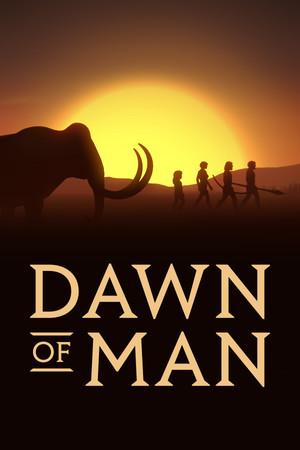
Dawn of Man
Forget everything after agriculture, the real hook is those first few hungry winters, scraping flint and praying your hunters find a mammoth before spring runs dry.
GamerScout Verdict
Strong buy for colony-sim newcomers drawn to prehistory; veterans will enjoy the early game and tolerate the rest.
Compare Prices(0 stores)
Loading prices...
We may earn a commission when you buy games through links on this page — at no extra cost to you. It never affects our rankings or verdicts.
Price History
Screenshots & Media
About Dawn of Man
I have a soft spot for management games that make the early game feel genuinely precarious, and Dawn of Man earns that feeling through sheer scarcity. You start with a handful of settlers, two tents, and a campfire, and the gap between "stable food supply" and "everyone starving" is razor-thin for the first several hours. Designating work zones for flint and sticks, rationing hunting parties, stockpiling smoked meat before the first snowfall, these decisions carry real weight when your Knowledge Point progression depends on villagers staying alive long enough to build a second storage tent. That loop, humble as it sounds, lands harder than most city-builders twice the price. The progression structure is worth understanding before you buy. Knowledge Points are earned by hitting milestones, constructing buildings, producing goods, growing your population, and accumulating enough of them advances you from the Paleolithic through the Mesolithic and into the Neolithic, where farming and animal domestication finally open up. Eventually you reach the Bronze and Iron Ages, unlocking copper and iron smelting, steel weapons, and fortified defenses against raider attacks. On paper that arc spans more than 10,000 years of human prehistory, and it feels appropriately vast in the early hours. The problem is that later eras lose tension fast. Once you have crop fields producing reliable surpluses and a perimeter wall with gatehouses, the challenge curve flatlines. Raiders scale up, but their AI is inconsistent enough that a few well-placed defenders with iron spears usually holds the line without much strategy involved. The endgame is a maintenance exercise more than a test of decision-making, which is a genuine disappointment after such a strong opening act. The villager AI is the game's most persistent flaw and the thing most likely to frustrate management veterans. Workers will occasionally stand idle near full storage tents, hunters will break off a group chase to address individual needs mid-hunt, and your villagers can die of hunger while food sits a few steps away. You cannot directly order a specific colonist to perform a specific task, you set zone priorities and ratios and hope the autonomy system fills in the gaps. For players accustomed to the granular control of something like Banished or Workers and Resources, this abstraction will grate. For newcomers to the colony-sim genre, it is actually a reasonable entry point: the zone-based work assignment system is clean, the tech tree tooltip explanations are serviceable, and the tutorial walks you through the first critical steps without being condescending. Seasonal planning, stockpiling food before winter, harvesting crops only during spring and summer, teaches good sim instincts organically. The Steam Workshop is the honest answer to the game's replayability ceiling. The three built-in scenarios, including the tougher Northlands variant with brutal winters and limited resources, cover maybe 15-30 hours before the formula repeats. Workshop scenarios from the community extend that substantially, and some introduce difficulty modifiers and goal structures the base game never attempts. The mod tooling is not as polished as the Workshop GUI suggests, creating custom scenarios still requires some manual file work, but the output from the community is solid enough to justify checking it before writing the game off. Organic map layouts, where terrain actually blocks and complicates settlement planning rather than offering a flat grid, also add meaningful variability across runs even without mods. Bottom line for the target audience: if you have never played a colony survival sim and want a gentle, atmospheric entry point that respects prehistory as a setting, Dawn of Man delivers that with good-looking visuals and a pacing that rewards patience. If you are a genre veteran hunting for deep late-game decision trees, iron-tight AI, and systemic complexity, the mid-game will leave you wanting. It is a solid first few winters. Just do not expect the Iron Age to feel as hard-won as that first mammoth hunt.

Strategy & simulation
Tags
System Requirements
Minimum
- OS
- Windows 7/8/10 (64 bit)
- Memory
- 4 GB RAM
- DirectX
- Version 11
- Storage
- 2 GB available space
- Graphics
- 1 GB VRAM (Shader Model 3)
- Processor
- 2 GHz Dual Core
Recommended
- OS
- Windows 7/8/10 (64 bit)
- Memory
- 8 GB RAM
- DirectX
- Version 11
- Storage
- 2 GB available space
- Graphics
- 2 GB AMD or NVIDIA Card
- Processor
- Intel Core i5 or equivalent
Keep exploring
Community Discussion
Be the first to comment on Dawn of Man.
Reviews & Ratings
Game Info
- Developer
- Madruga Works
- Publisher
- Madruga Works
- Release Date
- Mar 1, 2019