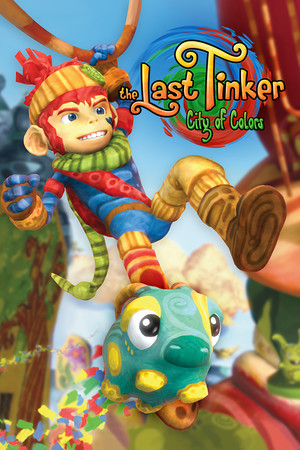
The Last Tinker™: City of Colors
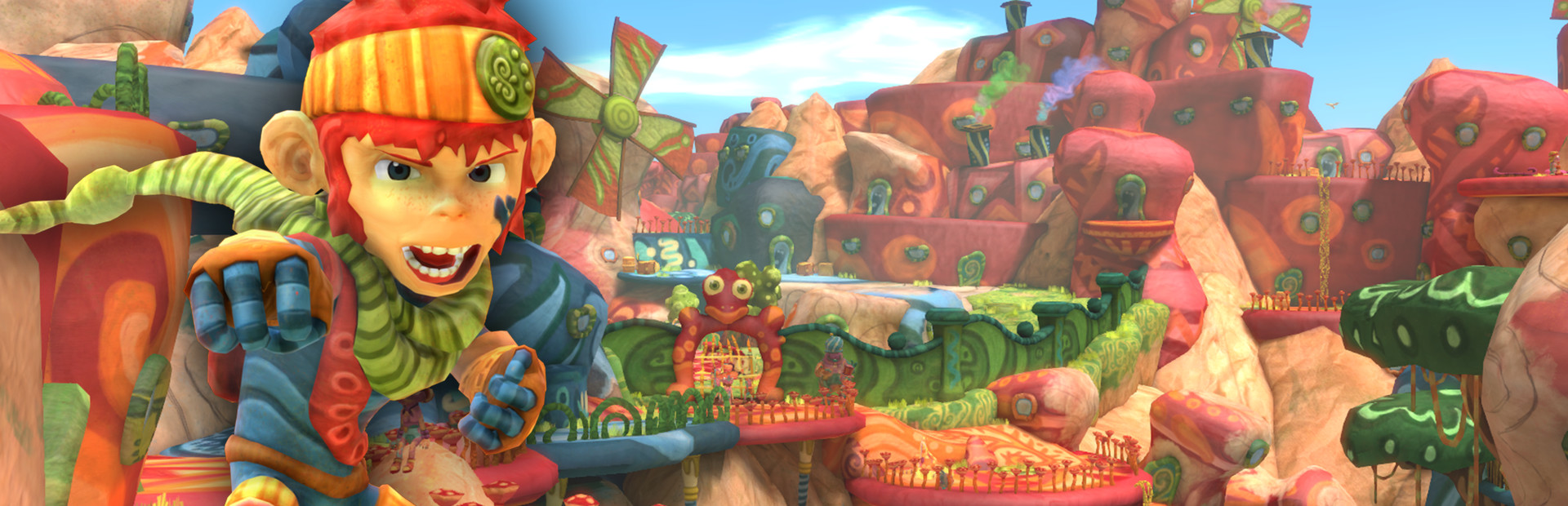
Mimimi's papercraft world is one of the most visually sincere things to come out of indie 3D action-adventure in years. The catch: the mechanics underneath it rarely match the ambition of the art.
GamerScout Verdict
Best for players who value atmosphere and theme over mechanical depth, and who don't mind a short, low-challenge adventure.
Compare Prices(7 stores)
Every store in this table quotes us in euros, so the EUR figure is the price the seller actually set, not our arithmetic — which is why EUR is also the currency we rank in. We only list an offer here when the store gives us its price in euros, so nothing in this table is a number we invented.
Pick USD, PLN, GBP, CAD or AUD in the header and we convert from EUR at the European Central Bank reference rate — converted amounts are prefixed with ~. Your bank or the store may apply a different rate at checkout. We never hide offers based on where you are: everyone sees this whole table.
We may earn a commission when you buy games through links on this page — at no extra cost to you. It never affects our rankings or verdicts.
Price History
Screenshots & Media
About The Last Tinker™: City of Colors
I came to this one expecting a forgettable budget platformer and left with a genuine appreciation for what Mimimi built here, even while cataloguing everything that holds it back. Colortown is a papercraft city split into three color-coded districts: red lizards burning with anger, green rabbits paralyzed by fear, blue bears sunk in sorrow. The premise sounds thin until you realize it is functioning as a low-key allegory for prejudice and division, told through chirping gibberish voices, exaggerated architecture, and a surprisingly affecting arc about a kid from the slums who refuses to pick a side. The world has real craft behind it. The core loop involves Koru working through each district, befriending a Color Spirit, and absorbing their emotional power into his combat toolkit. The Red Spirit charges you with rage-fueled attacks that bait enemies into aggressive states; the Green Spirit terrifies foes into fleeing and eventually hands you a time-freeze ability for platforming puzzles; the Blue Spirit stuns enemies with grief and lets you project a shield that walks you through the toxic Bleakness sludge. It is a tidy progression structure. The problem is that the combat underneath it never builds into something demanding. Punching, dodging, countering, and occasionally dashing between targets covers almost every encounter from start to finish, and the difficulty curve flattens well before the credits. The traversal design is where opinion splits loudest. There is no jump button. Platforming is automated via a held trigger, and the game guides Koru over gaps, up ledges, and across rail-grinding sequences with minimal input. Momentum-based sections feel fluid when the geometry cooperates. Precision sections, where timing matters and the camera swings to an awkward angle, feel more like interference than design. The rail sections in particular draw comparisons to Ratchet and Clank but lack the tightness that makes those sequences satisfying. On PC with keyboard and mouse, the control mapping is genuinely awkward. A controller is strongly recommended, and the game itself seems to know this. The soundtrack is the quiet star. Each district has its own groove, tying the emotional color theming into the music in a way that feels considered rather than decorative. The voice acting is a non-verbal collection of sounds and chirps that either charms you immediately or begins to grate by hour three. There is a setting to separate music from sound effects, which is a thoughtful inclusion. The colorblind mode is also present, though accounts suggest it has variable effectiveness. Runtime lands around six hours, and the game does not overstay that. Worth noting for Mac users: the game is documented as incompatible with macOS 10.15 Catalina and above, so check your OS before purchasing. Who is this actually for? Adults hunting a tight action game will find it shallow. Hardcore platformer fans expecting Banjo-Kazooie depth will find the automation frustrating. But players who want to spend an afternoon inside something visually warm, thematically gentle, and genuinely well-intentioned will find Colortown a pleasant place to visit. It is the kind of game I quietly root for: small team, big heart, uneven execution, real vision. Mimimi went on to make much more mechanically refined work after this, and you can see the craft instinct already present here, even where the design lets it down.

Indie & narrative
Tags
System Requirements
Minimum
- OS
- Windows Vista / 7
- Memory
- 2 GB RAM
- DirectX
- Version 9.0c
- Storage
- 2 GB available space
- Graphics
- SM 3.0 with 512MB VRAM; NVIDIA GeForce 8500 GT / AMD Radeon HD 4650 or greater
- Processor
- Intel Dual-Core 2.6 GHz / AMD Dual-Core Athlon 3.0 GHz
- Sound Card
- DirectX Compatible
Recommended
- OS
- Windows 7 or higher
- Memory
- 4 GB RAM
- DirectX
- Version 9.0c
- Storage
- 2 GB available space
- Graphics
- SM 3.0 with 1GB VRAM; NVIDIA GeForce GTX 280 / AMD Radeon HD 4830 or greater
- Processor
- Quad-Core Processor
- Sound Card
- DirectX Compatible
Keep exploring
Community Discussion
Be the first to comment on The Last Tinker™: City of Colors.
Reviews & Ratings
Game Info
- Developer
- Mimimi Games
- Publisher
- Daedalic Entertainment
- Release Date
- May 12, 2014