
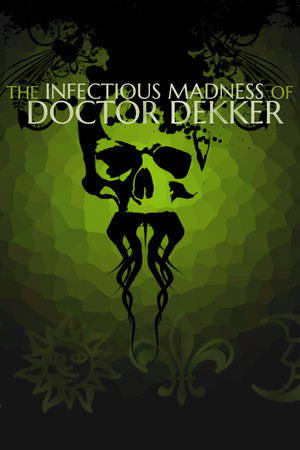
The Infectious Madness of Doctor Dekker
A Lovecraftian whodunnit where your typing skills are your only interrogation tool and every wrong word you feed a fragile patient could send them spiraling. Metacritic sits at 78 - earned, not gifted.
GamerScout Verdict
Best for Her Story fans who want a longer, weirder cast and can tolerate a parser that occasionally misfires on precise questions.
Compare Prices(5 stores)
Every store in this table quotes us in euros, so the EUR figure is the price the seller actually set, not our arithmetic — which is why EUR is also the currency we rank in. We only list an offer here when the store gives us its price in euros, so nothing in this table is a number we invented.
Pick USD, PLN, GBP, CAD or AUD in the header and we convert from EUR at the European Central Bank reference rate — converted amounts are prefixed with ~. Your bank or the store may apply a different rate at checkout. We never hide offers based on where you are: everyone sees this whole table.
We may earn a commission when you buy games through links on this page — at no extra cost to you. It never affects our rankings or verdicts.
Price History
Screenshots & Media
About The Infectious Madness of Doctor Dekker
I spend most of my time thinking about decision trees and branching state machines, so when a game hands me a free-form text parser as its sole interface and dares me to figure out the right keywords, I pay attention. Doctor Dekker is an FMV murder mystery built around a genuinely unusual premise: you have inherited the patient list of a psychiatrist who was murdered on Valentine's Day, and you must conduct therapy sessions across five acts while quietly working out which of those deeply troubled people killed him. The tension between being a good therapist and being an effective detective is the game's best design decision, and it holds up. The core loop works like this: each patient sits across from you in a fixed first-person therapy room, and you either type free-form questions into a text parser or lean on pre-loaded prompts. The game reads your keywords and fires the matching video clip. A traffic-light progress system tracks each patient per session - red means you have barely scratched the surface, yellow means you have covered the required ground, green means you have exhausted every available response. Chasing green is where the friction lives. The parser is competent but not brilliant; it handles keywords and short phrases reliably, but specific multi-part questions will occasionally misfire, pulling the wrong clip because it latched onto the wrong word. A hint system exists but carries a cooldown timer, so impatient players will find themselves stuck and annoyed at inopportune moments. Players who approach the parser the way they would a classic text adventure - short keywords, mirroring the character's own vocabulary back at them - report far fewer problems than those expecting natural language comprehension. The wildest mechanical choice is that the killer is randomised at the start of each playthrough. It guarantees replayability on paper, and the developers clearly built enough branching content to support it, with over 1,600 video responses and a runtime that reviewers put at around eight hours for a thorough first run. In practice, though, this also means the mystery cannot be constructed with the tight logical architecture of a classic whodunnit. Clues that feel significant in one run become irrelevant red herrings the next, and a vocal subset of players who kept careful notes felt the final accusation scene did not reward their investigative labour. That complaint is fair. If you go in expecting the satisfaction of a properly deduced solution, the randomised killer will frustrate you. If you go in expecting a creeping psychological character study with a Lovecraftian undertow and a final accusation that functions more as a narrative punctuation mark than a logical conclusion, the experience lands much better. The cast carries a lot of weight and mostly delivers. The acting has a deliberately campy, slightly stilted register that reads as amateurish for the first twenty minutes and then becomes the entire atmosphere of the thing. Patients include a man convinced he is reliving the same day on a loop, a woman who blacks out and wakes on a beach with no memory of how she got there, and Jaya, the receptionist, who radiates a specific kind of unpredictable menace throughout. The Lovecraftian layer - insanity points accumulate as you indulge patient delusions, unlocking alternate content - adds a second decision axis that strategy-minded players will find worth optimising. The single therapy room setting and repetitive ambient audio do create fatigue over long sessions, and that is a genuine limitation, not a nitpick. On PC, which is where this game belongs, the free-text input is the intended experience. Console versions replaced or supplemented typing with pre-written prompts and introduce their own friction. The PC version at 78 on Metacritic is the version worth considering. It rewards patience, curiosity, and a willingness to approach interrogation the way you would a resource-constrained puzzle rather than a conversation simulator. If Her Story was in your top ten and you have been waiting for something with more characters and more runtime, this is a logical next stop.

Strategy & simulation
Tags
System Requirements
Minimum
- OS
- Windows 7,8,10
- Memory
- 2 GB RAM
- Network
- Broadband Internet connection
- Storage
- 20 GB available space
- Graphics
- Intel HD3000 or comparable
- Processor
- Pentium 4 SSE2 onwards (dual core)
Keep exploring
Community Discussion
Be the first to comment on The Infectious Madness of Doctor Dekker.
Reviews & Ratings
Game Info
- Developer
- D'Avekki Studios Ltd
- Publisher
- D'Avekki Studios Ltd
- Release Date
- May 19, 2017