
The House of Da Vinci 3
If the slow burn of Renaissance mystery and the satisfying click of a well-engineered mechanism are your thing, this handcrafted trilogy closer delivers that feeling in spades - with one honest caveat about pacing.
GamerScout Verdict
Best for fans of The Room-style puzzle adventures who want narrative weight and handcrafted environments over raw puzzle difficulty.
Compare Prices(8 stores)
Every store in this table quotes us in euros, so the EUR figure is the price the seller actually set, not our arithmetic — which is why EUR is also the currency we rank in. We only list an offer here when the store gives us its price in euros, so nothing in this table is a number we invented.
Pick USD, PLN, GBP, CAD or AUD in the header and we convert from EUR at the European Central Bank reference rate — converted amounts are prefixed with ~. Your bank or the store may apply a different rate at checkout. We never hide offers based on where you are: everyone sees this whole table.
We may earn a commission when you buy games through links on this page — at no extra cost to you. It never affects our rankings or verdicts.
Price History
Screenshots & Media
About The House of Da Vinci 3
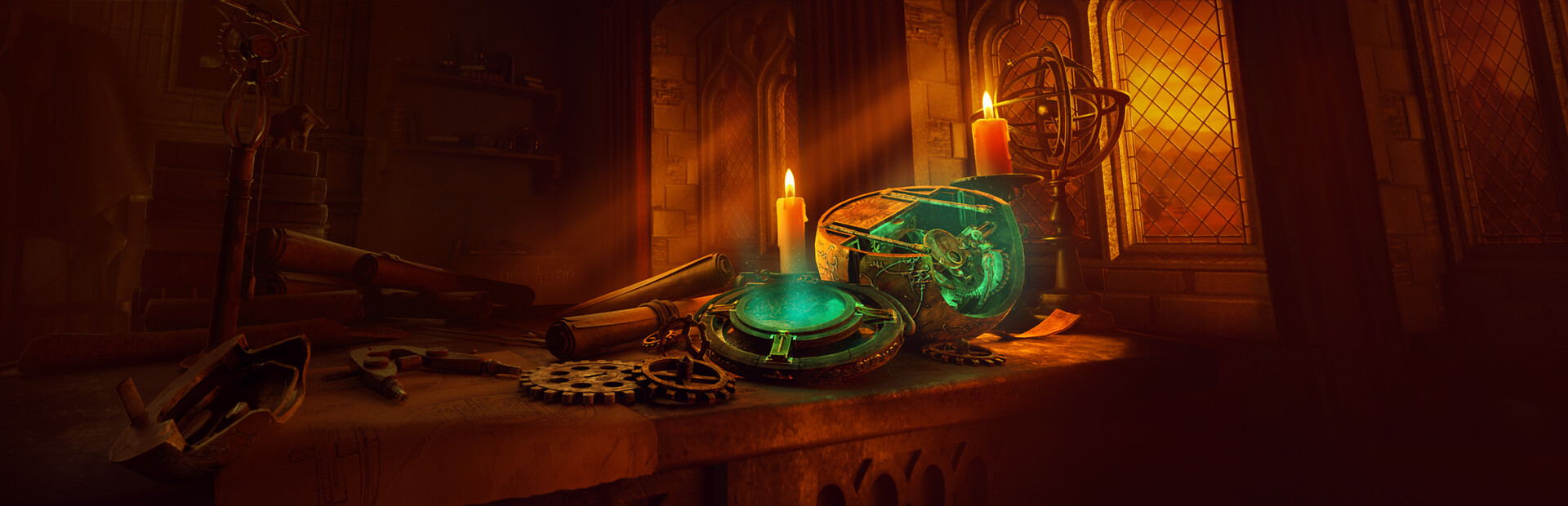
My first hour with The House of Da Vinci 3 felt like stepping into a candlelit workshop where every object on the bench is both a clue and a small act of craft. Blue Brain Games is a small Slovak indie team, and their fingerprints are all over this thing - the careful environmental staging, the 3D Renaissance interiors that genuinely reward looking closely, the sense that somebody built these spaces before they built the puzzles around them. If you have played the first two entries, you already know the rhythm. If you have not, the short version is: think The Room, but with more narrative ambition and a conspiracy that pulls da Vinci's real-world genius into something stranger and more personal. You play as Giacomo, apprentice and confidant to Leonardo, picked up mid-chase from where the second game left off. The central mechanical hook is the Oculus Perpetua - a hand-held device that lets you rewind a location to its past state, revealing what a mechanism looked like before it broke, or unlocking a path that no longer exists in the present. It is the strongest idea in the trilogy and the puzzles built around it are the highlight of the whole experience. The broader puzzle vocabulary is varied: you will pull levers that need to be fabricated from spare parts, operate elaborate 3D contraptions, work through 2D sliding sequences as palette cleansers, and decipher hidden codes. A three-tier hint system is always available at no penalty, which is a gracious design choice for players who want the atmosphere without the wall-staring. Where the game stumbles is a division that splits its own fanbase. Hardcore puzzle players - the ones who loved the first entry for its clean, silent logic - find this third chapter too heavy on dialogue and too loose on interactable density. Some stretches feel closer to a hidden-object crawl than a mechanical puzzler: you are hunting a missing cog for a machine, a lever for a door, a crank for a contraption, and the distance between those items and the puzzle they unlock can feel arbitrary. The cutscenes are fully voiced with decent acting and motion-captured animation, but they run long, and a subset of players will feel the story-to-puzzle ratio has tipped the wrong way. That complaint is real and worth knowing before you buy. For everyone else - the crowd that plays The Room games twice, who wants a few evenings of Renaissance atmosphere and handcrafted environments, who does not mind a story that leans into conspiracy and time-travel theatrics - this lands solidly. The audio design is quiet and deliberate, using ambient soundscapes to make each location feel lived-in rather than gamified. The achievement list includes timed completion challenges at under five, eight, and eleven hours, so speedrunners and completionists both have something to chase. Steam player reception sits at a very positive rating across over a thousand reviews, which suggests the fanbase found what it came for. The ending has drawn some criticism for feeling rushed and undercooked compared to the buildup, and that observation is fair - the final scene does not quite match the care of everything before it. Still, what precedes it is consistently handsome, occasionally genuinely clever, and always respectful of the player's time in the way that only a team that clearly loves this genre can manage.

Indie & narrative
Tags
System Requirements
Minimum
- OS
- Windows 7 or higher
- Memory
- 4 GB RAM
- DirectX
- Version 9.0c
- Storage
- 7 GB available space
- Graphics
- Video card with 1024MB of VRAM
- Processor
- 2.0 GHz Dual Core Processor
Recommended
- OS
- Windows 10
- Memory
- 8 GB RAM
- DirectX
- Version 10
- Storage
- 7 GB available space
- Graphics
- Nvidia GeForce GTX 970
- Processor
- Intel Core i5
Keep exploring
Community Discussion
Be the first to comment on The House of Da Vinci 3.
Reviews & Ratings
No ratings available
Game Info
- Developer
- Blue Brain Games
- Publisher
- Blue Brain Games
- Release Date
- Dec 22, 2022