The Dead Tree of Ranchiuna
Solo-dev walking sim from Tonguç Bodur that pulls you through an abandoned Romanian village and asks whether society leaves room for people to come home. Worth your two hours, but only if atmosphere is the destination, not the vehicle.
GamerScout Verdict
For patient mood-seekers who can forgive rough edges; skip if you need a tight narrative to justify the walk.
Compare Prices(5 stores)
Every store in this table quotes us in euros, so the EUR figure is the price the seller actually set, not our arithmetic — which is why EUR is also the currency we rank in. We only list an offer here when the store gives us its price in euros, so nothing in this table is a number we invented.
Pick USD, PLN, GBP, CAD or AUD in the header and we convert from EUR at the European Central Bank reference rate — converted amounts are prefixed with ~. Your bank or the store may apply a different rate at checkout. We never hide offers based on where you are: everyone sees this whole table.
We may earn a commission when you buy games through links on this page — at no extra cost to you. It never affects our rankings or verdicts.
Price History
Screenshots & Media
About The Dead Tree of Ranchiuna
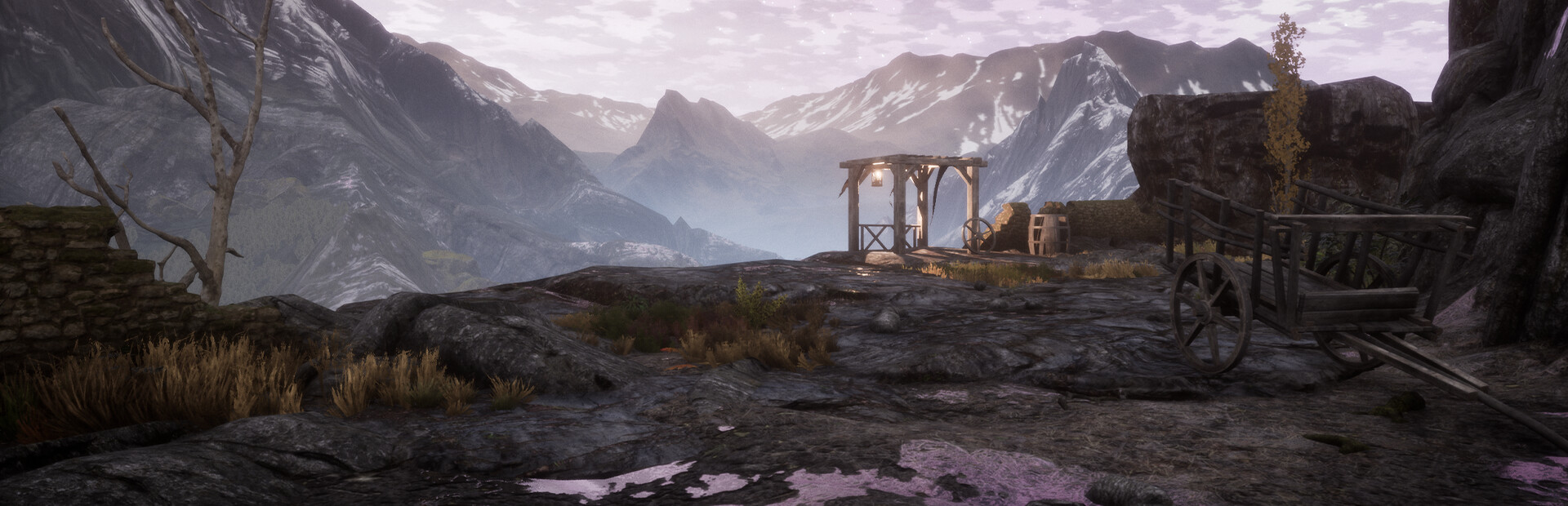
I went into The Dead Tree of Ranchiuna expecting the kind of quietly devastating atmosphere that a title like this promises, and what I found was something genuinely divided against itself: one half a melancholic mood-piece worth sitting with, the other half an execution that keeps tripping over its own ambitions. That tension is exactly what makes it interesting to write about, and exactly what makes it hard to recommend without caveats. The setup belongs to a tradition of introspective walking sims. You step into the boots of a university graduate returning to the rural village where he grew up, only to find it completely deserted. What unfolds is not a straight narrative but a layered series of visions, each one a fragment of another man's story pulled from different moments in time. The word "ranchiuna" is itself Romanian for grudge or resentment, and that etymology does real work here. This is a story about love, betrayal, jealousy, and the particular cruelty of small communities, filtered through surreal, occasionally disorienting imagery. Phantom conversations drift through abandoned doorways. A colossal statue looms on a hillside. Weather shifts mid-walk, repainting the world in different moods. You can toggle between first-person and third-person camera on the fly, though most players find the first-person view far more immersive. Light object-interaction puzzles mark the path forward, and a post-completion fast-travel mode lets you revisit any area to surface hidden dialogue you might have missed the first time through. The things that work, work quietly. The soundtrack, composed by Molo Dimolo, is the clearest success story here. It surfaces exactly when you stop expecting it, rounding a corner in silence and then meeting a string arrangement that earns the emotional weight the dialogue sometimes fumbles. The outdoor environments, rocky canyon walls, autumn lakeshores, fog-draped hillsides, carry a rugged photorealism that punches above the solo-developer budget. Bodur is clearly someone who finds beauty in geography, and that sensibility comes through in the world design even when the narrative thread goes slack. The problems are real, though, and a fair review has to say so plainly. Voice acting divides players sharply, with some finding it flat enough to undercut the story's more affecting moments. Sound effects loop clumsily in places, ambient audio cutting out at zone transitions in ways that break the spell. The narrative itself rushes toward its conclusion, leaving some of its most interesting threads unresolved rather than deliberately open. For a game whose entire value proposition rests on storytelling and atmosphere, those gaps sting. Critics have ranged from mildly charmed to openly hostile, and the honest truth is that Bodur's style is an acquired taste. Fans of his earlier titles like Lucid Cycle and Drizzlepath will know whether they are in the target audience. Anyone approaching this as a first Bodur game should treat it as a mood experiment, not a narrative payoff. If you read the developer's own note, written right on the game page, it says the core aspect is atmosphere and recommends it for those who mostly seek to experience the mood. I respect that honesty. This is a two-hour walk through a place that feels genuinely lonely, scored by music that occasionally transcends its budget, carrying a social critique about class, displacement, and the weight of going back. When it lands, it lands softly but sincerely. When it doesn't, the silence between story beats feels less like intentional space and more like an absence. Go in with adjusted expectations and you may find something worth the short runtime.

Indie & narrative
Tags
System Requirements
Minimum
- OS
- Windows 7 or higher 64-bit
- Memory
- 8 GB RAM
- DirectX
- Version 10
- Storage
- 14 GB available space
- Graphics
- NVIDIA GT 750 Ti 2 GB or AMD RADEON HD 7850 2 GB
- Processor
- Intel Core 2 Duo 2GHz, AMD Athlon 64 X2 2GHz
- Sound Card
- DirectX compatible Sound Card with latest drivers
Recommended
- OS
- Windows 7 or higher 64-bit
- Memory
- 8 GB RAM
- DirectX
- Version 11
- Storage
- 14 GB available space
- Graphics
- NVIDIA GTX 970 or AMD RADEON R9 390X
- Processor
- Quad-core Intel or AMD processor, 2.5 GHz or faster
- Sound Card
- DirectX compatible Sound Card with latest drivers
Keep exploring
Community Discussion
Be the first to comment on The Dead Tree of Ranchiuna.
Reviews & Ratings
No ratings available
Game Info
- Developer
- Tonguç Bodur
- Publisher
- Tonguç Bodur
- Release Date
- Feb 14, 2019