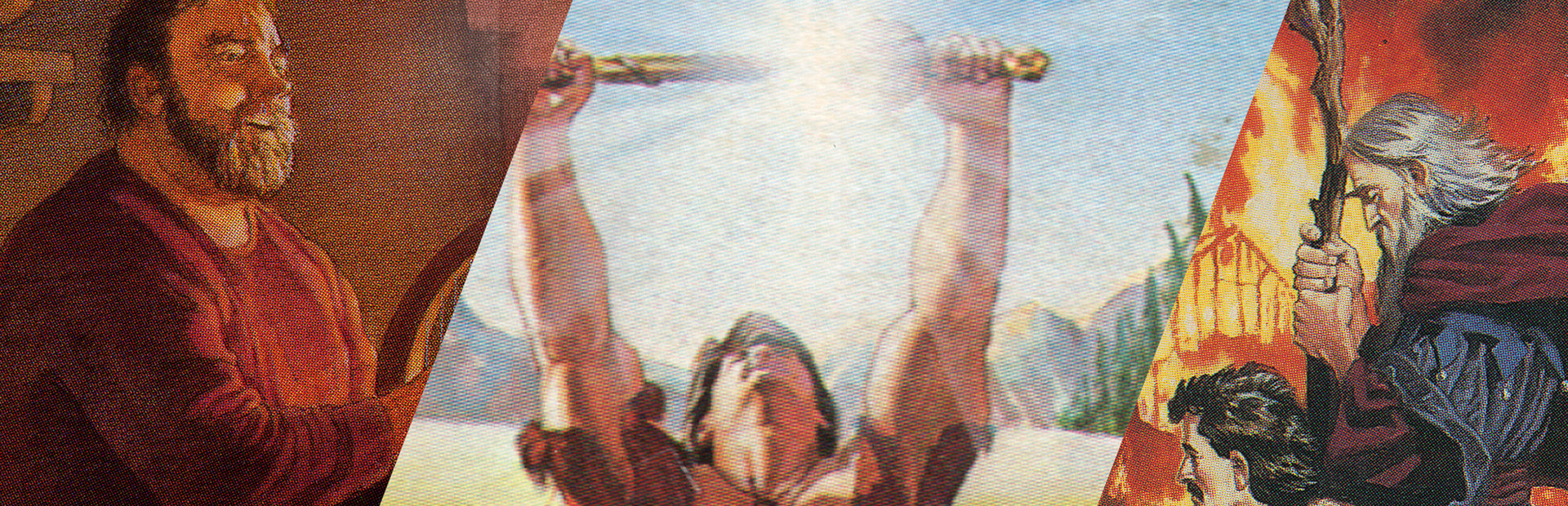
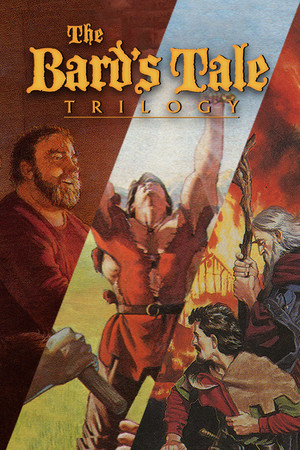
The Bard's Tale Trilogy
Three floors of 1980s dungeon-crawling, remade without the graph paper but not without the teeth. A love letter to old-school CRPGs that new players should approach with clear eyes.
GamerScout Verdict
Ideal for old-school CRPG fans willing to accept thin narrative in exchange for genuine dungeon-crawl tension across three interconnected games.
Compare Prices(5 stores)
Every store in this table quotes us in euros, so the EUR figure is the price the seller actually set, not our arithmetic — which is why EUR is also the currency we rank in. We only list an offer here when the store gives us its price in euros, so nothing in this table is a number we invented.
Pick USD, PLN, GBP, CAD or AUD in the header and we convert from EUR at the European Central Bank reference rate — converted amounts are prefixed with ~. Your bank or the store may apply a different rate at checkout. We never hide offers based on where you are: everyone sees this whole table.
We may earn a commission when you buy games through links on this page — at no extra cost to you. It never affects our rankings or verdicts.
Price History
Screenshots & Media
About The Bard's Tale Trilogy
I'll be honest with you: if your idea of RPG depth is branching dialogue trees and morally complex companions, The Bard's Tale Trilogy will feel like reading an instruction manual someone left in a dungeon. That is not an insult. It is the exact contract this remaster offers, and whether you sign it depends entirely on whether you find satisfaction in tight resource management, first-person grid navigation, and the quiet triumph of not dying on level two of Skara Brae. The package covers all three classic entries: Tales of the Unknown, The Destiny Knight, and Thief of Fate. You build a party of up to seven characters drawn from classes like Warrior, Rogue, Paladin, Monk, Sorcerer, and Mage, then carry that same party across all three games. The Bard class is the mechanical centerpiece, using songs to buff the party and debuff enemies in combat, with a hard cap on how many songs can be sung before a tavern visit is required to restore the voice. It is a wonderfully specific resource loop that feels nothing like anything in a modern RPG. Combat itself is turn-based and text-narrated, and there is no getting around the fact that it is repetitive by design. The entire pressure system lives in HP and SP attrition: how deep do you push into a dungeon before turning back? That tension is real and works, even if each individual fight has about as much tactical variety as a coin flip. Krome Studios did a thoughtful job calibrating the accessibility dial. The default mode adds automapping across all three games, a save-anywhere system, spell shortcut access, and cleaned-up inventory management. These are not minor conveniences; they are what separate a playable experience from a DOS archaeology project. Legacy Mode strips most of that back for the grognards who want the original punishment. The first volume is the weakest of the three, largely because Skara Brae itself is a samey-looking city of corridors. The second and third entries open up significantly in scope, and Thief of Fate sends the party across time and space to confront an actual Mad God, which is the kind of unhinged ambition I respect. Where it earns criticism: the writing is thin by any post-Planescape standard. There are no companions with arcs, no choices that redirect the plot, no dialogue worth re-reading. Story is delivered mostly through the manual and environmental context, which was standard for 1985 and is jarring in 2024. The XP grind in the default mode has been softened from the originals, but players who push past the content curve will still find themselves looping combat to stay viable. If you hate filler encounters, budget your tolerance accordingly before entering each dungeon tier. The community has noted that some players use macro tools to automate rote fights, which tells you something about the ceiling on combat engagement. This is not a game that rewards the part of my brain that wants to argue about whether the Wizard chose correctly or whether the Rogue deserved a redemption arc. It rewards the part that likes filling in a map square by square, nursing a low-level party through attrition, and learning that gold management is actually the whole game for the first several hours. For RPG historians and Wizardry-adjacent fans who have never touched the originals, it is the cleanest possible on-ramp. For everyone else, the honest question is whether mechanical archaeology is what you want right now.

RPGs
Tags
System Requirements
Minimum
- OS
- 64bit OS, Windows 7 SP1, Windows 8 / 8.1, Windows 10
- Memory
- 4 GB RAM
- DirectX
- Version 11
- Storage
- 1 GB available space
- Graphics
- Graphics card with DX10 (shader model 4.0) capabilities
- Processor
- Intel Core2 Quad Q9300 / AMD Athlon 64 X2 4200+ / Intel Core i5-2500K or higher if using integrated Intel GPU
Recommended
- OS
- 64bit OS, Windows 7 SP1, Windows 8 / 8.1, Windows 10
- Memory
- 8 GB RAM
- DirectX
- Version 11
- Storage
- 1 GB available space
- Graphics
- Nvidia 750 or AMD equivalent, or better
- Processor
- Intel Core i5-760 / AMD FX-6100set support
Keep exploring
Community Discussion
Be the first to comment on The Bard's Tale Trilogy.
Reviews & Ratings
Game Info
- Developer
- Krome Studios
- Publisher
- inXile Entertainment
- Release Date
- Aug 14, 2018