Tharsis
Survive 10 weeks in a crippled Mars-bound spacecraft by rolling dice and occasionally eating your crew. Brutally hard, deeply divisive, and genuinely gripping if RNG-heavy strategy games are your thing.
GamerScout Verdict
Worth it for players who enjoy high-variance puzzle runs and can stomach losing far more often than winning.
Compare Prices(0 stores)
Loading prices...
We may earn a commission when you buy games through links on this page — at no extra cost to you. It never affects our rankings or verdicts.
Price History
Screenshots & Media
About Tharsis
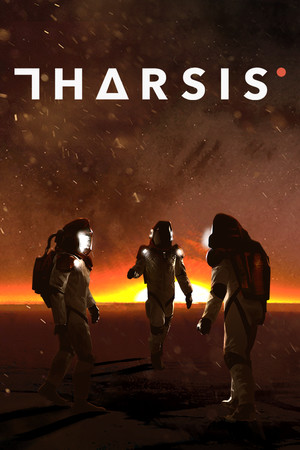
I have a spreadsheet tracking my Tharsis win rate, and it reads like a disaster log. After roughly 30 runs, the number of successful Mars landings fits on one hand. That is not a complaint. That is the whole point. Tharsis drops you aboard the Iktomi, a spacecraft that gets shredded by a micrometeorite storm at the start of every run. Two crew members die before you even take a turn. The remaining four astronauts, each with unique special abilities tied to roles like Captain, Mechanic, and Specialist, must survive 10 weekly turns across eight ship modules: the Life Support bay, the Greenhouse, the Medbay, Operations, the Laboratory, and others. Every turn, at least two modules take damage measured in numerical values you have to match or beat by rolling dice. A fully rested crew member rolls up to five dice; an exhausted one rolls one. Every single roll chips away at their maximum dice count unless food restores it. That is the pressure cooker this game runs at all times. The strategic layer is genuinely interesting once you stop blaming the dice. Each crew member carries a dice cache, a health bar, and a stress meter. High stress corrupts the side-project choices you get between turns, pushing suicidal or self-destructive options into the pool. The Operations module lets you spend dice rolls of five or higher to bleed off stress. The Life Support module converts any single die into two new dice, making it one of the most valuable rooms on the ship and a constant triage question: do you top up your dice economy now, or prioritize hull repair? The Assists resource can block up to three penalty dice per turn, meaning dice that carry void, stasis, or injury markers do not automatically wreck your crew. Learning when to burn Assists versus when to absorb a hit is probably the single deepest decision in the game. There is also a research system, post-launch streamlined by the developers, that feeds into your longer-term planning across runs. Here is where Tharsis gets divisive, and it is worth being direct about it. Critics scored it 61 on Metacritic, and the split is almost entirely about whether the dice variance is acceptable. Video game-focused reviewers called it frustrating and overly chance-dependent. Board game players and strategy streamers generally liked it. I land closer to the latter camp, with one honest caveat: a run that is going perfectly can absolutely be erased by two or three consecutive brutal rolls, and the game does nothing to soften that blow. The status-effect dice, which can lock, injure, or eliminate your dice mid-roll, are genuinely punishing when they cluster. The developers did rebalance the game post-launch, adding a smoother difficulty curve to Normal mode and reworking the Hard mode upward, but the core randomness is non-negotiable. Cannibalism is also non-negotiable. Dead crew members become bloody, haunted dice that roll poorly but keep you alive another turn. The game makes this feel appropriately grim. For the right player, Tharsis is a brilliant compact puzzle. Each run takes around 20 minutes, the tutorial is well-constructed and actually explains the module interactions, and unlockable crew members (earned through cross-run challenges like harvesting 20 food or committing cannibalism a truly alarming number of times) give experienced players genuine roster-building decisions. The art style, based on 1970s sci-fi aesthetics updated for a modern sensibility, holds up well alongside a strong ambient soundtrack. The mod ecosystem is small, mostly custom crew portraits and mission events on Steam, so do not come in expecting Paradox-scale community content. This is a tightly scoped solo experience with permadeath, roguelike run variety, and a very specific patience requirement. If your tolerance for RNG cruelty tops out at FTL on hard mode, Tharsis will chew you up. If you are the person who genuinely enjoys theorycrafting optimal dice allocation under pressure, it will click into place somewhere around run fifteen, and you will be annoyed at yourself for not seeing it sooner.

Strategy & simulation
Tags
System Requirements
Minimum
- OS
- Windows 7 x64
- Memory
- 2 GB RAM
- DirectX
- Version 11
- Storage
- 2 GB available space
- Graphics
- DirectX 11 compatible graphics card (Intel HD 5000, NVIDIA GeForce 400 or Radeon HD 5000)
- Processor
- Intel Core i5 5xxx
Recommended
- OS
- Windows 7 x64
- Memory
- 6 GB RAM
- DirectX
- Version 11
- Storage
- 2 GB available space
- Graphics
- NVIDIA GeForce 6xx or Radeon HD 7xxx
- Processor
- Intel Core i7 5xxx
Keep exploring
Community Discussion
Be the first to comment on Tharsis.
Reviews & Ratings
Game Info
- Developer
- Choice Provisions
- Publisher
- Choice Provisions
- Release Date
- Jan 11, 2016