
Terra Nil
Forget building up - the whole point here is to restore, recycle, and then disappear. An order-of-operations puzzle dressed in city-builder clothing, for players who find satisfaction in leaving nothing behind.
GamerScout Verdict
Worth it for puzzle-minded strategy players who value tight, meditative sessions over long-haul content - but go in expecting four to eight hours, not forty.
Compare Prices(8 stores)
Every store in this table quotes us in euros, so the EUR figure is the price the seller actually set, not our arithmetic — which is why EUR is also the currency we rank in. We only list an offer here when the store gives us its price in euros, so nothing in this table is a number we invented.
Pick USD, PLN, GBP, CAD or AUD in the header and we convert from EUR at the European Central Bank reference rate — converted amounts are prefixed with ~. Your bank or the store may apply a different rate at checkout. We never hide offers based on where you are: everyone sees this whole table.
We may earn a commission when you buy games through links on this page — at no extra cost to you. It never affects our rankings or verdicts.
Price History
Screenshots & Media
About Terra Nil
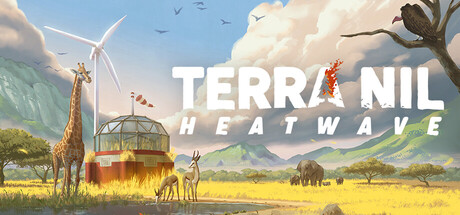
My first instinct when I loaded Terra Nil was to start optimising resource chains the way I would in any city-builder, and the game quietly punished me for it within ten minutes. Spent too much money on toxin scrubbers before establishing a power grid? Start over. Planted a forest before the soil was fertile enough to sustain it? Start over. This is not a grand-strategy sandbox where you recover from mistakes over fifty turns - it is a tightly constrained order-of-operations puzzle that happens to look like the most calming screenshot you have ever seen. The core loop runs in three phases per map: scrub pollution and build basic grassland using irrigators and toxin scrubbers, layer in biome-specific structures to hit biodiversity thresholds, then - and this is the part nobody talks about enough - recycle every single piece of machinery you placed and leave without a trace. That final recycling phase alone is unlike anything in the city-builder genre. Four main regions make up the base campaign: River Valley, Desolate Island (tropical), Volcanic Glacier, and Flooded City, each demanding a completely different toolkit. The Volcanic Glacier has you routing geothermal vents for power amid ice and ash. The Flooded City requires decontaminating irradiated ruins before you can even think about bamboo forests. Each region introduces new buildings - geothermal stations anchored to lava tiles, shade nests that only activate when placed in triangular clusters of three, animal observatories that scan for wildlife once biome coverage thresholds are met. The placement rules create genuine puzzle depth: wind turbines need rocks, forests need burnt ground, and every structure draws from a shared energy budget that will punish sloppy placement with a hard stop. The post-launch Vita Nova update added new missions including a Polluted Bay and Scorched Caldera map, overhauled the wildlife system so animals have more specific habitat needs, and rebuilt the world map in 3D. It addressed one of the biggest launch criticisms directly. Let me be honest about who will bounce off this. If you come in expecting the systemic depth of a Paradox title or even the long-tail replayability of something like Islanders, you will feel the walls closing in fast. The main campaign clocks in at roughly four to six hours on a first run. Procedural generation shuffles the terrain but not the fundamental puzzle structure - you will always scrub, then build, then recycle, in that order. Community criticism at launch was sharp and fair: there is no tech tree, no meta-progression, no unlock incentive to drive repeat sessions. The alternate variant missions unlocked post-credits add some challenge spikes, but replayability ultimately rests on whether the optimisation loop itself hooks you, not on content volume. Here is why strategy and puzzle players specifically should still pay attention. The decision-making inside a single session is genuinely demanding. Energy management acts as a hard constraint that forces you to read the procedurally generated terrain before placing anything - a skill that feels closer to puzzle-solving than city-building. The in-game logbook documents every biome, building, and wildlife requirement in clean tooltip form, and the tutorial on the first map walks new players through interactions step by step without condescending. Adjustable difficulty options let you dial resource costs up or down on the fly, which means the same map can be a zen experience or a tight optimisation challenge depending on your settings. For a strategy newcomer, that flexibility makes Terra Nil a genuinely low-friction entry point into resource-management thinking. The Vita Nova additions also give the game meaningfully more surface area than it had at launch. The art direction is doing serious heavy lifting throughout. The hand-painted isometric visuals shift from grey desolation to layered greens, blues, and oranges as your biomes form, and the ambient soundscape - bird calls, flowing water, rustling canopy - updates dynamically with what you have built. It all makes the moment you finally clear your machinery and see an untouched ecosystem sitting there, built entirely by your planning, genuinely satisfying. It is a short game with real craft behind it, and the Vita Nova update shored up enough of the content concerns to make the value proposition more defensible than it was at launch.

Strategy & simulation
Tags
System Requirements
Minimum
- OS
- Windows 7 x64
- Memory
- 8 GB RAM
- Storage
- 2 GB available space
- Graphics
- GeForce GTX 760 / Radeon RX 560X
- Processor
- Intel Core i5-4590 / AMD FX-8350
Recommended
- OS
- Windows 10 x64
- Memory
- 8 GB RAM
- Storage
- 2 GB available space
- Graphics
- GeForce GTX 1080 / Radeon RX 5700 XT
- Processor
- Intel Core i7-6950X / AMD Ryzen 5 2600
Keep exploring
Community Discussion
Be the first to comment on Terra Nil.
Reviews & Ratings
Game Info
- Developer
- Free Lives
- Publisher
- Devolver Digital
- Release Date
- Mar 28, 2023