Technotopia
Reigns meets Dorfromantik in a cyberpunk art-deco puzzle that will floor you with how much faction pressure it wrings out of a three-card hand. Short campaign, zero fluff, surprisingly sharp.
GamerScout Verdict
Best for puzzle fans who want faction-pressure decisions in short, replayable runs - not a true city builder, but a sharp one-sitting strategy bite.
Compare Prices(7 stores)
Every store in this table quotes us in euros, so the EUR figure is the price the seller actually set, not our arithmetic — which is why EUR is also the currency we rank in. We only list an offer here when the store gives us its price in euros, so nothing in this table is a number we invented.
Pick USD, PLN, GBP, CAD or AUD in the header and we convert from EUR at the European Central Bank reference rate — converted amounts are prefixed with ~. Your bank or the store may apply a different rate at checkout. We never hide offers based on where you are: everyone sees this whole table.
We may earn a commission when you buy games through links on this page — at no extra cost to you. It never affects our rankings or verdicts.
Price History
Screenshots & Media
About Technotopia
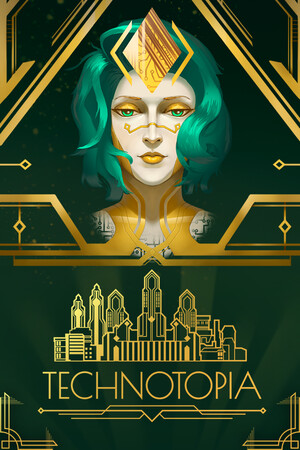
My strategy instincts kept whispering 'city builder' while Technotopia quietly ignored them and did its own thing. That gap between expectation and reality is worth addressing immediately: this is a roguelite puzzle with city-building dressing, not a SimCity descendant. Once you accept that framing, the game clicks into place fast, and the click is genuinely satisfying. You play as Iris, an AI architect tasked with keeping four factions - capitalists, aristocrats, politicians, and common people - from tearing each other apart. On each turn you pick one of three randomly drawn building cards and place it on a grid that grows outward from a central hub. Every building you drop generates resources for its associated faction, and every ten placements those factions bill you for upkeep. Let any single faction's balance go negative and the run ends. The loop sounds simple because it is, but the tension comes from the district bonus system: arrange four buildings into specific tetromino-like shapes and you unlock a multiplied resource burst that can flip a near-failing run back into the green. Knowing which shape to chase, which faction to sacrifice short-term, and when to pivot - that is where the actual decision-making lives. It is light by grand-strategy standards, but it is real. The run-based structure carries persistent progress between attempts. Story objectives do not reset when you fail, new buildings unlock after each run summary screen, and the four-act narrative about Iris, her creator, and the corruption surrounding them advances incrementally regardless of how cleanly you managed the last grid. That design decision deserves credit: it means less experienced players will still reach the story's conclusion without needing to master the resource math first. The moral event system adds texture on top of the spatial puzzle - every few in-game days a dilemma fires, asking whether you want to call in strikebreakers, automate jobs, or broker a deal. Each choice nudges faction counters that influence which events appear next. It is not Crusader Kings-level consequence, but it keeps the card placements from feeling mechanical. The weaknesses are real and worth knowing. The 'deck-building' label on the Steam tags is misleading: you add cards to a pool during a run, but you cannot actively draft, discard, or order draws, so calling it a deck-builder oversells the agency. The faction-balance system has also been criticised for lacking depth at higher understanding - once you grasp that focusing resources on one or two factions rather than perfect equilibrium is often more efficient, the strategic tension softens. The art-deco, retro-futurist visual style (directly inspired by the 1927 film Metropolis, per the developers) is striking but building colours can blur together under pressure, and there is no colorblind mode. Total campaign length sits around ten to fifteen hours including achievement hunting, with one luck-dependent achievement that can stretch the tail considerably. No sandbox mode, no mod support via Steam Workshop. For strategy players who enjoy a focused, low-commitment system over sprawling complexity, Technotopia earns its strong community reception honestly. It will not replace your Paradox library, but it is a well-constructed small game that respects your time and gives you just enough levers to pull that a losing run teaches you something. Approach it as a scored puzzle with a narrative backbone and you will finish it satisfied. Approach it expecting Anno or Frostpunk and you will bounce off it inside an hour.

Strategy & simulation
Tags
System Requirements
Minimum
- OS
- Windows 10 64 bit
- Memory
- 8 GB RAM
- Storage
- 3 GB available space
- Graphics
- NVIDIA GeForce GTX 960/AMD Radeon RX 760
- Processor
- Intel(R) Core(TM) i5-4440 CPU/AMD Ryzen 5 1600
Keep exploring
Community Discussion
Be the first to comment on Technotopia.
Reviews & Ratings
No ratings available
Game Info
- Developer
- Yustas
- Publisher
- Alawar
- Release Date
- Oct 23, 2024