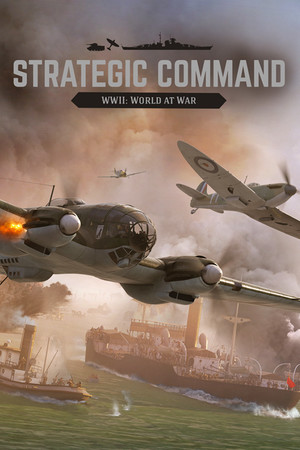
Strategic Command WWII: World at War
Grand-scale WWII turn-based wargame that sits between Axis & Allies and a full grognard sim - approachable enough to learn in a weekend, deep enough to argue over for years.
GamerScout Verdict
Best for WWII strategy fans who want global scope without drowning in economic micromanagement - bring patience for the UI.
Compare Prices(8 stores)
Every store in this table quotes us in euros, so the EUR figure is the price the seller actually set, not our arithmetic — which is why EUR is also the currency we rank in. We only list an offer here when the store gives us its price in euros, so nothing in this table is a number we invented.
Pick USD, PLN, GBP, CAD or AUD in the header and we convert from EUR at the European Central Bank reference rate — converted amounts are prefixed with ~. Your bank or the store may apply a different rate at checkout. We never hide offers based on where you are: everyone sees this whole table.
We may earn a commission when you buy games through links on this page — at no extra cost to you. It never affects our rankings or verdicts.
Price History
Screenshots & Media
About Strategic Command WWII: World at War
I'll be straight with you: I'm the shooter guy on this team, and Matrix Games handed me a hex-based grand strategy wargame about the entire Second World War. So take my perspective for what it is - someone who respects tight systems and has zero patience for bloat, evaluating whether this thing is actually worth your time. What Strategic Command WWII: World at War gets right is its scope-to-complexity ratio. You're commanding the whole war - Europe, the Pacific, North Africa, China - on a single global map, but the production layer stays lean. Everything runs through Military Production Points (MPP), a single currency you earn by capturing and holding key geographical locations and maintaining naval convoys. Spend it on new units, pump it into R&D across categories like Infantry Weapons, Rockets, Anti-Submarine Warfare, and Amphibious Warfare, or burn it on diplomacy to pull neutral nations into your corner. There's no juggling of separate economic infrastructure systems or population management screens. You plan, you fight, you reinvest. The loop is clean. The supply line mechanic is where the real thinking happens. Offensives that stretch beyond your logistics get punished fast, and terrain - mountains in China, the North African bottleneck at El Alamein - shapes what's actually possible rather than just providing flavor. Fog of War keeps both sides honest. The Grand Campaign opens in 1939 and can run to the end of the war, but shorter scenarios are available if you want to drop into specific moments like the 1944 Allied onslaughts or the 1941 fight for Rostov. You can also assign the AI to theaters you don't care about and focus your attention where you want it, which is a sensible design call for a game this wide. The weaknesses are real though. The UI does not hold your hand. Commands for recon and carrier management are not surfaced clearly, turn-start popup notifications can't be recalled once dismissed, and the manual - while well written - is something you'll actually need to open. Sea combat gets criticized for feeling like pure attrition compared to the more nuanced land game, with no supply line dynamic at sea. Against the AI, late-game balance softens and the endgame can slide into brute force. In head-to-head multiplayer, human players report games often feeling decided by 1941, which is either a feature or a dealbreaker depending on your patience. The modding community is active and has been pumping out alternate scenarios for years, which extends the life considerably. If you bounced off Hearts of Iron because you wanted to fight the war rather than simulate a nation-state, this fills that gap. It's not a light game and it's not a deep simulation - it sits deliberately between the two, and that middle ground is exactly where it earns its audience.

Shooters
Tags
System Requirements
Minimum
- OS
- Windows 7, Windows 8, Windows 10
- Memory
- 4 GB RAM
- DirectX
- Version 9.0c
- Storage
- 1108 MB available space
- Graphics
- 8MB video memory
- Processor
- 1.5 GHZ Processor or Equivalent (Running the game in higher resolution requires more processing power.)
Keep exploring
Community Discussion
Be the first to comment on Strategic Command WWII: World at War.
Reviews & Ratings
No ratings available
Game Info
- Developer
- Fury Software
- Publisher
- Matrix Games
- Release Date
- Dec 6, 2018