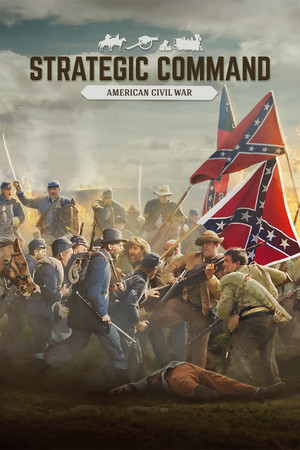
Strategic Command: American Civil War
If you can stomach a hundred-page manual and a UI that hasn't flirted with modernity, this grand-strategy wargame rewards the patient grognard with one of the deepest hex-based Civil War sandboxes on PC.
GamerScout Verdict
Best for patient wargame veterans who want a serious grand-strategy Civil War simulation and don't mind doing homework first.
Compare Prices(8 stores)
Every store in this table quotes us in euros, so the EUR figure is the price the seller actually set, not our arithmetic — which is why EUR is also the currency we rank in. We only list an offer here when the store gives us its price in euros, so nothing in this table is a number we invented.
Pick USD, PLN, GBP, CAD or AUD in the header and we convert from EUR at the European Central Bank reference rate — converted amounts are prefixed with ~. Your bank or the store may apply a different rate at checkout. We never hide offers based on where you are: everyone sees this whole table.
We may earn a commission when you buy games through links on this page — at no extra cost to you. It never affects our rankings or verdicts.
Price History
Screenshots & Media
About Strategic Command: American Civil War
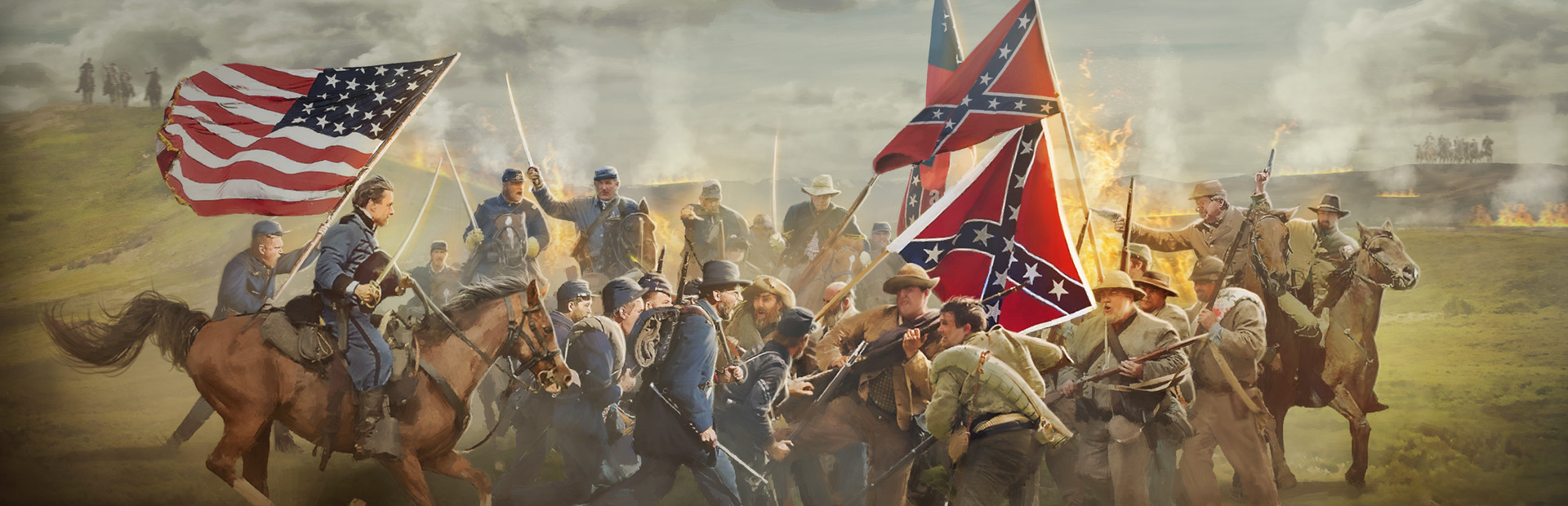
I'll be straight with you: I came into this one expecting to bounce hard. Shooters are my lane, and a turn-based hex wargame set in 1861 is about as far from a 240hz monitor situation as you can get. But SC:ACW pulled me in for longer than I expected, and it did it the old-fashioned way, by making every decision feel like it actually matters. What you're getting here is a grand-strategy wargame that plays at the level of nations, not soldiers. You manage Manpower Production Points (MPPs) across turns, spending them on recruitment, research, production, and diplomacy, all while trying to hold or push a front line that stretches from Virginia to the Trans-Mississippi. The map is enormous: a 66,000-hex grid covering all of North America at a 15km-per-hex scale, which is the largest the series has shipped. You build brigades, upgrade them to divisions, eventually field corps-sized formations, and assign historical commanders like Lee, Grant, Jackson, or Sherman to lead them. General assignment matters, too, and HQ placement in particular is pointed to by veterans as one of the more tactically satisfying levers in the game. The six campaigns give you good variety. The full "Blue and Gray" run starts at Fort Sumter and goes the distance, which is daunting for new players. Shorter entries like "Lee Goes North" or "Make Georgia Howl" drop you into mid-war situations where the board is already developed, and those are genuinely the better starting points. There's also an alternate-history branch where Britain enters the war on the Confederate side, which opens up interesting diplomatic and naval decisions you wouldn't otherwise see. Naval play in general works: riverine combat using Monitors and river gunboats is a distinct mechanic, the Union blockade creates real resource pressure, and amphibious operations against Confederate ports have teeth. Balloons show up as a unit type, which is a detail that lands better than it sounds. Here's where I have to be honest about the friction. The tactical layer is essentially abstracted away. No unit stacking, combat resolved by stats rather than maneuvering at the engagement level, and the Eastern Theater in particular tends to collapse into a static WWI-style line from the Shenandoah to the Potomac rather than the fluid operational campaigns history recorded. Players coming in expecting to feel Antietam or Chancellorsville will be disappointed. The West plays more fluidly, and that's where the game's movement mechanics feel most authentic to the conflict. The AI is a mixed bag, with the Confederate AI reportedly spamming ironclad-type vessels in ways that have nothing to do with history, though this matters more in single-player than in PBEM matchups. The tutorial is thin, the manual runs hundreds of pages, and there is very little video content online to shortcut the learning curve. That's a real barrier. Multiplayer via the PBEM++ system is where this game quietly earns its price. Async play against a human opponent, with cloud saves handling the logistics, levels out most of the AI complaints and turns the diplomatic and resource decisions into a legitimate competitive puzzle. At its review score of 84% positive on Steam, the community is small but loyal and active in head-to-head play. The editor, fully documented in the manual, also supports custom campaigns and mods for players who want to push into alternate history further than the base scenarios allow. This is not a game for someone who wants to click into a match in twenty minutes. It rewards players who read, plan, and are willing to sit with consequences that won't resolve for forty turns. If that sounds like your idea of a weekend, SC:ACW delivers the goods. If not, move along.

Shooters
Tags
System Requirements
Minimum
- OS
- 64-bit Windows 10
- Memory
- 6 GB RAM
- Graphics
- 8MB video memory
- Processor
- 1.5 GHZ Processor or Equivalent
- Sound Card
- DirectX Compatible Sound Card
DLC & Add-ons for Strategic Command: American Civil War1
Expansions, DLC packs and add-on content for this game. Click any item to see store offers.
Keep exploring
Community Discussion
Be the first to comment on Strategic Command: American Civil War.
Reviews & Ratings
No ratings available
Game Info
- Developer
- Fury Software
- Publisher
- Matrix Games
- Release Date
- Jul 14, 2022