
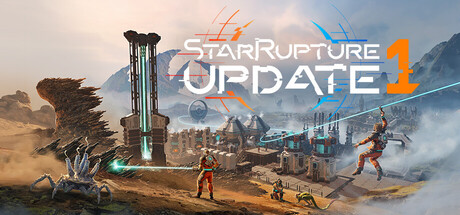
StarRupture
Satisfactory meets a hostile alien sun: build conveyor belts and cargo launchers by day, then sprint for your bunker before a planetary firestorm erases everything you just constructed.
GamerScout Verdict
Best for factory-builder fans who want survival pressure injected into the genre and can tolerate Early Access rough edges while Creepy Jar iterates.
Compare Prices(10 stores)
Every store in this table quotes us in euros, so the EUR figure is the price the seller actually set, not our arithmetic — which is why EUR is also the currency we rank in. We only list an offer here when the store gives us its price in euros, so nothing in this table is a number we invented.
Pick USD, PLN, GBP, CAD or AUD in the header and we convert from EUR at the European Central Bank reference rate — converted amounts are prefixed with ~. Your bank or the store may apply a different rate at checkout. We never hide offers based on where you are: everyone sees this whole table.
We may earn a commission when you buy games through links on this page — at no extra cost to you. It never affects our rankings or verdicts.
Price History
Screenshots & Media
About StarRupture
My spreadsheet instincts lit up the moment I understood StarRupture's core tension: you are not building a factory, you are building a factory that has to survive a recurring apocalypse. Creepy Jar, the Warsaw studio that tortured players with leech removal in Green Hell, has pivoted from Amazonian jungle to the sci-fi penal colony of Arcadia-7, and the structural DNA carries over. You are a prisoner working off a corporate sentence for the Claywood Corporation, strip-mining a planet and launching refined goods into orbit via Cargo Launchers. The narrative is thin but functional, and honestly the systems do more world-building than any dialogue could. You pick one of four characters - biologist Samuel, scientist Chris, engineer Maeve, or soldier Han - each dropped into the same punishing loop: scavenge, build a Base Core and Habitat, get smelters running, start a production chain, and do not be outside when the Rupture hits. The Rupture is the game's standout mechanic and the thing that separates it from Satisfactory comparisons. At regular real-world intervals, Arcadia-7's volatile star sends a fiery wave scorching across the surface, forcing a full stop on expansion while you shelter in your Habitat. That countdown clock transforms routine resource runs into genuine risk-reward calculations. Do you push deeper for a blueprint cache in an abandoned structure, or do you head back and reinforce the turret ring around your Base Core? The production chain itself scales from basic hand-mining through smelters, fabricators, and rail systems shuttling Ceramics, Metal Sheets, and Rotors between processing stations. Data Points earned through exports unlock new tech and raise your corporate standing across five competing firms, which adds a light optimization layer to what goods you prioritize sending up. The automation loop is satisfying in exactly the way the genre demands: watching a once-manual operation run itself while you go pick a fight with a cluster of leaper-type alien bugs is a specific and very good feeling. The rough edges are real and worth naming before you hand over money. The UX is the most pressing problem in the current build. Inventory management requires physically carrying resources to a crafting bench rather than pulling from nearby storage, which is a baffling omission in a game about automation. Text is small, UI scaling options are limited, and the building placement system is imprecise enough that constructing complex rail layouts becomes a patience exercise. Combat is functional - gunplay has serviceable weight and the enemy roster includes leapers, infection-carrying exploders, and slag-shooting ranged pests - but enemy variety is thin and encounters get repetitive in longer sessions. Solo players will also feel the sting of no fast travel between bases, a serious issue once your operation sprawls across the map. Co-op with up to three friends smooths most of these friction points considerably, splitting the logistical and defensive workload in ways that make the whole sandbox click. Here is the strategic argument for buying in early: Creepy Jar's track record with Green Hell is the closest thing to a guarantee this genre offers. That game launched rough and became genuinely polished through sustained community-driven updates. StarRupture is sitting at a Very Positive rating on Steam across over twelve thousand reviews, hotfixes arrived within days of launch, and a free content update targeting additional biomes, enemies, and late-game depth is already on the public roadmap. Nearly 40 percent of players have logged over ten hours according to the developer's own data, which is a meaningful retention signal for an Early Access title. The late-game content is admittedly shallow right now - the tech tree bottoms out faster than veterans of Factorio or Satisfactory will expect - but the foundation is architecturally sound. If you need the game to be finished before you start, set a calendar reminder for the 1.0 window. If you can tolerate a game that occasionally fights you over inventory while it figures out its own best self, there is already thirty-plus hours of legitimate content here.

Strategy & simulation
Tags
System Requirements
Minimum
- OS
- Windows 10 or later (64-Bit)
- Memory
- 16 GB RAM
- DirectX
- Version 12
- Storage
- 45 GB available space
- Graphics
- NVIDIA GeForce GTX 1060 (6 GB VRAM) / AMD Radeon RX 580 (8 GB VRAM)
- Processor
- Intel Core i5-8400 / AMD Ryzen 5 2600
Recommended
- OS
- Windows 10 or later (64-Bit)
- Memory
- 16 GB RAM
- DirectX
- Version 12
- Storage
- 45 GB available space
- Graphics
- NVIDIA GeForce RTX 3060 (8 GB VRAM) / AMD Radeon RX 7600 (8 GB VRAM)
- Processor
- Intel Core i5-11400F / AMD Ryzen 5 3600
Keep exploring
Community Discussion
Be the first to comment on StarRupture.
Reviews & Ratings
No ratings available
Game Info
- Developer
- Creepy Jar
- Publisher
- Creepy Jar
- Release Date
- Jan 6, 2026