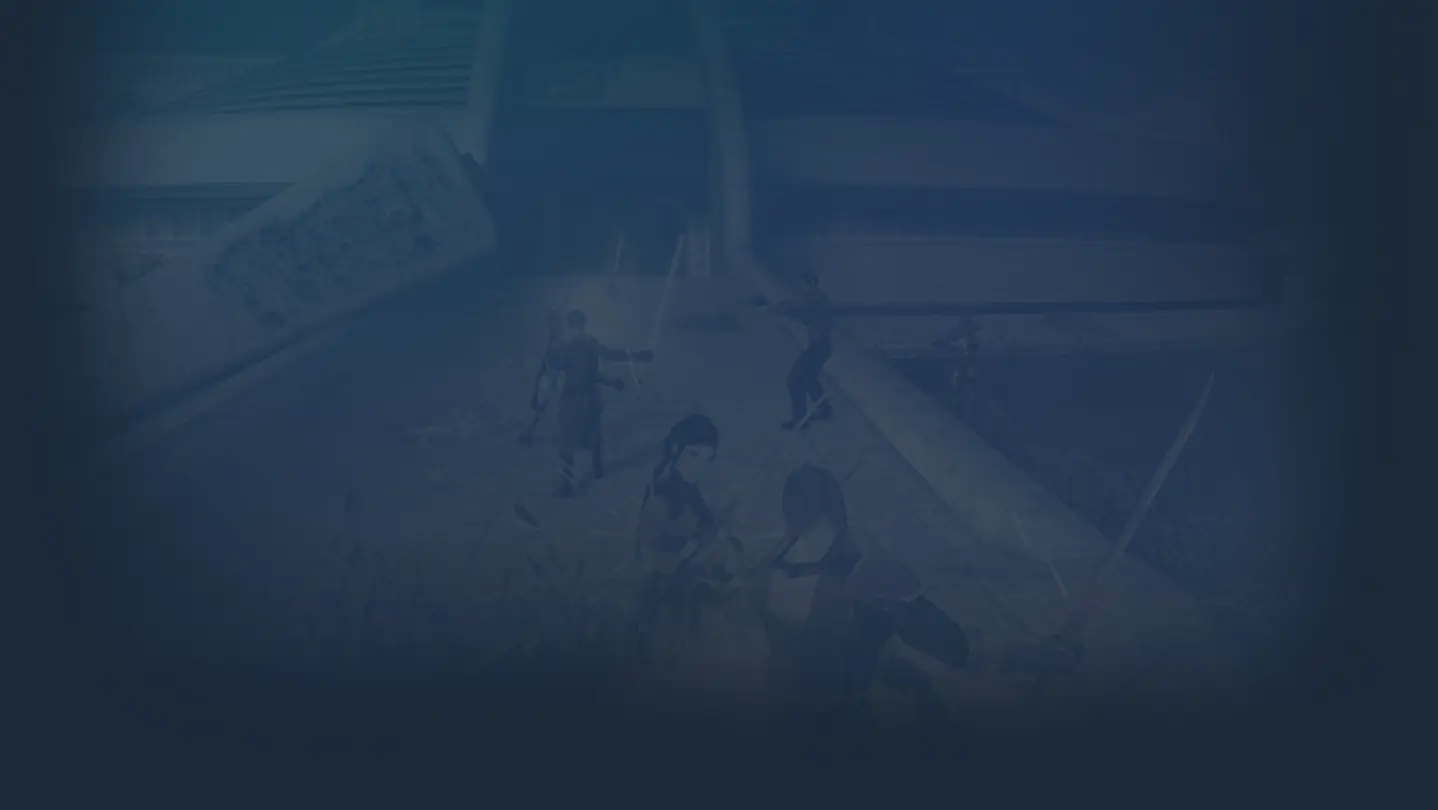
Star Wars: Knights of the Old Republic
A 4000-year-old Star Wars story where your moral choices actually reshape the ending. BioWare's RPG still hits harder than most modern releases.
GamerScout Verdict
Essential for RPG fans who care about build depth and story payoff, provided you install the community bugfix patch first.
Compare Prices(8 stores)
Every store in this table quotes us in euros, so the EUR figure is the price the seller actually set, not our arithmetic — which is why EUR is also the currency we rank in. We only list an offer here when the store gives us its price in euros, so nothing in this table is a number we invented.
Pick USD, PLN, GBP, CAD or AUD in the header and we convert from EUR at the European Central Bank reference rate — converted amounts are prefixed with ~. Your bank or the store may apply a different rate at checkout. We never hide offers based on where you are: everyone sees this whole table.
We may earn a commission when you buy games through links on this page — at no extra cost to you. It never affects our rankings or verdicts.
Price History
Screenshots & Media
About Star Wars: Knights of the Old Republic
Star Wars: Knights of the Old Republic is a turn-based RPG built on a d20-derived ruleset, set roughly four millennia before the films in a galaxy where the Sith have nearly wiped out the Jedi Order. You build a character from scratch, pick a class, assemble a party of companions, and work through a globe-hopping (planet-hopping, rather) series of missions that feed into one of the more genuinely surprising narrative pivots in RPG history. If you have avoided spoilers this long, protect that. The combat is real-time with pause, meaning you queue up actions, let the dice resolve, and adjust mid-round rather than watching pure action. Strength of attack, Force power costs, saving throws, critical hit ranges, all of it is governed by stats you allocate and feats you unlock as you level. For a strategy-minded player, character builds matter more than reflexes, which is exactly the kind of system that rewards planning over button-mashing. The depth of decision-making here is not just mechanical. The Light Side and Dark Side alignment system tracks every choice you make, from dialogue options to how you resolve side quests, and your position on that meter directly affects which Force powers become efficient, how NPCs react to you, and which ending you see. It is a binary system by modern standards, and a nuanced moral philosopher will find it simplistic, but it works precisely because the writing underneath it is sharp. Companion characters like HK-47, Carth, and Bastila have distinct personalities and story arcs that feel authored rather than procedural. There are no radiant quests padding things out here. Every mission was written by hand. For newcomers worried about age, the interface is clunkier than anything released in the last decade, and the load times on the original PC build require a community patch (the Restoration and bugfix mods are widely documented and straightforward to install). The tutorial is patient and thorough without being condescending, walking you through the ruleset on the opening planet before releasing you into the wider galaxy. A player who has never touched a tabletop RPG system can be functional within an hour. A player who has will immediately start theorycrafting a dual-lightsaber Consular build optimised for Force Wave crowd control, which is a valid use of an evening. What does not hold up as well: the late-game planet Manaan overstays its welcome, the minimap is nearly useless in several environments, and the final dungeon is a significant difficulty spike that punishes underprepared builds more than it should. The AI in combat is not sophisticated by any standard, but that is not really what KOTOR is selling. It is selling story, world-building, and the satisfaction of a well-constructed build coming together across a 30-40 hour playthrough. The mod ecosystem, while not as vast as something like Morrowind or Baldur's Gate 2, includes quality-of-life patches, widescreen fixes, and the long-running restoration project that adds cut content. It is enough to make a second playthrough on the opposite alignment feel like a different product. With 91% positive Steam reviews across over 33,000 ratings, the community verdict has been consistent for years. If you are weighing whether this is the right entry point into classic BioWare RPGs, it is genuinely more approachable than Baldur's Gate 2 and arguably better paced than Neverwinter Nights. Play it once for the story. Play it twice to understand why the builds matter.

Strategy & simulation
Tags
System Requirements
Minimum
- Processor
- Intel Pentium 3 1Ghz or AMD Athlon 1GHz
- Memory
- 256 RAM
- Graphics
- 32 MB with Hardware T&L DirectX®: Directx 9.0b or better Hard Drive: 3.5 GB Sound: Directx 9.0b compatible
Keep exploring
Community Discussion
Be the first to comment on Star Wars: Knights of the Old Republic.
Reviews & Ratings
Game Info
- Developer
- BioWare
- Publisher
- LucasArts
- Release Date
- Sep 5, 2009
![It's only PARTLY cloudy in Brain Fog Land today, so it's a STAR WARS kinda day-->more Knights of the Old Republic [18+]](https://static-cdn.jtvnw.net/previews-ttv/live_user_n8nefarious-440x248.jpg)

