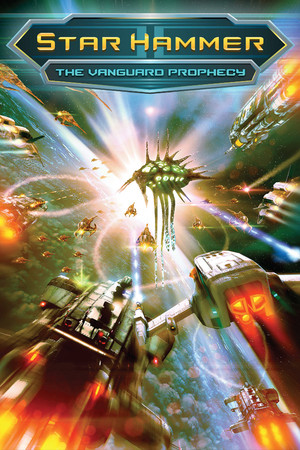
Star Hammer: The Vanguard Prophecy
One genuinely exceptional combat system propping up a campaign that barely deserves it - worth your time if 3D tactical space battles are your thing and you can live without a compelling story.
GamerScout Verdict
Buy it for the WEGO combat loop at a discount; skip it if a compelling campaign or multiplayer is non-negotiable for you.
Compare Prices(5 stores)
Every store in this table quotes us in euros, so the EUR figure is the price the seller actually set, not our arithmetic — which is why EUR is also the currency we rank in. We only list an offer here when the store gives us its price in euros, so nothing in this table is a number we invented.
Pick USD, PLN, GBP, CAD or AUD in the header and we convert from EUR at the European Central Bank reference rate — converted amounts are prefixed with ~. Your bank or the store may apply a different rate at checkout. We never hide offers based on where you are: everyone sees this whole table.
We may earn a commission when you buy games through links on this page — at no extra cost to you. It never affects our rankings or verdicts.
Price History
Screenshots & Media
About Star Hammer: The Vanguard Prophecy
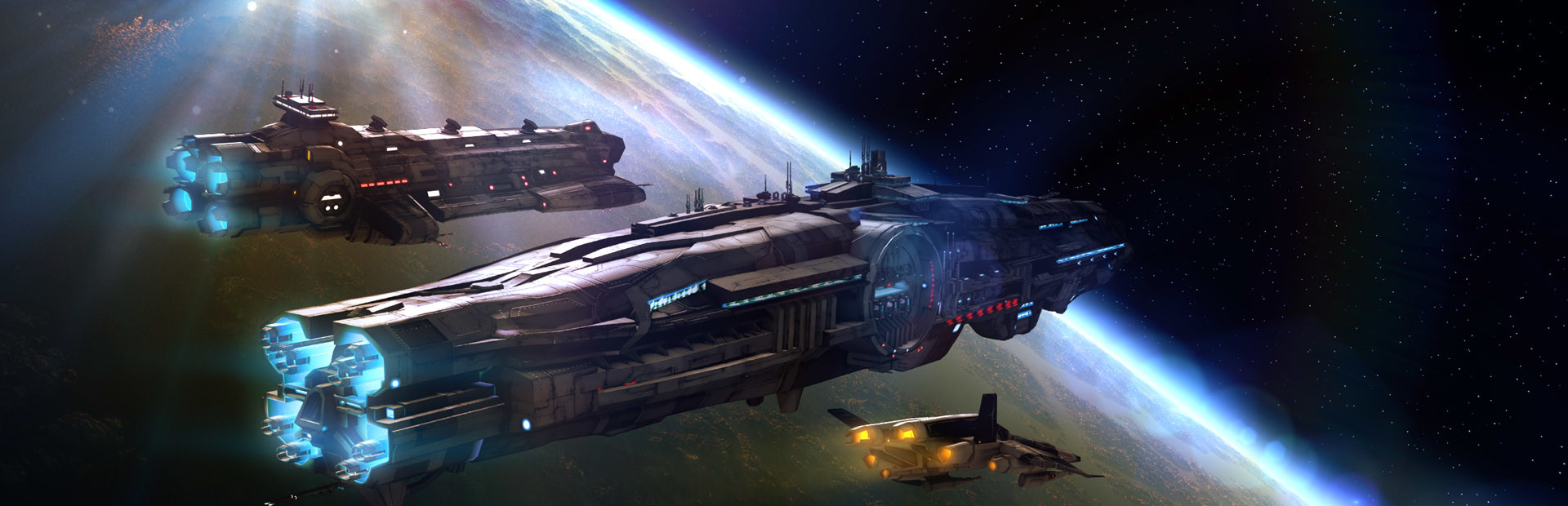
I have a colour-coded folder of Slitherine releases going back years, and Star Hammer: The Vanguard Prophecy sits in the uncomfortable middle column: games that nail one thing so well you forgive, or at least tolerate, everything else. The one thing here is the WEGO simultaneous-turn combat, and it really is something worth sitting with. During the planning phase you assign movement trajectories and combat orders to a small roster of corvettes, destroyers, frigates, and capital ships; then you hit execute and both your fleet and the enemy AI resolve their commands at the same time, in real-time, before the game pauses again and asks for new orders. That rhythm - plan, commit, watch, adjust - gives every engagement a miniatures-game tension that pure turn-based or pure RTS space titles rarely match. Positioning your destroyer side-on for a broadside while a nimble corvette cuts beneath an enemy formation is the kind of satisfying geometry that keeps strategy players awake. The combat system has genuine depth in the way it handles individual ship management. You can divert power between weapons, shields, and engines on each vessel separately, so a frigate taking heavy fire can go full shield mode while a raider sprints past to flank. Special loadouts are class-locked - the corvette carries missiles, the frigate runs countermeasures - which forces you to treat each ship as a role-player rather than a generic damage dealer. The Nautilid enemies (cephalopod aliens in a war set in 2174) lack conventional shields but compensate with tough organic hulls and bio-missiles, so the threat profile genuinely shifts from the human-on-human skirmish mode. At Normal and Hard difficulty the AI applies enough pressure to make positioning matter; Easy is passive enough to function as a live tutorial. Here is where the honest spreadsheet column goes red. The campaign spanning over 60 branching missions has a structural problem that no amount of good combat fixes: almost every objective eventually collapses into "wipe out everything on the map." Escort and hunt missions are window dressing that the game abandons the moment contact is made. The branching system tags missions as Neutral, Aggressive, or Defensive and theoretically unlocks different routes based on your playstyle, but the mechanics governing that are opaque enough that most players will barely notice the branches. The crew relationship system, which ties a social compatibility graph between named officers to fleet-wide stat buffs, sounds interesting on paper and falls apart in practice because you can respec crew perks at any point with no cost, draining any sense of permanent decision-making from the system. There is no voice acting, no mid-mission save, and the camera in a 3D space environment remains genuinely awkward to wrestle into position under pressure. For newcomers to the genre this is not a bad entry point specifically because the fleet stays small. You will never manage more than around five ships at once, the campaign introduces each class gradually, and the WEGO structure gives you a full stop between every burst of action to reassess. That is a more forgiving on-ramp than most Slitherine titles. The skirmish mode - Mission Simulation, Battle Training, and a randomised Surprise Me option - adds replay value once the campaign wears out its welcome, which it will do earlier than the mission count implies. No mod ecosystem to speak of, no multiplayer of any kind, and a Metacritic sitting at 69 that honestly reflects the split between a brilliant core and an underbaked wrapper. If you are the kind of player who can extract 20 hours of enjoyment from a tight combat loop and treat the campaign as a mission delivery mechanism rather than a narrative, Star Hammer delivers that loop more cleanly than almost anything else in the tactical space-battle niche. Go in with adjusted expectations and the WEGO system alone earns its asking price at a discount. Go in expecting Homeworld-level storytelling or any form of strategic layer beyond the tactical missions and you will be disappointed quickly.

Strategy & simulation
Tags
System Requirements
Minimum
- OS
- Vista, 7, 8, 10
- Memory
- 1 GB RAM
- DirectX
- Version 9.0
- Network
- Broadband Internet connection
- Graphics
- 256Mb DirectX 9 Compatible Graphics Card
- Processor
- 2.0Ghz or higher
- Sound Card
- DirectX Compatible Sound Card
Keep exploring
Community Discussion
Be the first to comment on Star Hammer: The Vanguard Prophecy.
Reviews & Ratings
Game Info
- Developer
- Black Lab Games
- Publisher
- Slitherine Ltd.
- Release Date
- Jun 4, 2015