Spheroids
Pang's bubble-popping chaos gets a 2D platformer makeover, and the result lands somewhere between nostalgic comfort food and a half-eaten sandwich: charming enough to finish, light enough to forget.
GamerScout Verdict
Best for players who fondly remember Pang and want a low-stakes, breezy evening with it rather than a deep reinvention.
Compare Prices(6 stores)
Every store in this table quotes us in euros, so the EUR figure is the price the seller actually set, not our arithmetic — which is why EUR is also the currency we rank in. We only list an offer here when the store gives us its price in euros, so nothing in this table is a number we invented.
Pick USD, PLN, GBP, CAD or AUD in the header and we convert from EUR at the European Central Bank reference rate — converted amounts are prefixed with ~. Your bank or the store may apply a different rate at checkout. We never hide offers based on where you are: everyone sees this whole table.
We may earn a commission when you buy games through links on this page — at no extra cost to you. It never affects our rankings or verdicts.
Price History
Screenshots & Media
About Spheroids
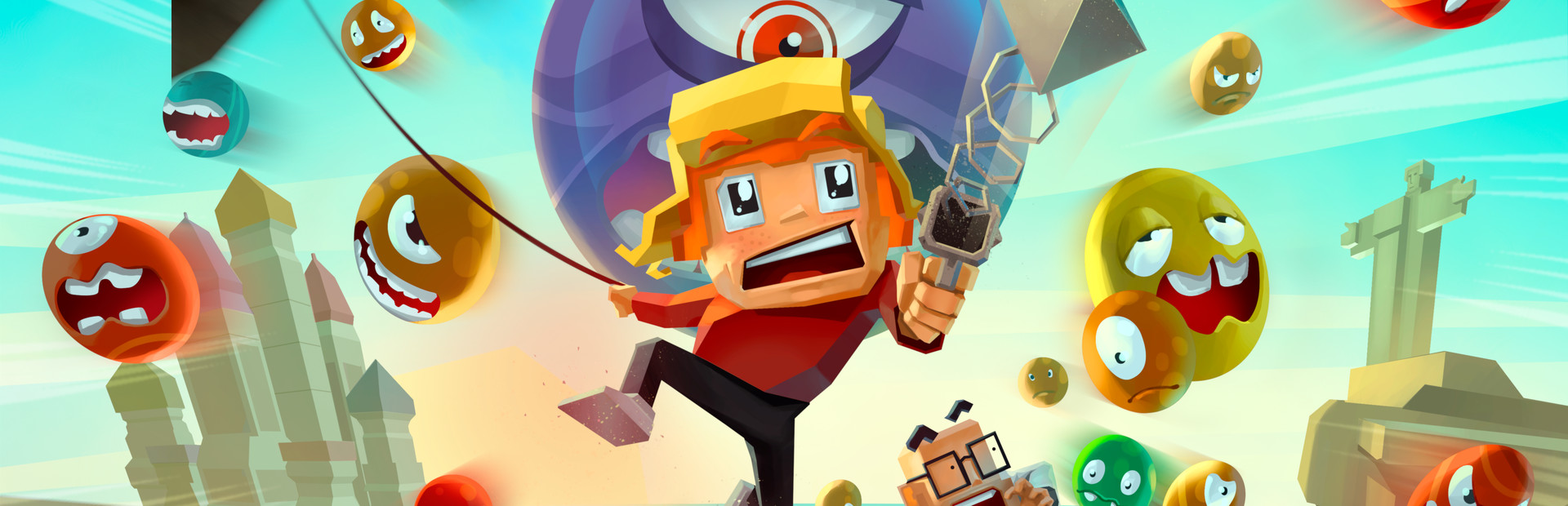
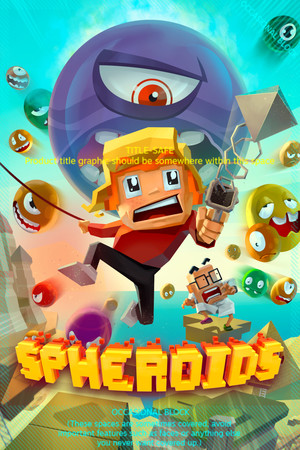
My first reaction to Spheroids was genuine warmth, the kind you feel when a game wears its influences without shame. Eclipse Games planted its flag squarely in Pang territory, built a little sci-fi comedy around a nervous Canadian kid named Lucas and his chaotic scientist partner Otto, and dared to ask whether a bouncing-ball arcade loop could carry a 32-level side-scrolling platformer. The answer is: mostly yes, with some caveats worth spelling out before you spend an afternoon on it. The core combat loop is pulled directly from Pang. Lucas fires a harpoon vertically, spheroid enemies bounce and split on contact, and the screen can fill with smaller, faster versions of whatever you just hit. Red spheroids die in one shot, yellow ones split into two, green ones can reattach to matching-size siblings, orange ones stomp downward with a delayed pounce, and grey ones take two hits to crack. That enemy variety gives the combat more texture than a straight Pang clone would. The Pang-inspired sections are genuinely satisfying in short windows, and the arena-style rooms that lock you in until all enemies are cleared produce the best, most focused tension the game offers. Between those rooms, the platforming introduces a grappling hook borrowed spiritually from Umihara Kawase, gravity boots that let Lucas flip onto ceilings and walk upside down, and teleporters that shift him between foreground and background planes. On paper, that sounds like a generous toolkit. In practice, each mechanic arrives just as you are getting comfortable, and the game never quite commits to any of them long enough to feel deliberate. The presentation is warm and tidy. Eight real-world locations, rendered in blocky pixel art, each get their own background palette: ice-blue Russia, cherry-blossom Japan, beige Egypt. The retro aesthetic suits the arcade roots without feeling slavishly devoted to any specific era. The soundtrack sits somewhere between jazz drums and chiptune, breezy enough not to grate over a four-to-five-hour run. The dialogue cutscenes between Lucas and Otto have a goofy science-fiction energy, though the text scrolls fast enough that slower readers will miss punchlines, and the jokes repeat on loading screens often enough to outstay their welcome. The problems are structural. Generous checkpoints combined with enemies that stay dead after you respawn mean failure carries almost no consequence. Upgrades like double-shot or slow-time can be purchased with collected coins, but most players will clear the game without ever needing them, which makes the shop feel decorative. The grappling hook has accuracy issues, occasionally latching onto the wrong anchor point at critical moments. A small number of reviewers reported crashes and an edge case where a spheroid gets stuck in an unreachable spot, forcing a level restart. The first four chapters feel light to the point of passivity; the difficulty jump in the back half arrives without much warning. What holds this together is the game's self-awareness about its own modest scale. It does not overstay its welcome, and within that short window, the central arcade loop does produce genuine moments of screen-filling, split-second chaos that feel exactly like why Pang was worth remembering in the first place. Spheroids is the kind of small game that works best when you treat it as a palate cleanser rather than a main event. It is easy, brief, and occasionally glitchy, but it is also unpretentious and quietly enjoyable in a way that more ambitious games sometimes forget to be. If you remember feeding coins into Pang at an arcade, or if you just want something low-stakes to unwind with for an evening, there is something genuinely likeable here, sitting quietly behind a modest price tag, asking very little of you.

Indie & narrative
Tags
System Requirements
Minimum
- OS
- Windows 7
- Memory
- 2 GB RAM
- Processor
- Intel i3 or equivalent
Recommended
- OS
- Windows 7
- Memory
- 4 GB RAM
- Processor
- Intel i3 or equivalent
Keep exploring
Community Discussion
Be the first to comment on Spheroids.
Reviews & Ratings
No ratings available
Game Info
- Developer
- Eclipse Games
- Publisher
- SA Industry
- Release Date
- Feb 13, 2017