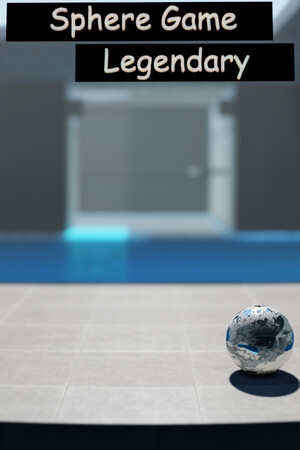

Sphere Game
Fifteen obstacle-filled levels, three difficulty tiers including 'impossible', and physics that actually push back: the opening entry in the Sphere Game series is a micro-challenge worth knowing about.
GamerScout Verdict
Worth a look for physics-platformer purists who want a compact, no-filler challenge, but too bare for anyone needing progression hooks.
Compare Prices(3 stores)
Every store in this table quotes us in euros, so the EUR figure is the price the seller actually set, not our arithmetic — which is why EUR is also the currency we rank in. We only list an offer here when the store gives us its price in euros, so nothing in this table is a number we invented.
Pick USD, PLN, GBP, CAD or AUD in the header and we convert from EUR at the European Central Bank reference rate — converted amounts are prefixed with ~. Your bank or the store may apply a different rate at checkout. We never hide offers based on where you are: everyone sees this whole table.
We may earn a commission when you buy games through links on this page — at no extra cost to you. It never affects our rankings or verdicts.
Price History
Screenshots & Media
About Sphere Game
I keep a soft spot for the kind of solo-dev project that shows up on Steam with almost no fanfare and quietly does exactly what it says on the tin. Sphere Game by D.P.L.D.S is that project. You roll a weighted sphere through fifteen hand-built levels against a physics engine that has real opinions about your line through each obstacle. The weight feels deliberate rather than clunky: momentum builds, corners punish, and a missed gap sends you back to try again with a little more humility. It is a small thing, and it knows it. The structure is clean and honest. Three difficulty settings sit stacked from easy to impossible, which is about as direct a difficulty curve as you will find. Easy gives newcomers room to learn how the sphere's mass behaves. Hard tightens the margins. Impossible is for people who genuinely want their reflexes tested by a ball rolling through geometry. Each level is essentially a self-contained dexterity puzzle, linear in layout, designed to isolate a specific kind of spatial problem. There is no open world padding here, no collectible bloat: you either clear the stage or you repeat it. That linearity is a choice, not a shortcut. Where the game is honest about its scale, it is also honest about its limits. This is a micro-indie from a single developer who has since iterated the concept across multiple sequels, each one adding camera controls, skins, and mechanics not present in this first entry. The original Sphere Game is stripped back by comparison: no jumping, no camera freedom, no customisation. If you arrive expecting the polish of later entries in the franchise, you will feel the absence of those layers. What you get instead is the raw physics-platformer kernel the whole series grew from, and there is a certain satisfaction in seeing something that focused. For the right player, namely someone who wants a compact, tactile challenge that respects their time and asks nothing more than precise movement through obstacle sequences, this delivers a complete experience at a price point that barely registers. For anyone who needs progression systems, visual spectacle, or a narrative thread to stay engaged, the game will feel bare within the first hour. My honest read: treat it as a proof-of-concept that aged into a curiosity, play it on hard or above, and see whether the developer's instinct for weighted-sphere feel hooks you enough to follow the series forward.

Indie & narrative
Tags
System Requirements
Minimum
- OS
- windows 10
- Memory
- 4 GB RAM
- DirectX
- Version 11
- Storage
- 200 MB available space
- Graphics
- intel(R) HD Graphics 520
- Processor
- intel i3-6006u cpu@2.00 GHz
Keep exploring
Community Discussion
Be the first to comment on Sphere Game.
Reviews & Ratings
No ratings available
Game Info
- Developer
- D.P.L.D.S
- Publisher
- D.P.L.D.S
- Release Date
- Aug 5, 2020