Compare Space Run prices across 50+ stores and find the best deal. Developed by Passtech Games. Published by Focus Entertainment. Released on 6/13/2014. Available on PC, Mac, Linux. Genres: Indie, Strategy. Metacritic score: 73/100.

Tower defense meets real-time shipbuilding in a package that respects your time and punishes lazy loadouts. Lean, focused, and surprisingly tense once the pirates start flanking from three directions at once.

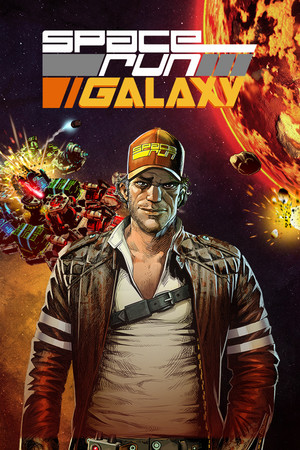
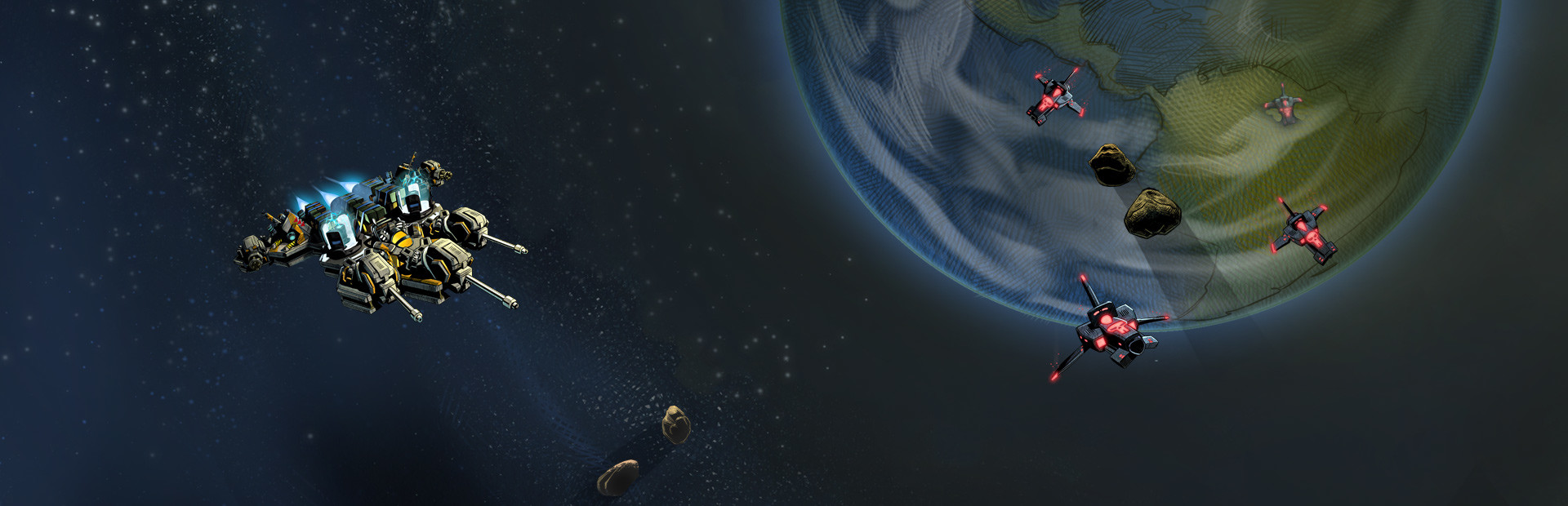
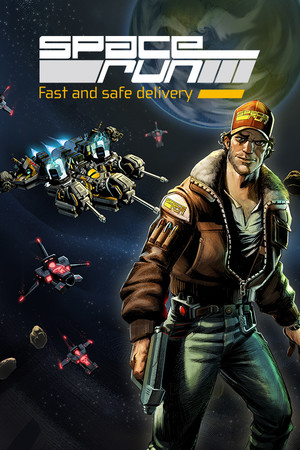
I put a couple of hours into Space Run expecting a light tower-defense diversion and walked away with ink-stained notes about power grid adjacency rules. The core loop is tighter than it looks: you start each mission with an empty hex-tile ship, load cargo according to whatever quirky constraints the current corporation imposes, then spend the flight scrambling to place and orient weapons, shields, thrusters, and energy reactors before the first wave arrives. There is no pause button. That single design choice is what separates a casual tower-defense from something that actually demands your attention. The hex grid is where most of the strategic texture lives. Weapons must face outward into empty space, power generators need to sit adjacent to the modules they feed, and passenger cabins demand outward-facing tiles that directly eat into your weapon coverage. Fourteen or so hours in, you will still be finding edge cases in that placement logic. The 18 constructible modules each carry two secondary skills you can fire manually mid-mission: some guns switch to a burst fire mode, fusion reactors can emergency-repair neighbors, and several turrets can be reoriented on the fly. Managing those active abilities while also collecting dropped space credits by mousing over the battlefield creates a satisfying, chaotic rhythm that the Metacritic 73 score undersells. The tension between speed and survival is the game's best design argument. Each mission has tiered time bonuses: get in fast and you bank extra reputation, which unlocks harder contracts and better modules. The temptation to strip out one shield generator and slot another thruster will get you killed, and that trade-off calculus is exactly what strategy players live for. The corporations add variety - one client hands you plain cargo crates and a mechanic module that generates bonus crates mid-run, another loads fragile passenger modules that block entire flanks of your ship. Different cargo, different hexboard shape, different threat angle. The game keeps rotating those variables at a pace that stays interesting through the campaign. The real criticism from the community, and it is valid, is that harder missions lean heavily on trial-and-error memory. Enemies attack from specific vectors that are not fully telegraphed on a first run, so your first attempt on a tough level often functions as a scouting mission rather than a genuine strategic encounter. It does not ruin the experience, but players expecting airtight information design will notice the gap. The story wraps you in a lightly satirical space-opera shell with a Han Solo-adjacent protagonist named Buck Mann, full voice acting that holds up well, and enough personality in the pirate antagonists to make the between-mission cutscenes worth watching rather than skipping. For strategy-curious newcomers, the difficulty scales sensibly through the early missions and the module unlock system is paced well enough that you are never thrown into complexity without a foundation. Veterans will want to go back to cleared missions with a full kit and chase the three-star time ranks, which is where genuine build optimization kicks in. It is a compact game by modern standards, more of a focused weekend than a sprawling campaign, and that is not a flaw. Not every strategy title needs to be 200 hours. Space Run knows what it is, does it with polish, and exits cleanly. Diego, Scout Team

Space Run
IndieStrategy

Space Run

Jun 13, 2014Passtech GamesFocus Entertainment
GamerScout Says

Tower defense meets real-time shipbuilding in a package that respects your time and punishes lazy loadouts. Lean, focused, and surprisingly tense once the pirates start flanking from three directions at once.

PCMacLinux
Best Price Available
0.00
at N/A
Historical low: $0.44

Compare Prices(0 stores)

Loading prices...

We may earn a commission when you buy games through links on this page — at no extra cost to you. It never affects our rankings or verdicts.

Screenshots & Media

Screenshot

About Space Run

I put a couple of hours into Space Run expecting a light tower-defense diversion and walked away with ink-stained notes about power grid adjacency rules. The core loop is tighter than it looks: you start each mission with an empty hex-tile ship, load cargo according to whatever quirky constraints the current corporation imposes, then spend the flight scrambling to place and orient weapons, shields, thrusters, and energy reactors before the first wave arrives. There is no pause button. That single design choice is what separates a casual tower-defense from something that actually demands your attention. The hex grid is where most of the strategic texture lives. Weapons must face outward into empty space, power generators need to sit adjacent to the modules they feed, and passenger cabins demand outward-facing tiles that directly eat into your weapon coverage. Fourteen or so hours in, you will still be finding edge cases in that placement logic. The 18 constructible modules each carry two secondary skills you can fire manually mid-mission: some guns switch to a burst fire mode, fusion reactors can emergency-repair neighbors, and several turrets can be reoriented on the fly. Managing those active abilities while also collecting dropped space credits by mousing over the battlefield creates a satisfying, chaotic rhythm that the Metacritic 73 score undersells. The tension between speed and survival is the game's best design argument. Each mission has tiered time bonuses: get in fast and you bank extra reputation, which unlocks harder contracts and better modules. The temptation to strip out one shield generator and slot another thruster will get you killed, and that trade-off calculus is exactly what strategy players live for. The corporations add variety - one client hands you plain cargo crates and a mechanic module that generates bonus crates mid-run, another loads fragile passenger modules that block entire flanks of your ship. Different cargo, different hexboard shape, different threat angle. The game keeps rotating those variables at a pace that stays interesting through the campaign. The real criticism from the community, and it is valid, is that harder missions lean heavily on trial-and-error memory. Enemies attack from specific vectors that are not fully telegraphed on a first run, so your first attempt on a tough level often functions as a scouting mission rather than a genuine strategic encounter. It does not ruin the experience, but players expecting airtight information design will notice the gap. The story wraps you in a lightly satirical space-opera shell with a Han Solo-adjacent protagonist named Buck Mann, full voice acting that holds up well, and enough personality in the pirate antagonists to make the between-mission cutscenes worth watching rather than skipping. For strategy-curious newcomers, the difficulty scales sensibly through the early missions and the module unlock system is paced well enough that you are never thrown into complexity without a foundation. Veterans will want to go back to cleared missions with a full kit and chase the three-star time ranks, which is where genuine build optimization kicks in. It is a compact game by modern standards, more of a focused weekend than a sprawling campaign, and that is not a flaw. Not every strategy title needs to be 200 hours. Space Run knows what it is, does it with polish, and exits cleanly. Diego, Scout Team

Tags

singleplayerachievementstrading-cardscloud-savestier:aaaReal-Time Ship BuildingHex GridNo Pause MechanicActive Module SkillsCargo ManagementSpeed-vs-Survival TradeoffMission Score ChasingSatirical Sci-Fi

Steam Deck & Linux

ProtonDB Platinum

Runs flawlessly on Linux out of the box. Based on 6 ProtonDB community reports.

System Requirements

Minimum

OS
WINDOWS XP SP3/WINDOWS VISTA SP2/WINDOWS 7/WINDOWS 8
Memory
2048 MB RAM
Storage
1 GB available space
Graphics
512 MB 100% OPENGL 2.1 COMPATIBLE NVIDIA GEFORCE 8600/ATI RADEON HD 2600/INTEL HD 2000
Processor
AMD/INTEL DUAL-CORE 2.4 GHZ
Sound Card
FMOD COMPATIBLE
Additional Notes
INTERNET CONNECTION REQUIRED FOR THE GAME ACTIVATION

Community Discussion

Be the first to comment on Space Run.

Reviews & Ratings

Metacritic
73

Game Info

Developer
Passtech Games
Publisher
Focus Entertainment
Release Date
Jun 13, 2014

Price Alert

Get notified when the price drops below your target!

Create Alert

Price History

2026-06-100.44(lowest)

More from Passtech Games

Buy smarter: helpful guides

Looking for more? See games like Space Run

Frequently asked questions about Space Run

How much does Space Run cost?

Space Run pricing changes often and varies by store, edition and region. The live price table on this page compares the cheapest in-stock key and store offers across 50+ verified shops, so you always see the current lowest price before you buy.

Where can I buy Space Run cheapest?

Compare Space Run prices across every verified store in the price table on this page. We list the cheapest in-stock key and store offers, updated regularly, so you always see the best current deal before you buy.

What platforms is Space Run available on?

Space Run is available on PC, Mac, Linux.

When was Space Run released?

Space Run was released on 13 June 2014.

Who developed Space Run?

Space Run was developed by Passtech Games and published by Focus Entertainment.

Is Space Run worth buying?

Space Run holds a Metacritic score of 73/100, making it one of the standout Indie titles. See the full reviews, ratings and how-long-to-beat times on this page to decide.