Sonic the Hedgehog 4 - Episode I
Sixteen years of fan anticipation squeezed into a two-to-three-hour sprint through zones you've already memorized from other games. Worth it for casual nostalgia-chasers; frustrating for purists who know exactly what's missing.
GamerScout Verdict
Fine for a casual nostalgia hit, but Sonic Mania does everything this promises and actually delivers it.
Compare Prices(5 stores)
Every store in this table quotes us in euros, so the EUR figure is the price the seller actually set, not our arithmetic — which is why EUR is also the currency we rank in. We only list an offer here when the store gives us its price in euros, so nothing in this table is a number we invented.
Pick USD, PLN, GBP, CAD or AUD in the header and we convert from EUR at the European Central Bank reference rate — converted amounts are prefixed with ~. Your bank or the store may apply a different rate at checkout. We never hide offers based on where you are: everyone sees this whole table.
We may earn a commission when you buy games through links on this page — at no extra cost to you. It never affects our rankings or verdicts.
Price History
Screenshots & Media
About Sonic the Hedgehog 4 - Episode I
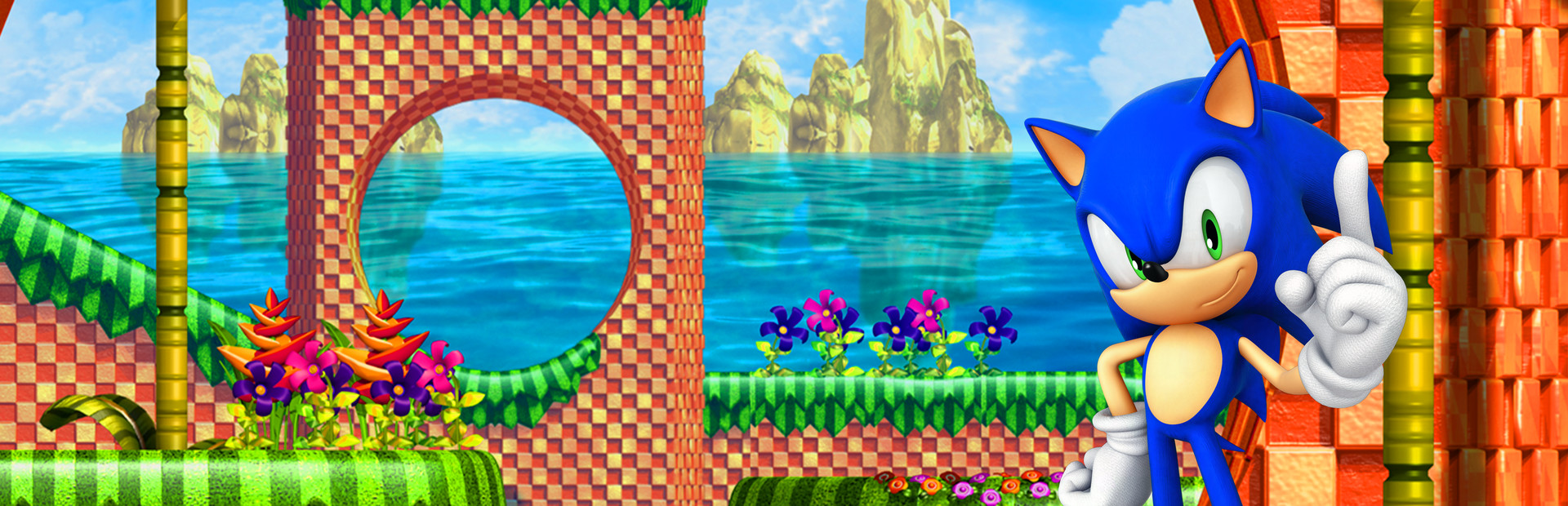
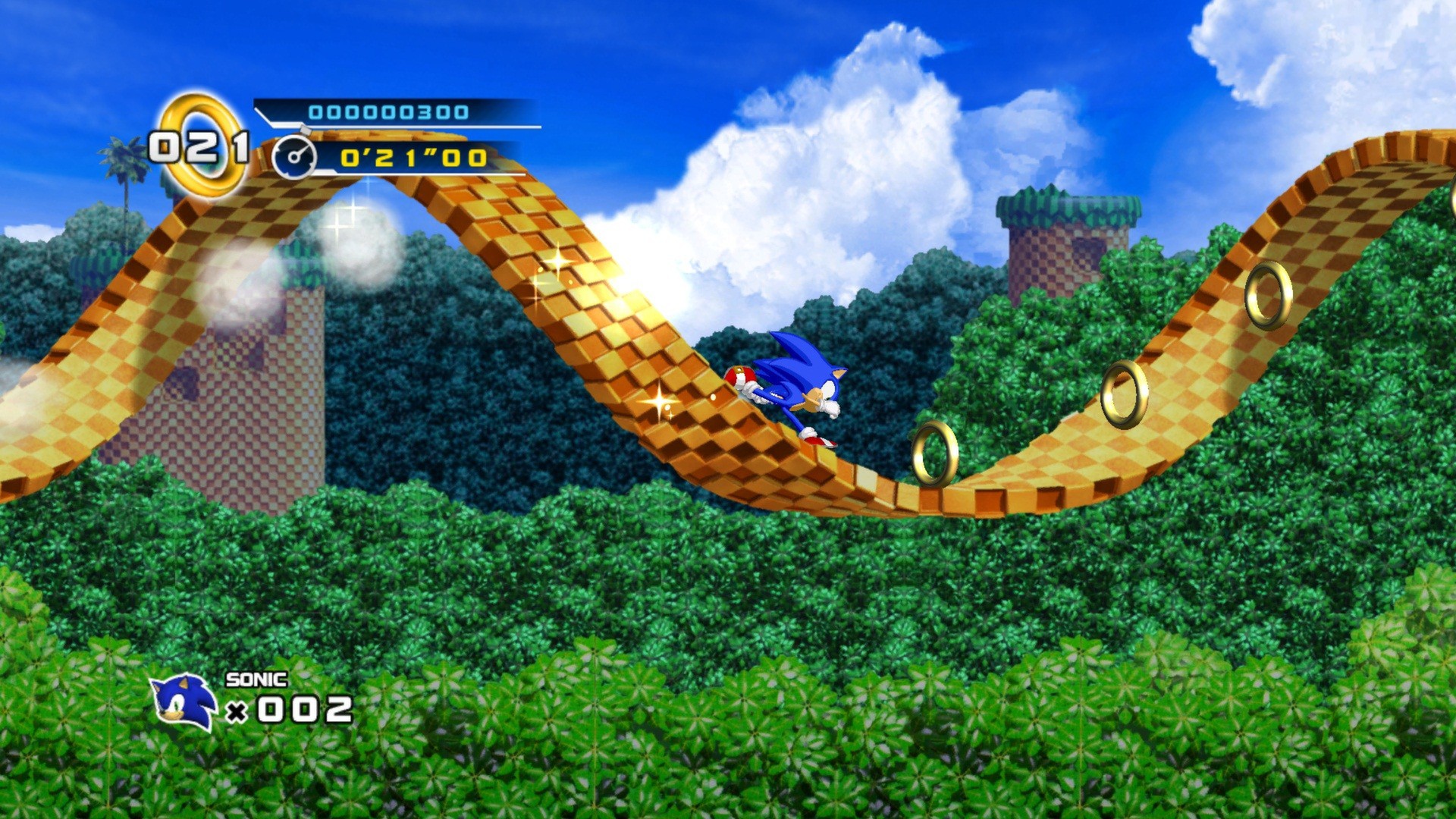
My first hour with Sonic the Hedgehog 4 Episode I felt like bumping into someone you hadn't seen since the nineties - familiar, a little off, and shorter than you remembered. The premise is simple: SEGA's blue hedgehog is back in strict 2D (or technically 2.5D, with polygonal characters running across painted backdrops), picking up directly after Sonic and Knuckles left off. Dr. Eggman has survived, dusted off his old robots, and it's up to Sonic to run through four Zones and put him down again. Solo. No Tails, no Knuckles, no story cutscenes. Just you, a spin dash, and a homing attack borrowed from the Adventure era. The four Zones - Splash Hill, Casino Street, Lost Labyrinth, and Mad Gear - are where the game's biggest argument lives. Each one is an open callback to a Genesis-era stage: Splash Hill echoes Green Hill, Casino Street is practically Casino Night Zone with a new coat of gloss, Lost Labyrinth riffs on the infamous water stages of old, and Mad Gear cribs directly from Metropolis Zone. Whether you read that as nostalgic homage or cynical recycling will define your whole experience. The zones look genuinely nice in motion, with Casino Street's cascading lights being a visual highlight, but the level design inside them swings wildly between breezy fun and flat-out cheap. Pitfalls appear at the edge of your camera view, enemy rows exist primarily to set up homing-attack chains over gaps rather than as actual threats, and the Lost Labyrinth Zone's torch-carrying puzzle section brings the momentum to a dead stop in a way that feels designed by a different team than whoever built the fast sections. The physics are the loudest conversation around this game, and for good reason. Sonic loses speed too quickly on inclines, rolls off ramps and inexplicably uncurls mid-air, and the momentum-based flow that made the Genesis games feel alive just is not there. The homing attack plugs some of that gap - locking onto nearby enemies or springs with a red target indicator and letting you chain jumps across gaps with a satisfying snap - but it also becomes a crutch the level design leans on too hard. Miss a chain over a pit and Sonic drops like a stone. The physics engine was reportedly borrowed from the Sonic Rush handheld games, which worked fine for a portable title but feels wrong at this scale. Casual players will probably not notice or care much. Longtime fans who can recite the slope physics from Sonic 3 by heart will feel it immediately. Length is the other sore point. Completing all four Zones and the E.G.G. Station finale takes somewhere between two and three hours on a first run. There are seven Chaos Emeralds to collect through rotating-maze special stages (lifted straight from Sonic 1 with a countdown timer added), which unlock Super Sonic and pad total playtime modestly. Zone select lets you replay any act or special stage in any order and compare times with friends, which is a small but welcome addition. Beyond that, the replay drawer is thin. Episode I was always designed as the first chapter of a trilogy; Episode II arrived in 2012, and a planned Episode III was cancelled. What you get here is a deliberately incomplete story that ends on a loose thread, which stings more now that the series is dead in the water. If you have no strong attachment to the Genesis games and want a clean, short, reasonably fun 2D platformer with a familiar face, Episode I delivers that without much friction. The speed sections feel good when the level steps back and lets them breathe, the visual presentation is cheerful, and the absence of voice acting or bizarre narrative detours is genuinely refreshing. If you are a series veteran hunting for the spiritual successor to Sonic 3 and Knuckles, this is not it, and Sonic Mania (released years later) is the game that actually fills that hole. Come in with calibrated expectations and there is a decent, if short, afternoon here.

Catch-all
Tags
System Requirements
Minimum
- OS
- Windows XP/Vista/Win7
- Sound
- DirectX Compatible
- Memory
- 1 GB (2 GB on Vista) GB RAM
- Graphics
- 256 MB (NVIDIA GeForce 7600/AT Radeon X1300) & above
- DirectX®
- dx90a
- Processor
- Pentium 4 @ 3.2 GHz/Athlon 64 3000+ or Equivalent & above
- Hard Drive
- 500 MB HD space
Recommended
- OS
- Windows XP/Vista/Win7
- Sound
- DirectX Compatible
- Memory
- 2 GB+ GB RAM
- Graphics
- 512 MB (NVIDIA GeForce 8800/ATI Radeon HD 3800) & above
- DirectX®
- dx50
- Processor
- Intel Core 2 DUO @ 2.4 GHz/Athlon 64 X2 4200+ & above
- Hard Drive
- 500 MB HD space
Keep exploring
Community Discussion
Be the first to comment on Sonic the Hedgehog 4 - Episode I.
Reviews & Ratings
No ratings available
Game Info
- Developer
- SEGA
- Publisher
- SEGA
- Release Date
- Jan 19, 2012