Shovel Knight: Shovel of Hope
The little Kickstarter that redefined what a retro platformer could be, and still holds up a decade on. Four to five hours of handcrafted joy, or a lot more if you start smashing checkpoints for extra gold.
GamerScout Verdict
Best for platformer fans who want a tight, handcrafted campaign with replay hooks - and a soundtrack that lingers.
Compare Prices(5 stores)
Every store in this table quotes us in euros, so the EUR figure is the price the seller actually set, not our arithmetic — which is why EUR is also the currency we rank in. We only list an offer here when the store gives us its price in euros, so nothing in this table is a number we invented.
Pick USD, PLN, GBP, CAD or AUD in the header and we convert from EUR at the European Central Bank reference rate — converted amounts are prefixed with ~. Your bank or the store may apply a different rate at checkout. We never hide offers based on where you are: everyone sees this whole table.
We may earn a commission when you buy games through links on this page — at no extra cost to you. It never affects our rankings or verdicts.
Price History
Screenshots & Media
About Shovel Knight: Shovel of Hope
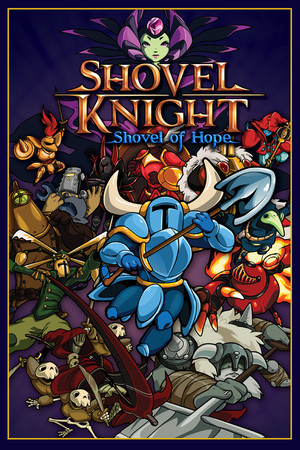
I keep coming back to Shovel of Hope the way you revisit a favourite short novel: the length is exactly right, the craft is visible in every room, and the ending earns everything that came before it. Yacht Club Games, a small team built partly from ex-WayForward staff, set out to make a platformer that felt like the best parts of NES-era Mega Man and Castlevania without any of the era's cruelty, and they landed it with remarkable precision. The core loop is deceptively simple. Shovel Knight swings his shovel blade horizontally for close-range attacks, and can drop into a downward pogo thrust mid-air to bounce off enemies and objects. That pogo move, which defies gravity in the most satisfying way, forms the heart of the best platforming sequences: chain enough bounces across a pit and the game opens up into something closer to acrobatics. Twelve themed stages send you through Pridemoor Keep, the Explodatorium mad-science lab, the steampunk Iron Whale submarine, and the psychedelic Clockwork Tower, each with its own enemy types and gimmicks that ramp up as you near the Order of No Quarter boss waiting at the end. Every boss is thematically matched to their stage - Tinker Knight fumbles with wrenches before revealing a mechanical suit, Specter Knight's level wraps you in near-total darkness broken only by lightning flashes. The humour is gentle and consistent; nobody here takes themselves too seriously, and the game is stronger for it. Progression runs through two hub towns where you spend collected gems on Gastronomer health upgrades, Magicist magic upgrades, Shovel Smith blade enhancements, and Armorer suits that change how the platforming feels. Chester, a hidden vendor tucked inside most stages, sells Relics: secondary tools like the ranged Flare Wand, the airborne Propeller Dagger, the defensive Phase Locket, and the improbable Fishing Rod. The honest caveat is that fully upgrading everything softens the difficulty noticeably - if you want the game to push back, go easy on the Gastronomer, or try New Game Plus, which strips checkpoints, reduces healing opportunities, and gives enemies more bite. Smashing checkpoints for bonus gold rather than saving them is another self-imposed challenge that the game quietly rewards with extra treasure. The soundtrack, composed by Jake Kaufman with additional tracks from Mega Man composer Manami Matsumae, is genuinely one of the finest chiptune scores in the genre. It draws on NES hardware sounds in ways that feel homage rather than pastiche, and individual stage themes have a way of staying with you long after the credits roll. The pixel art is equally considered: big, clean sprites with animated backgrounds that show real craft without feeling like a museum exhibit. Where Shovel of Hope sits slightly behind the campaigns that followed it in the Treasure Trove collection is in Relic balance and overall challenge ceiling. Some Relics are rarely useful, the pogo-bounce can trivialise certain bosses if you lean on it hard, and a handful of players find the difficulty ramp slow in the early stages. These are minor complaints against a campaign that knows exactly what it is and executes it with care. A run takes four to five hours; completionists and Challenge Mode devotees will add considerable time on top. If you already own Shovel Knight: Treasure Trove, this campaign is part of that package. If you are coming in fresh, Shovel of Hope is a measured, generous starting point for one of indie platforming's most consistent series.

Indie & narrative
Tags
System Requirements
Minimum
- OS
- Windows 7 or later
- Memory
- 2 GB RAM
- DirectX
- Version 9.0
- Storage
- 250 MB available space
- Graphics
- 2nd Generation Intel Core HD Graphics (2000/3000), 512MB
- Processor
- Intel Core 2 Duo 2.1 ghz or equivalent
Keep exploring
Community Discussion
Be the first to comment on Shovel Knight: Shovel of Hope.
Reviews & Ratings
No ratings available
Game Info
- Developer
- Yacht Club Games
- Publisher
- Yacht Club Games
- Release Date
- Dec 10, 2019