Shovel Knight Showdown
Bring three friends and a couch, or walk away: Showdown is a local-only platform brawler that shines in a crowd and flatlines when you're alone with the CPU.
GamerScout Verdict
Best for Shovel Knight fans with a couch full of players; solo buyers should weigh the absent online mode hard before committing.
Compare Prices(5 stores)
Every store in this table quotes us in euros, so the EUR figure is the price the seller actually set, not our arithmetic — which is why EUR is also the currency we rank in. We only list an offer here when the store gives us its price in euros, so nothing in this table is a number we invented.
Pick USD, PLN, GBP, CAD or AUD in the header and we convert from EUR at the European Central Bank reference rate — converted amounts are prefixed with ~. Your bank or the store may apply a different rate at checkout. We never hide offers based on where you are: everyone sees this whole table.
We may earn a commission when you buy games through links on this page — at no extra cost to you. It never affects our rankings or verdicts.
Price History
Screenshots & Media
About Shovel Knight Showdown
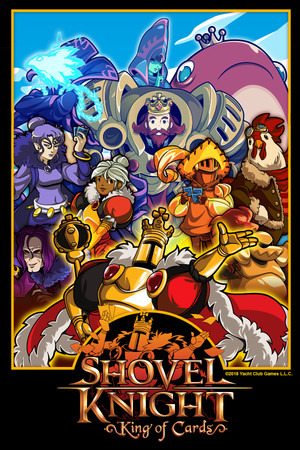
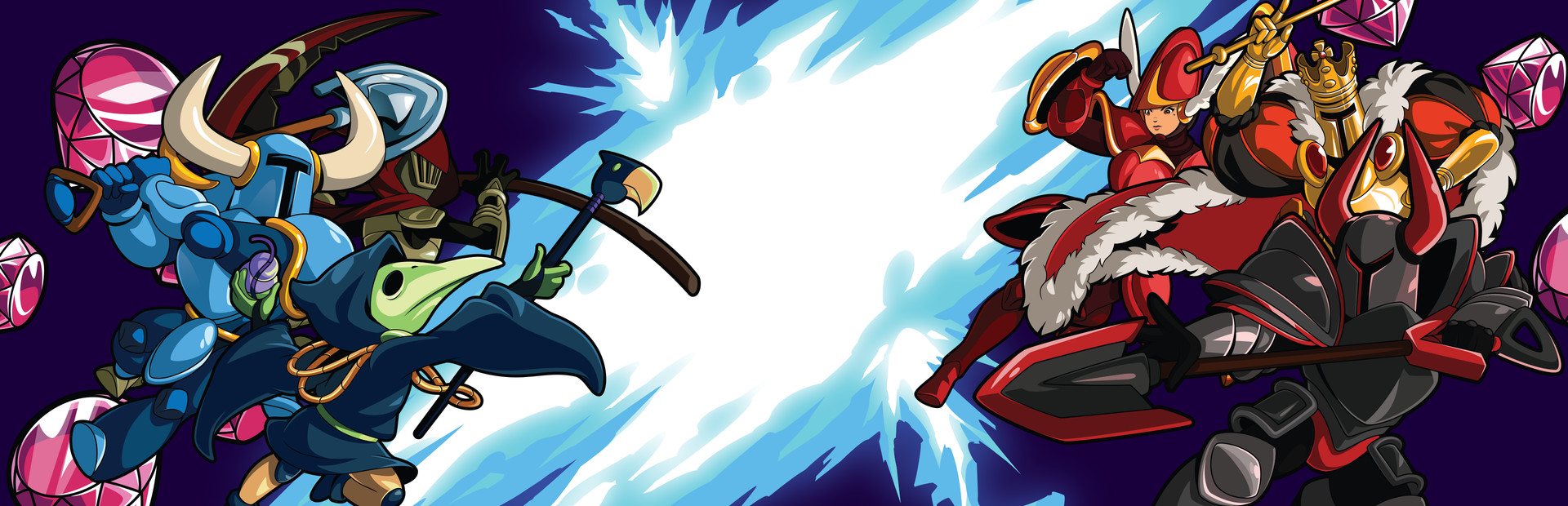
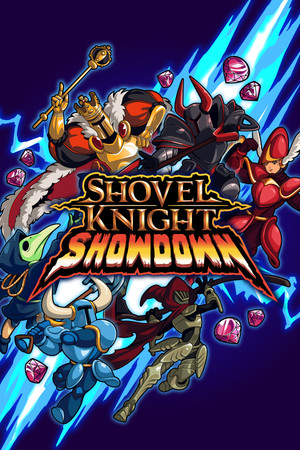
I want to be straight with you about what kind of game this is, because the pitch can mislead you. Shovel Knight Showdown started as a Kickstarter stretch goal, grew into something Yacht Club themselves compared to a party game, and landed at a 65 on Metacritic with critics mostly agreeing on the same fault line: tremendous with people in the room, noticeably hollow without them. That context matters before you spend anything. The fighting system is deliberately flat in a way that either relaxes or frustrates you depending on your expectations. Every character has four hit points, every attack deals one point of damage, and a universal parry button replaces rolling or shielding. That parry is spammable, which blunts aggression in solo play but keeps chaos readable in four-player matches. There is no online mode. Full stop. If your crew is Discord-only these days, this game has nothing for you. For a local session though, the roster does a lot of work: twenty characters with movesets pulled from their respective campaigns, so Specter Knight brings his wall-jumps and diagonal dash-slash, Plague Knight can bomb-burst out of knockback, Shield Knight throws her shield as a projectile, and Black Knight fires upward. The variety is genuine enough that experimenting with characters is consistently rewarding in short bursts. The stage design earns some respect. Around thirty stages, a mix of static arenas and auto-scrolling maps where the platforming ancestry of the series actually matters. Hazard modifiers, one-hit KO rules, Hyper Brawl (everybody jumps higher and runs faster), and the Chester's Choice randomiser keep individual sessions from feeling identical. Treasure Clash, where kills drop gems that enemies can steal before they hit the floor, is the stronger of the two main formats because it creates a second decision layer beyond just punching people. The Showdown deathmatch mode feels thin by comparison, capped at five lives per player. The single-player Story Mode is where things get inconsistent. It runs each character through a nine-stage arcade ladder with semi-randomised opponents, a Break the Targets detour against Percy, and a two-part boss fight against a giant magic mirror. The AI difficulty swings wildly: at Normal it can read inputs and punish you precisely, then stand next to a lava pit and walk into it. Character balance in solo play is also uneven, with heavier fighters like Polar Knight absorbing punishment that sends smaller characters like Shovel Knight himself pinballing across the screen. Completionists get 33 achievements requiring character-specific tasks, which will keep achievement hunters busy, but the repetition catches up fast after the second or third story run. Bottom line: this is a game that grew beyond its original scope but never fully committed to being a standalone fighting game. If you already own Shovel Knight: Treasure Trove it came free, which is exactly the right price for what it is. As a standalone purchase it asks you to honestly answer one question before clicking buy: do you have people to play it with tonight?

Shooters
Tags
System Requirements
Minimum
- OS
- Windows 7 or later
- Memory
- 2 GB RAM
- DirectX
- Version 9.0
- Storage
- 250 MB available space
- Graphics
- 2nd Generation Intel Core HD Graphics (2000/3000), 512MB
- Processor
- Intel Core 2 Duo 2.1 ghz or equivalent
Keep exploring
Community Discussion
Be the first to comment on Shovel Knight Showdown.
Reviews & Ratings
Game Info
- Developer
- Yacht Club Games
- Publisher
- Yacht Club Games
- Release Date
- Dec 10, 2019