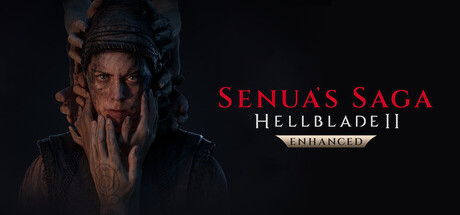
Senua’s Saga: Hellblade II
Ninja Theory's most visually arresting game yet doubles down on cinematic immersion, but if you showed up wanting a combat-first action title, this sequel will test your patience before it earns your respect.
GamerScout Verdict
Worth it for players who prioritize atmosphere and narrative over mechanical depth; a tough sell if you want a proper action game.
Compare Prices(5 stores)
Every store in this table quotes us in euros, so the EUR figure is the price the seller actually set, not our arithmetic — which is why EUR is also the currency we rank in. We only list an offer here when the store gives us its price in euros, so nothing in this table is a number we invented.
Pick USD, PLN, GBP, CAD or AUD in the header and we convert from EUR at the European Central Bank reference rate — converted amounts are prefixed with ~. Your bank or the store may apply a different rate at checkout. We never hide offers based on where you are: everyone sees this whole table.
We may earn a commission when you buy games through links on this page — at no extra cost to you. It never affects our rankings or verdicts.
Price History
Screenshots & Media
About Senua’s Saga: Hellblade II
My first few hours with Hellblade II felt less like playing a game and more like being pulled through a fever dream someone rendered at near-photorealistic fidelity. That reaction is the most useful thing I can tell you before you spend money on it, because whether that sounds appealing or alarming says everything about whether this is your kind of experience. What Ninja Theory has built is a linear, single-player action-adventure set in Viking Iceland, following Senua on a mission to free enslaved villagers while wrestling with the voices that inhabit her mind. The psychosis audio design, recorded using binaural techniques, remains the game's single most effective trick - headphones are not optional, they are the difference between a decent game and a genuinely unsettling one. Structurally, the loop is: walk through stunning environments, solve focus-based environmental puzzles by scanning the world to align runes or shift reality, and fight. Combat has Senua using light and heavy attacks, dodges, and parries to build a focus meter that, once triggered, lets her slow time and press hard. Notably, the first game's permadeath mechanic is gone, so dying is consequence-free. Enemy variety includes standard sword-wielding Northmen and the more grotesque Draugr, and certain cutscenes blend directly into fights, making individual encounters feel like interactive set pieces. The high-water mark for pure spectacle is the giant encounters, where the game genuinely tries something different in scale and staging. Here is the honest problem: the gameplay mechanics do not evolve. The focus puzzles established early on are the same puzzles you solve at the end, and the camera frequently telegraphs the solution so directly that they function more as loading screens with extra steps. Combat, while satisfying in short bursts, grows repetitive because there is no weapon variety, no loadout, no build to fiddle with. The entire experience runs around eight to ten hours with no replay hook. Critics landed all over the map on this - an 80 Metacritic sits alongside scores ranging from 6 to 10 - and the split reflects a genuine disagreement about what games owe players in terms of mechanical substance. Pacing in the second half sags under the weight of too many walking-and-talking stretches. On the technical side, PC players at launch reported shader compilation stutters, and the game is extremely demanding at high resolutions even on top-end hardware. What nobody argues about is the presentation. Unreal Engine 5 is put to work harder here than in almost anything else released in this console generation, and the character animation and environmental detail in particular set a bar that very few productions can touch. Melina Juergens' performance as Senua carries emotional weight that most narrative games never approach. The sound design is the kind of thing you remember a year later. If the original Hellblade hooked you with its psychological intimacy and you are happy to revisit that register with a bigger canvas, the sequel largely delivers on those terms. If you bounced off the first game's pace or found its combat thin, nothing here fixes that - it arguably trims it further in favor of cinematic momentum. The honest read is that Hellblade II is doing one thing exceptionally well - crafting an atmospheric, emotionally demanding single-player experience that treats audio and visual storytelling as first-class citizens - while treating mechanics as a necessary minimum to keep you moving. That is a deliberate creative choice, not an oversight, and it divides players cleanly along preference lines.
Catch-all
Tags
System Requirements
Minimum
- OS
- Windows 10/11 64 Bit
- Memory
- 16 GB RAM
- Storage
- 70 GB available space
- Graphics
- Nvidia GTX 1070 | AMD RX 5700 | Intel Arc A580
- Processor
- Intel i5-8400 | AMD Ryzen 5 2600
Recommended
- OS
- Windows 10/11 64 Bit
- Memory
- 16 GB RAM
- Storage
- 70 GB available space
- Graphics
- Nvidia RTX 3080 | AMD RX 6800 XT | Intel Arc A770
- Processor
- Intel i7-10700K | AMD Ryzen 5 5600X
Keep exploring
Community Discussion
Be the first to comment on Senua’s Saga: Hellblade II.
Reviews & Ratings
Game Info
- Developer
- Ninja Theory
- Publisher
- Xbox Game Studios
- Release Date
- May 21, 2024