Compare Sea Salt prices across 50+ stores and find the best deal. Developed by YCJY Games. Published by YCJY Games. Released on 10/17/2019. Available on PC. Genres: Action, Adventure, Indie, Strategy.

Controlling an Old God's horde felt more tactical than I expected from a pixel-art indie, until the pathfinding reminded me who actually holds the leash.

I came into Sea Salt expecting a mindless crowd-pusher. What I got was something closer to a stripped-down horde-management puzzle dressed in a Lovecraftian coat, and for a few hours that combination is genuinely compelling. You play as an apostle of Dagon, directing a swarm of eldritch minions across top-down maps by dragging a cursor around the screen while your creatures follow in formation. You are not clicking individual units or queuing build orders. The entire horde moves as one mass, and your job is positioning, surround the target, hold the attack trigger, watch the carnage. Simple on paper, meaningfully tense once armored gunners, pikemen, and AoE hunters start showing up. The unit roster is where most of the strategic texture lives. You unlock 19 different minion types across the campaign, the basic Swarm, acid-trailing Worms, ranged Cultists, tanky Crabs, Liches that raise Spectres from corpses, Hermits that project a bullet-proof shield bubble, and more. Composition decisions matter more than the surface-level controls imply. Worms slow enemies that wander into melee range, which lets Cultists work safely from the back line; Crabs absorb hits while the ranged units pick apart gunners behind barricades. That synergy space is narrow compared to a proper RTS, but it is real, and the later maps are built specifically to stress-test it. There are also multiple Apostles to unlock, each with different starting troops and passive bonuses, which extends replayability without asking you to replay the same content identically. The difficulty curve deserves credit. The opening stages let you brute-force everything with raw numbers, which teaches the basics without friction. By the mid-game, enemy hunters with flamethrowers, shotguns, and telegraphed charge attacks demand actual positioning reads and deliberate use of cover. Boss encounters, like an anchor-swinging dockworker and a horseback commander using balista fire and necromancy for area denial, communicate their patterns clearly before punishing sloppiness. Generous checkpoints mean failure never costs much time, which keeps the pacing tight. An arena wave-survival mode adds a secondary challenge loop once the campaign is done. Here is where I need to be honest about the friction. Pathfinding is the game's main recurring enemy, and not the fun kind. Minions occasionally scatter toward off-screen threats instead of following your cursor, and when your horde splits across multiple engagements at once it can dissolve faster than the game gives you credit to replace it. You cannot split the group deliberately or order specific unit types to hold position, which means late-game multi-threat rooms can devolve into chaos you did not author. The color palette is intentionally murky and atmospheric, which is great for mood and occasionally terrible for reading exactly which pixel-mass is your Hermit's shield versus an enemy AoE ring. Neither flaw is a dealbreaker, but both are worth knowing before you commit. For the right player, someone who wants dark atmosphere, a compact villain-protagonist narrative, and a few genuinely clever unit-synergy puzzles in a session-friendly runtime, Sea Salt does its job. It is not a deep-bench strategy title and it will not occupy a hundred hours. Think of it as the Hotline Miami of horde games: all action, demands you read the room, rewards patience over aggression, and wraps up before it outstays its welcome. At sub-five dollars it represents extremely low financial risk for what it offers. Diego, Scout Team

Sea Salt
ActionAdventureIndieStrategy

Sea Salt

Oct 17, 2019YCJY Games
GamerScout Says

Controlling an Old God's horde felt more tactical than I expected from a pixel-art indie, until the pathfinding reminded me who actually holds the leash.

PC
Best Price Available
0.00
at N/A
Historical low: $2.15

Compare Prices(0 stores)

Loading prices...

We may earn a commission when you buy games through links on this page — at no extra cost to you. It never affects our rankings or verdicts.

Screenshots & Media

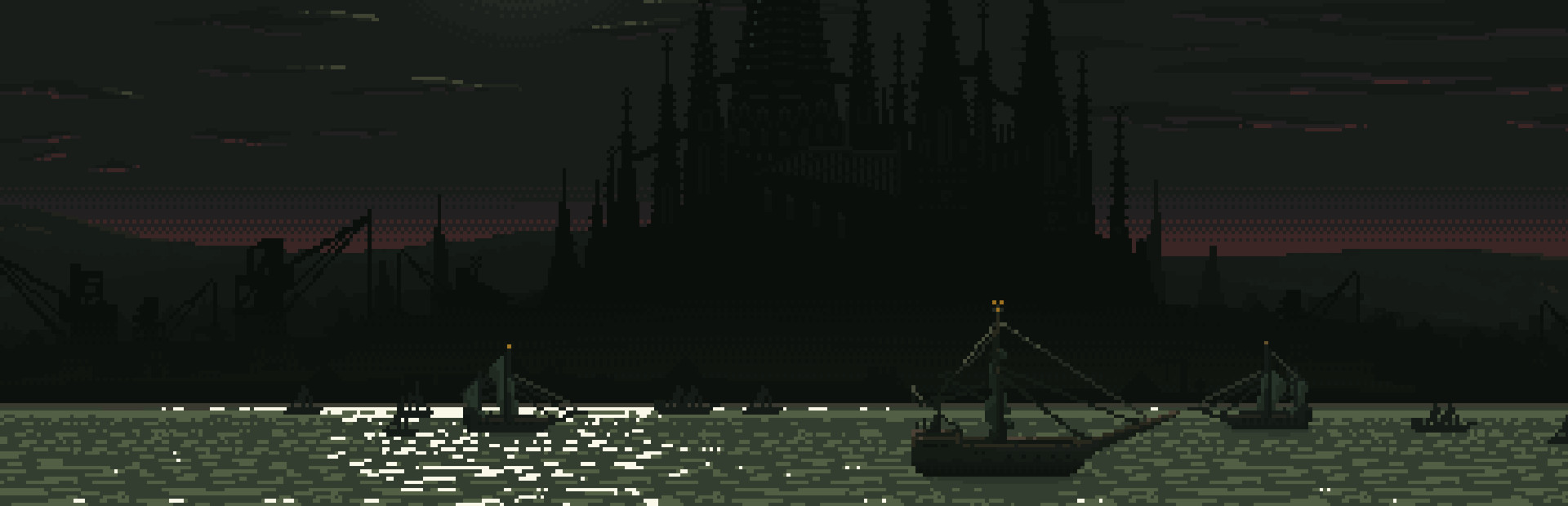
Screenshot

About Sea Salt

I came into Sea Salt expecting a mindless crowd-pusher. What I got was something closer to a stripped-down horde-management puzzle dressed in a Lovecraftian coat, and for a few hours that combination is genuinely compelling. You play as an apostle of Dagon, directing a swarm of eldritch minions across top-down maps by dragging a cursor around the screen while your creatures follow in formation. You are not clicking individual units or queuing build orders. The entire horde moves as one mass, and your job is positioning, surround the target, hold the attack trigger, watch the carnage. Simple on paper, meaningfully tense once armored gunners, pikemen, and AoE hunters start showing up. The unit roster is where most of the strategic texture lives. You unlock 19 different minion types across the campaign, the basic Swarm, acid-trailing Worms, ranged Cultists, tanky Crabs, Liches that raise Spectres from corpses, Hermits that project a bullet-proof shield bubble, and more. Composition decisions matter more than the surface-level controls imply. Worms slow enemies that wander into melee range, which lets Cultists work safely from the back line; Crabs absorb hits while the ranged units pick apart gunners behind barricades. That synergy space is narrow compared to a proper RTS, but it is real, and the later maps are built specifically to stress-test it. There are also multiple Apostles to unlock, each with different starting troops and passive bonuses, which extends replayability without asking you to replay the same content identically. The difficulty curve deserves credit. The opening stages let you brute-force everything with raw numbers, which teaches the basics without friction. By the mid-game, enemy hunters with flamethrowers, shotguns, and telegraphed charge attacks demand actual positioning reads and deliberate use of cover. Boss encounters, like an anchor-swinging dockworker and a horseback commander using balista fire and necromancy for area denial, communicate their patterns clearly before punishing sloppiness. Generous checkpoints mean failure never costs much time, which keeps the pacing tight. An arena wave-survival mode adds a secondary challenge loop once the campaign is done. Here is where I need to be honest about the friction. Pathfinding is the game's main recurring enemy, and not the fun kind. Minions occasionally scatter toward off-screen threats instead of following your cursor, and when your horde splits across multiple engagements at once it can dissolve faster than the game gives you credit to replace it. You cannot split the group deliberately or order specific unit types to hold position, which means late-game multi-threat rooms can devolve into chaos you did not author. The color palette is intentionally murky and atmospheric, which is great for mood and occasionally terrible for reading exactly which pixel-mass is your Hermit's shield versus an enemy AoE ring. Neither flaw is a dealbreaker, but both are worth knowing before you commit. For the right player, someone who wants dark atmosphere, a compact villain-protagonist narrative, and a few genuinely clever unit-synergy puzzles in a session-friendly runtime, Sea Salt does its job. It is not a deep-bench strategy title and it will not occupy a hundred hours. Think of it as the Hotline Miami of horde games: all action, demands you read the room, rewards patience over aggression, and wraps up before it outstays its welcome. At sub-five dollars it represents extremely low financial risk for what it offers. Diego, Scout Team

Tags

singleplayerachievementscontroller-supporttier:sub-5Reverse-HorrorHorde ManagementTop-Down TacticsApostle Unlock SystemArena ModeUnit SynergyVillain Protagonist

Steam Deck & Linux

Steam Deck VerifiedProtonDB Platinum

Valve rates this game Steam Deck Verified. Runs flawlessly on Linux out of the box. Based on 7 ProtonDB community reports.

System Requirements

Minimum

OS
Windows 7/8/8.1/10 x86/x64
Memory
4 GB RAM
DirectX
Version 9.0
Storage
2 GB available space
Graphics
Intel HD 4000
Processor
Intel Core i5-3210M (2 * 2500) or equivalent
Additional Notes
Some integrated cards have an issue with memory and may not launch the game

Recommended

OS
Windows 7/8/8.1/10 x64
Memory
8 GB RAM
DirectX
Version 10
Storage
2 GB available space
Graphics
Intel HD Graphics or AMD (formerly ATI) Radeon HD Graphics (Discrete): Nvidia GeForce GTX 760 (or greater) or AMD Radeon HD 7600 (or greater)
Processor
Intel i7 or equivalent

Community Discussion

Be the first to comment on Sea Salt.

Reviews & Ratings

No ratings available

Game Info

Developer
YCJY Games
Publisher
YCJY Games
Release Date
Oct 17, 2019

Price Alert

Get notified when the price drops below your target!

Create Alert

Price History

2026-06-102.15(lowest)

More from YCJY Games

Buy smarter: helpful guides

Looking for more? See games like Sea Salt

Frequently asked questions about Sea Salt

How much does Sea Salt cost?

Sea Salt pricing changes often and varies by store, edition and region. The live price table on this page compares the cheapest in-stock key and store offers across 50+ verified shops, so you always see the current lowest price before you buy.

Where can I buy Sea Salt cheapest?

Compare Sea Salt prices across every verified store in the price table on this page. We list the cheapest in-stock key and store offers, updated regularly, so you always see the best current deal before you buy.

What platforms is Sea Salt available on?

Sea Salt is available on PC.

When was Sea Salt released?

Sea Salt was released on 17 October 2019.

Who developed Sea Salt?

Sea Salt was developed by YCJY Games.