Rome: Total War
Classic grand-strategy meets real-time battles across the ancient Mediterranean. Lead Rome, or its enemies, from republic to empire across centuries of warfare.
GamerScout Verdict
Worth it for historical strategy fans who patch it first and have a mod or two queued up for after the vanilla campaign.
Compare Prices(4 stores)
Every store in this table quotes us in euros, so the EUR figure is the price the seller actually set, not our arithmetic — which is why EUR is also the currency we rank in. We only list an offer here when the store gives us its price in euros, so nothing in this table is a number we invented.
Pick USD, PLN, GBP, CAD or AUD in the header and we convert from EUR at the European Central Bank reference rate — converted amounts are prefixed with ~. Your bank or the store may apply a different rate at checkout. We never hide offers based on where you are: everyone sees this whole table.
We may earn a commission when you buy games through links on this page — at no extra cost to you. It never affects our rankings or verdicts.
Price History
Screenshots & Media
About Rome: Total War
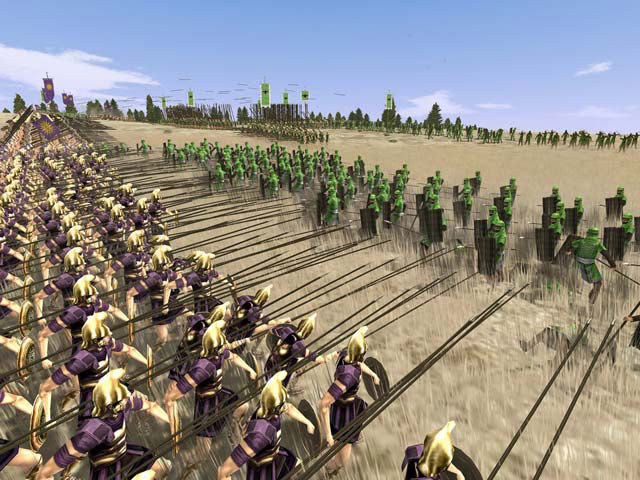
Rome: Total War is a hybrid strategy game that splits its time between a turn-based campaign map and real-time tactical battles. The campaign covers roughly 270 BC to 14 AD, the era when Rome ground its neighbours into provinces and argued internally about who got to be in charge of the grinding. You pick a faction, one of three Roman houses at the start, with others unlockable, and you manage armies, cities, family members, senators, and the creeping threat of civil war. The scope is enormous, but the core loop is approachable: build a settlement, recruit a stack, march it somewhere, fight a battle, repeat. That simplicity is deceptive, because the mid- and late-game layers pile on fast. For newcomers, the real-time battle layer is the strongest entry point. Units have clear roles: hastati and legionaries form your line, cavalry hits flanks, artillery softens walls. Morale is the deciding mechanic, break it and an entire cohort routs, which cascades into a collapse faster than any damage calculation. Learning to read the morale bar is the single skill that separates players who win battles from players who annihilate them. The tutorial covers the basics adequately, though it is showing its age and does not explain the campaign economy as well as it should. Budget ten hours of early-game poverty before the trade routes and tax income start clicking into place. The campaign AI has a reputation for being erratic, and that reputation is mostly earned. Enemy factions will occasionally make bizarre alliance choices, and the senate missions can feel like random interruptions rather than meaningful political pressure. Where the AI does hold up is in battle, particularly on higher difficulty settings where it will use terrain and flanking more aggressively than you expect from a game of this vintage. The faction variety is genuinely strong: playing the Gauls or the Seleucid Empire feels mechanically different from Rome, with different unit rosters and starting positions that demand different expansion priorities. The mod ecosystem is the reason this game still has a community decades after release. Europa Barbarorum and Rome: Total Realism are the two flagship overhauls, both adding historical accuracy, overhauled rosters, and reworked economies that make the base game feel like a prototype. If you finish the vanilla campaign and want more, both mods are free and extensively documented. The Steam version carries a Mixed review flag, partly because the original 2004 release was superior in several technical respects and this 2007 re-release has known compatibility issues on modern Windows without community patches. Check the Steam discussions for the current fix before you buy, the workaround is straightforward but it should not be necessary. Bottom line: Rome: Total War is a foundational strategy title that still delivers a satisfying campaign if you patch it correctly and accept that some AI and UI decisions are products of their time. The battle system is tactile and rewarding. The campaign depth, managing generals, family trees, and the looming threat of your own generals going rogue, holds up better than most contemporaries. If your interest in the genre starts here, the modding scene gives it a ceiling high enough to last well past the base game.

Strategy & simulation
Tags
System Requirements
Minimum
Microsoft® Windows® 2000/XP, Pentium III 1.0GHz or Athlon 1.0GHz processor or higher, 256MB RAM, 2.9GB of uncompressed free hard disk space (plus 500MB for Windows swap file), 100% DirectX® 9.0c compatible 16-bit sound…
DLC & Add-ons for Rome: Total War1
Expansions, DLC packs and add-on content for this game. Click any item to see store offers.
Keep exploring
Community Discussion
Be the first to comment on Rome: Total War.
Reviews & Ratings
Game Info
- Developer
- The Creative Assembly
- Publisher
- SEGA
- Release Date
- Aug 28, 2007
