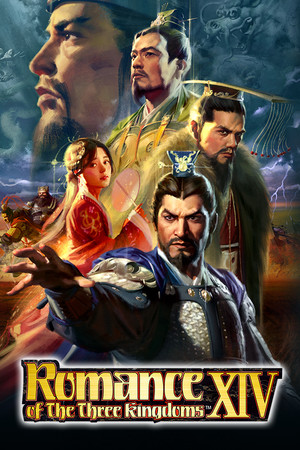
ROMANCE OF THE THREE KINGDOMS XIV
Koei's fourteenth crack at the Three Kingdoms saga is the most accessible entry in the series, yet it trades away the franchise's historic depth to get there - a deal that will thrill newcomers and frustrate veterans in equal measure.
GamerScout Verdict
Best for Koei series veterans and Three Kingdoms lore fans willing to accept shallow combat in exchange for the deepest officer roster in the franchise.
Compare Prices(4 stores)
Every store in this table quotes us in euros, so the EUR figure is the price the seller actually set, not our arithmetic — which is why EUR is also the currency we rank in. We only list an offer here when the store gives us its price in euros, so nothing in this table is a number we invented.
Pick USD, PLN, GBP, CAD or AUD in the header and we convert from EUR at the European Central Bank reference rate — converted amounts are prefixed with ~. Your bank or the store may apply a different rate at checkout. We never hide offers based on where you are: everyone sees this whole table.
We may earn a commission when you buy games through links on this page — at no extra cost to you. It never affects our rankings or verdicts.
Price History
Screenshots & Media
About ROMANCE OF THE THREE KINGDOMS XIV
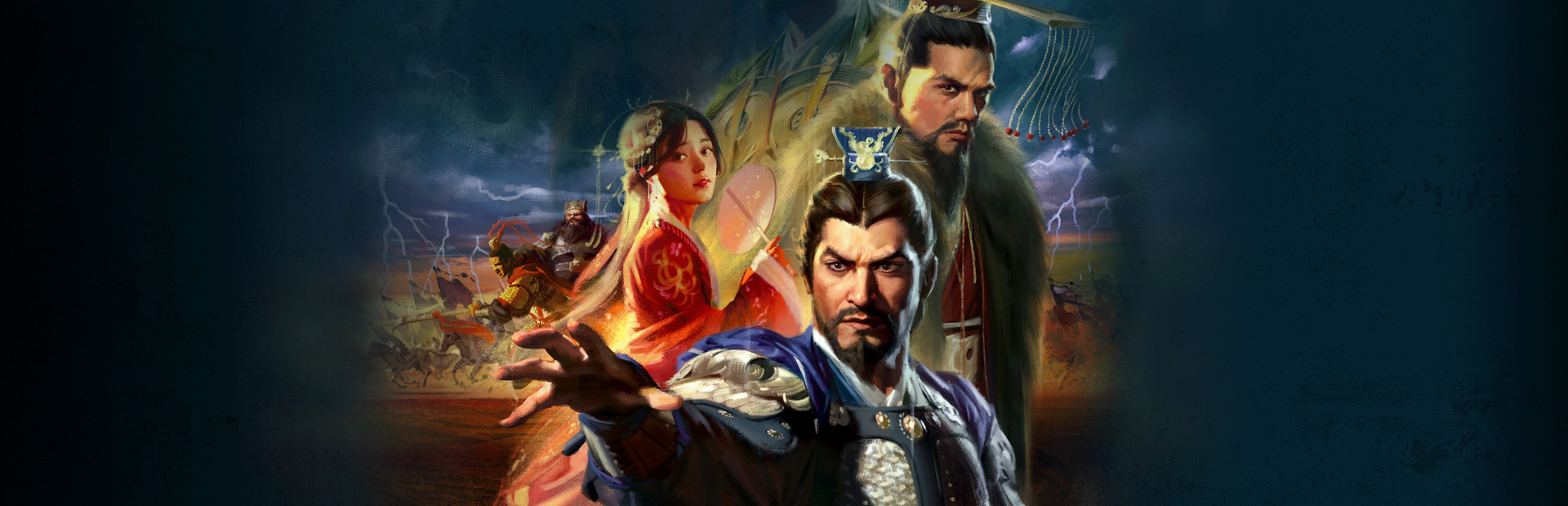
I keep a mental checklist for grand strategy games: depth of the administration layer, quality of the AI opponent, whether the combat gives you meaningful agency, and how punishing the opening hour is for someone without a franchise PhD. Romance of the Three Kingdoms XIV scores decently on the first point, stumbles on the second and third, and surprisingly passes the fourth. That split result is basically the whole story. The structure borrows the best idea from entries IX and XI - a single continuous map of ancient China where domestic administration, troop movements, and territorial combat all coexist in one view. No switching between city screens and a separate battle map. The roughly 46 cities and 340 surrounding regions are colour-coded by controlling faction, and watching those colours shift as your forces push outward gives the campaign a satisfying visual rhythm. You start each scenario by picking a ruler - Cao Cao if you prefer governance and political leverage, someone like Liu Bei if you want an underdog arc against long odds - and the internal administration screen, laid out as a personnel chart, lets you slot over 1,000 unique officers into roles that unlock commands and passive effects. Getting that organisation right is the strongest decision space in the game. The officer trait system, with more than 150 distinct traits covering battlefield roles and administrative bonuses, rewards players who actually read the tooltips. For newcomers worried about the series' historically impenetrable menus: the tutorial is narrative-driven and takes roughly an hour to clear. The UI has been genuinely streamlined compared to earlier entries in the franchise. The catch - and this is a real catch - is that the first turn can still feel like you have been handed a running engine mid-flight. You immediately have cities to govern, generals to assign, diplomacy queues to process, and supply lines to consider. The opening density is the opposite of how most strategy games ease you in. Push through it, and the mid-game flow becomes considerably smoother as your empire develops momentum. The problems start in earnest once the armies march. Combat resolves on the same hexagonal map grid using officer-led formations, and you choose formation type (which affects unit stats and whether siege equipment is deployed) before sending your force off. From that point, your direct influence over the outcome is thin. The AI handles execution, abilities fire automatically, and what you mostly see is numbers appearing over unit stacks. Veterans of the series expecting to out-think an opponent through tactical positioning will find little to grip. The diplomatic layer is similarly shallow - alliances are useful for protecting a flank temporarily, but nuanced negotiation is largely absent. The AI running both your enemies and your own delegated governors has been widely criticised as inconsistent, capable enough to pressure you at times, but prone to passive or illogical behaviour when left unsupervised. Several critics at launch also noted bugs, including at least one game-breaking issue, alongside a PC port that shipped with a 30fps cap and required manual GPU workarounds. Patches have addressed some of this, but the technical roughness around launch was a genuine mark against the release. The honest framing for this game is that it sits in a contested market segment. Total War: Three Kingdoms covers similar historical ground with far more satisfying tactical battle resolution. Paradox-style grand strategy scratches a deeper systemic itch. What ROTK XIV offers that neither of those does is Koei's 35-year-old understanding of the Three Kingdoms character roster - the officer artwork, the historically grounded scenario writing, and the specific fantasy of building a court around legendary strategists and generals. If that specific flavour is what you are after, particularly if you have already spent hundreds of hours in Total War's take on the period, this game has a real, if narrow, lane. If you are a series newcomer looking for your first grand strategy experience in ancient China, the streamlined entry point is genuinely useful, but be aware that the depth ceiling is lower than you might expect from the runtime the game can generate.

Strategy & simulation
Tags
System Requirements
Minimum
- OS
- Windows® 10, 64bit
- Memory
- 4 GB RAM
- DirectX
- Version 11
- Network
- Broadband Internet connection
- Storage
- 20 GB available space
- Graphics
- NVIDIA GeForce GTX660
- Processor
- Intel Core i3-3220 (3.0GHz or over)
- Sound Card
- 16 bit stereo, 48KHz WAVE file can be played
Recommended
- OS
- Windows® 10, 64bit
- Memory
- 8 GB RAM
- DirectX
- Version 11
- Network
- Broadband Internet connection
- Storage
- 20 GB available space
- Graphics
- NVIDIA GeForce GTX 1060 6GB
- Processor
- Intel Core i7-3770 (3.0GHz or over)
- Sound Card
- 16bit 5.1ch Surround, 48KHz WAVE file can be played
DLC & Add-ons for ROMANCE OF THE THREE KINGDOMS XIV1
Expansions, DLC packs and add-on content for this game. Click any item to see store offers.

Keep exploring
Community Discussion
Be the first to comment on ROMANCE OF THE THREE KINGDOMS XIV.
Reviews & Ratings
No ratings available
Game Info
- Developer
- KOEI TECMO GAMES CO., LTD.
- Publisher
- KOEI TECMO GAMES CO., LTD.
- Release Date
- Jan 15, 2020