Rogue Waters
Tactical roguelite meets pirate revenge fantasy, with a two-phase combat system sharp enough to reward the spreadsheet crowd and forgiving enough to not punish newcomers into quitting.
GamerScout Verdict
Best for tactics players who want a forgiving but mechanically layered roguelite and can live with some cannon-phase RNG.
Compare Prices(10 stores)
Every store in this table quotes us in euros, so the EUR figure is the price the seller actually set, not our arithmetic — which is why EUR is also the currency we rank in. We only list an offer here when the store gives us its price in euros, so nothing in this table is a number we invented.
Pick USD, PLN, GBP, CAD or AUD in the header and we convert from EUR at the European Central Bank reference rate — converted amounts are prefixed with ~. Your bank or the store may apply a different rate at checkout. We never hide offers based on where you are: everyone sees this whole table.
We may earn a commission when you buy games through links on this page — at no extra cost to you. It never affects our rankings or verdicts.
Price History
Screenshots & Media
About Rogue Waters
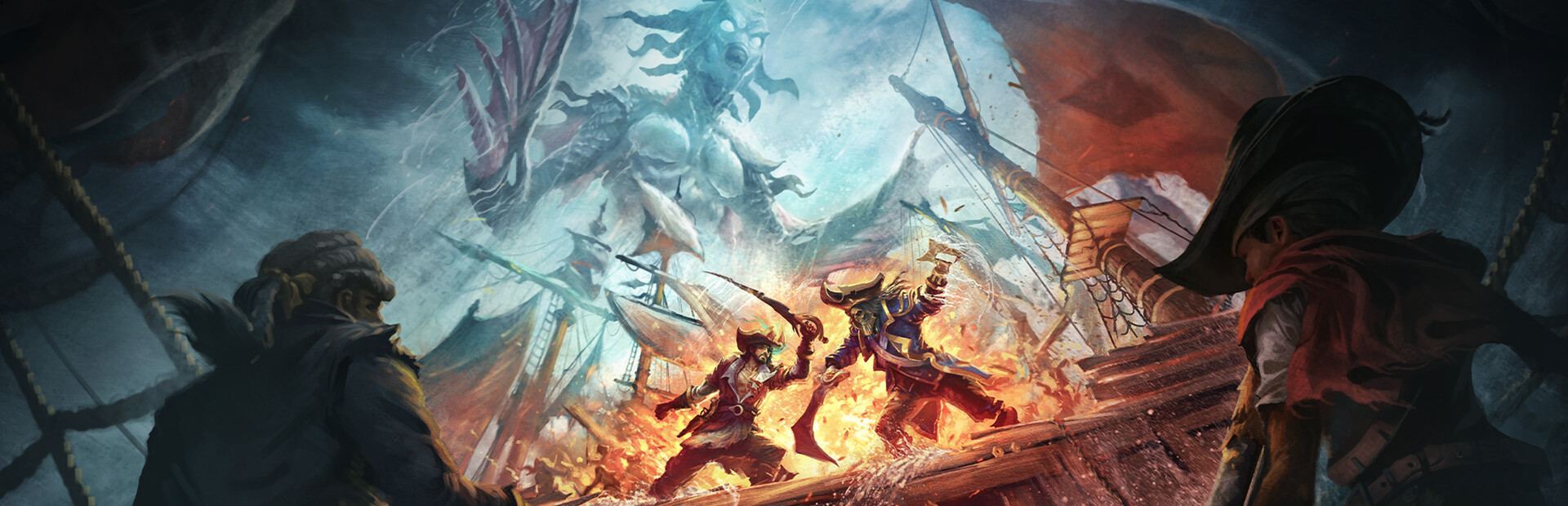
My first instinct when I saw Rogue Waters was to mentally file it under "theming over substance" and move on. Pirate skins on familiar mechanics, nice art, probably shallow. I was wrong, and the Metacritic 83 is doing a decent job of saying so. What Ice Code Games built here is a two-phase tactical loop that genuinely earns the roguelite label rather than borrowing it for store-page keywords. Every combat encounter opens with a cannon phase: three rounds of command-point management where you decide whether to destroy enemy cannons with Cannonbreakers, strip their ship modules with Shipwreckers, or soften the crew directly with Decksweepers before the boarding even starts. Those decisions ripple directly into the skirmish phase that follows. Gut their cannons aggressively and you board into a weakened enemy with your crew intact. Play it wrong and you board short-handed, with your own specialists nursing HP penalties that carry into future fights. That causal chain between phase one and phase two is the mechanical hook that elevates Rogue Waters above most genre entries. The skirmish phase itself is built around positioning and environmental momentum: push enemies into masts, shove them overboard, swing on rigging ropes to cross the deck, and summon unlockable sea creatures like the Kraken, the Mermaid, or the Giant Snail when the fear meter is cooperating. Critically, skirmish combat has no randomness on action outcomes, and there is an undo button for the current turn, which makes the boarding fights feel like puzzles rather than dice rolls. The roguelite structure runs lighter than contemporaries like Darkest Dungeon 2. Dying sends you back to your Pirate Cave hub, not to the very beginning. Currency earned carries over, permanent upgrades unlock across runs, and your immortal crew can never be permanently lost, only temporarily wounded. The node-based run map borrows the Slay the Spire layout that the genre has standardised on, which means anyone with ten hours in a modern roguelite will read the UI immediately. This is a genuinely newcomer-accessible game if approached with two or three deliberate early runs dedicated to currency farming before tackling the story raids. That slow opening hour where the meta-progression wall feels punishing is the one thing worth warning against, but it clears up once upgrades start compounding. Difficulty is also customisable, with higher settings offering better loot rather than just gating content, which is a sensible design call. The legitimate criticisms are real and worth factoring in. The cannon phase, for all its strategic texture, introduces damage ranges that can feel arbitrary, and some runs have been sunk by RNG variance in that phase rather than by a mistake in the skirmish. Community sentiment is split on whether that constitutes exciting volatility or unfair punishment. The systems also have a repetitiveness ceiling: after the main story is finished, the loop does not dramatically reinvent itself, and players who completed the campaign in the reported ten-to-fifteen hour range found the replayability thinner than dedicated roguelite veterans might want. A modest mod ecosystem and no co-op are further limits. Still, as a tactics game, Rogue Waters earns its score. The specialist system, with named crew members carrying unique skill trees and class identities, provides real build variety within a run. The five crew classes give boarding squads meaningfully different options. Presentation is solid, the game is almost fully voice-acted, and the pirate ghost-story framing does more narrative work than the genre usually bothers with. It sits comfortably between Tactical Breach Wizards and Darkest Dungeon 2 in the difficulty-to-accessibility spectrum, closer to the forgiving end, and that is not a flaw.

Strategy & simulation
Tags
System Requirements
Minimum
- OS
- Windows 10 64bit
- Memory
- 8 GB RAM
- DirectX
- Version 11
- Storage
- 6 GB available space
- Graphics
- NVIDIA GeForce GTX 950 || Radeon RX 560
- Processor
- 4-Core Processor (4 CPUs) 2.5 Ghz 64bit Intel Core i5-4690T 2.5 GHz || AMD Phenom X4 9850 2,5 GHz
Recommended
- OS
- Windows 10 64bit
- Memory
- 8 GB RAM
- DirectX
- Version 11
- Storage
- 6 GB available space
- Graphics
- NVIDIA GeForce GTX 1050Ti || Radeon RX 570
- Processor
- 4-Core Processor (4 CPUs) 3.0 Ghz 64bit Intel Core i5-2320 3.0 GHz || AMD Ryzen 3 3200 3,0 GHz
Keep exploring
Community Discussion
Be the first to comment on Rogue Waters.
Reviews & Ratings
Game Info
- Developer
- Ice Code Games
- Publisher
- Tripwire Presents
- Release Date
- Sep 30, 2024