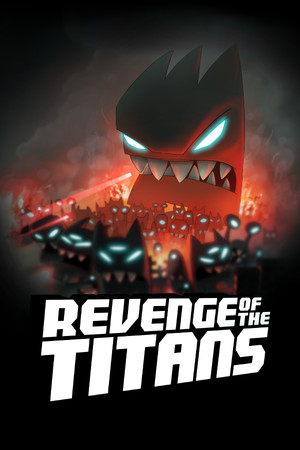
Revenge of the Titans
A tower defense that punishes lazy placement and lazy research in equal measure, rewarding the few players willing to treat a 50-level campaign like a long-form strategy puzzle.
GamerScout Verdict
Ideal for strategy players who want tower defense with real build-order stakes, but expect to learn the hard way on your first run.
Compare Prices(5 stores)
Every store in this table quotes us in euros, so the EUR figure is the price the seller actually set, not our arithmetic — which is why EUR is also the currency we rank in. We only list an offer here when the store gives us its price in euros, so nothing in this table is a number we invented.
Pick USD, PLN, GBP, CAD or AUD in the header and we convert from EUR at the European Central Bank reference rate — converted amounts are prefixed with ~. Your bank or the store may apply a different rate at checkout. We never hide offers based on where you are: everyone sees this whole table.
We may earn a commission when you buy games through links on this page — at no extra cost to you. It never affects our rankings or verdicts.
Price History
Screenshots & Media
About Revenge of the Titans
I have a soft spot for games that treat the player like an adult, and Revenge of the Titans does exactly that right from its opening waves. Puppygames built a tower defense framework and then quietly loaded it with resource management pressure, a branching research tree, and an AI that actively routes around your turrets rather than walking politely into your kill zones. That last point alone separates it from the majority of the genre: enemies do not follow fixed paths and will change their approach based on where you build, which means any complacent placement strategy collapses fast. The mechanical core is tighter than it first appears. You drop refineries to harvest crystals on the map surface, which funds the turrets, barricades, cooling towers, batteries, and scanners that make up your toolkit. Cooling towers boost firing rate, batteries extend ammo capacity, and a single support building can buff multiple adjacent weapons simultaneously, so the spatial arrangement of your base matters beyond simple coverage angles. The research tree, which spans over 40 technologies across blaster turrets, rocket launchers, laser cannons, spreader cannons, droid factories, and more, is persistent across levels and is the game's deepest system as well as its sharpest edge. Commit to the wrong tech branch early and you will hit a wall in the mid-campaign when armored Titans appear on the Moon, or phantom-type enemies arrive on Mars requiring specific counters like the X-ray scanner or capacitor. The game offers no respec, no refund, and limited guidance on prerequisites. First playthroughs are therefore partially a scouting run, and the community broadly agrees that knowing a rough tech order before starting saves serious frustration. Difficulty scales dynamically based on how much money you carry into the next level: hoard cash and the next wave scales up to match. It is a clever pressure valve that prevents turtling, but it also means careless spending and miserly spending are both punished, which takes a few runs to internalize. The campaign takes you from Earth through Mars and Saturn to Titan itself, covering around 50 levels with new enemy types introduced regularly enough to keep research decisions feeling urgent. Boss encounters punctuate the planet transitions and demand specific loadouts, which is where poorly planned research trees tend to finally crack. Two additional modes, Endless and Survival, exist after the campaign but strip out the research tree, making them reasonable distractions rather than compelling long-term destinations. On the presentation side, the retro pixel-art aesthetic is genuinely charming rather than lazy, landing somewhere between Space Invaders and a polished Atari-era arcade cabinet. The mumbling non-voice acting from the British general and scientist characters is a low-budget choice that works tonally. The synthesized soundtrack is sparse and occasionally repetitive, though it rarely rises above background noise. What the game lacks in audio ambition it compensates for with tight visual feedback: defeated enemy sprites pop cleanly, turret animations read clearly at speed, and the screen stays legible even during the heaviest wave pressure. There is no co-op, which is a genuine missed opportunity given how naturally the base-building could accommodate two players managing different sectors, but the singleplayer campaign is deep enough to carry the weight on its own. For a strategy-focused player who enjoyed Desktop Tower Defense but wanted persistent progression and a reason to care about build order, this holds up well. New players should not be scared off by the difficulty reputation. The early Earth levels provide a reasonable on-ramp, and the difficulty adjustment option (which regenerates a level to an easier map variant at the cost of a gold medal) exists as a pressure release. Go in expecting to learn from failure, keep a loose tech plan in mind, and manage your cash rather than sitting on it. The depth is real.

Strategy & simulation
Tags
System Requirements
Minimum
- OS
- Windows XP or later
- Memory
- 512MB RAM
- Processor
- 1.8GHz single core
- Video Card
- OpenGL 1.5+, 128MB video memory
- Hard Disk Space
- 490MB
Recommended
- Processor
- 2GHz dual core
- Video Card
- OpenGL 2.1+, 256MB video memory
Keep exploring
Community Discussion
Be the first to comment on Revenge of the Titans.
Reviews & Ratings
Game Info
- Developer
- Puppygames
- Publisher
- Puppygames
- Release Date
- Mar 16, 2011