
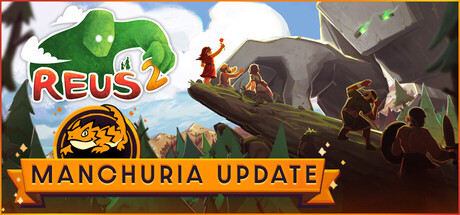
Reus 2
Pick three giants, drop some stoats next to a forest tile, watch a Merchant civilization inexplicably start a war over salt deposits. Reus 2 is the puzzle-strategy god game that rewards players who think two eras ahead.
GamerScout Verdict
Best for puzzle-minded strategy players who enjoy optimization loops and can push past a sparse tutorial to reach the depth underneath.
Compare Prices(9 stores)
Every store in this table quotes us in euros, so the EUR figure is the price the seller actually set, not our arithmetic — which is why EUR is also the currency we rank in. We only list an offer here when the store gives us its price in euros, so nothing in this table is a number we invented.
Pick USD, PLN, GBP, CAD or AUD in the header and we convert from EUR at the European Central Bank reference rate — converted amounts are prefixed with ~. Your bank or the store may apply a different rate at checkout. We never hide offers based on where you are: everyone sees this whole table.
We may earn a commission when you buy games through links on this page — at no extra cost to you. It never affects our rankings or verdicts.
Price History
Screenshots & Media
About Reus 2
I went in expecting a breezy city-builder wearing a god-game costume. What I got was a tight placement puzzle with a surprisingly meaty synergy engine underneath, and I've spent more sessions than I intended chasing one more optimal tile arrangement. Reus 2 looks soft and colourful, but do not let that fool you: this is a game about reading tags, stacking adjacency bonuses, and drafting the right biotica before your Eras close out. The core loop is elegant. You pick three giants from a roster of six - each governing a distinct biome, from Satari's forests to Aegir's taiga - then terraform a circular planet grid and populate it with over 100 unlockable plants, animals, and minerals called biotica. Positioning is everything. A stoat placed next to a compatible predator source generates substantially more food than one dropped in isolation, and that delta matters when your settlements are chasing Era objectives. Leader personalities add another layer: the Botanist wants science-heavy plant coverage, while the Merchant is chasing gold yields. Each run you draft from a limited pool of biotica when settlements hit milestones, so every planet feels like a constrained optimization problem rather than a sandbox toy. The energy-based turn structure removed the original Reus countdown timer, which was a smart call - you can now think at your own pace, though inefficient placements still cost you in ways that compound late. For strategy players, the depth-to-runtime ratio here is excellent. A single planet takes roughly thirty minutes, but the meta-progression unlocks new biotica and scenario types at a pace that keeps early runs from ever feeling complete. Eras act as both a scoring system and a mid-run pivot point: completing Era Quests earns stars that feed your profile level, which drip-feeds new options at a comfortable rate. The system also doubles as the game's difficulty dial - more demanding Era combos are available as your profile grows. The steam community's reception has been overwhelmingly positive, with over 95% of a large review base recommending it, and the developers shipped twelve free updates and three DLCs across two years post-launch, including the Mesozoic Wilds biome with three alternate mode archetypes (Savage, Grand, Hidden). Now for the honest part. The tutorial is short and fairly hands-off, and the UI can stack up information until the screen feels cluttered, particularly when you are juggling multiple settlements with overlapping resource needs. Early runs before your profile has unlocked a decent biotica pool can feel repetitive - you will hit the same opening patterns several times before the draft variety opens up. Players who need a linear story or an explicit win condition handed to them will likely bounce off this. The achievement list carries a lot of the progression weight, and if that structure does not motivate you, the game can start to feel directionless. One persistent note from community feedback is that font sizes on certain info panels are small enough to cause eye strain during longer sessions, something to keep in mind if you are sensitive to dense UI. Here is the case for newcomers to this kind of game: Reus 2 is actually one of the more approachable puzzle-strategy hybrids available precisely because each planet is self-contained and short. You are not committing to a 200-hour campaign. One failed planet teaches you one lesson, and you apply it in thirty minutes. The free play mode removes objectives entirely for pure creative experimentation. If you can find a tutorial guide in the community hub - and there are good ones - the learning curve flattens out considerably faster than the UI density initially suggests. Think of it less as a god game and more as a turn-based puzzle that asks you to design an ecosystem: once that framing clicks, the systems feel intuitive rather than overwhelming.

Strategy & simulation
Tags
System Requirements
Minimum
- OS
- Windows 10
- Memory
- 8 GB RAM
- DirectX
- Version 10
- Storage
- 3 GB available space
- Graphics
- GeForce GTX 950 Ti / Radeon HD 7750
- Processor
- AMD FX-4130 Quad-Core / Intel Core i3-4130
Recommended
- OS
- Windows 10
- Memory
- 16 GB RAM
- DirectX
- Version 11
- Storage
- 4 GB available space
- Graphics
- Radeon RX 580 / GeForce GTX 1060
- Processor
- Ryzen 7-1700X / Intel Core i7-4770
DLC & Add-ons for Reus 23
Expansions, DLC packs and add-on content for this game. Click any item to see store offers.
Keep exploring
Community Discussion
Be the first to comment on Reus 2.
Reviews & Ratings
No ratings available
Game Info
- Developer
- Abbey Games
- Publisher
- Firesquid
- Release Date
- May 28, 2024
