
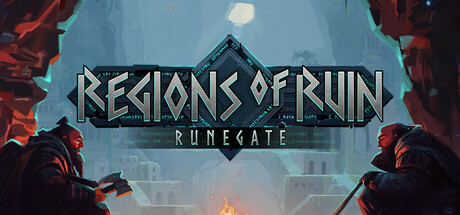
Regions of Ruin: Runegate
Watching a pile of crumbling dwarven rubble slowly become Rivenbrook Keep is quietly one of 2026's most satisfying small-game moments - just don't arrive expecting a sprawling epic.
GamerScout Verdict
Best for cozy-leaning action-RPG fans who want a gorgeous short session game and can forgive a passive resource grind and an abrupt ending.
Compare Prices(6 stores)
Every store in this table quotes us in euros, so the EUR figure is the price the seller actually set, not our arithmetic — which is why EUR is also the currency we rank in. We only list an offer here when the store gives us its price in euros, so nothing in this table is a number we invented.
Pick USD, PLN, GBP, CAD or AUD in the header and we convert from EUR at the European Central Bank reference rate — converted amounts are prefixed with ~. Your bank or the store may apply a different rate at checkout. We never hide offers based on where you are: everyone sees this whole table.
We may earn a commission when you buy games through links on this page — at no extra cost to you. It never affects our rankings or verdicts.
Price History
Screenshots & Media
About Regions of Ruin: Runegate
I have a soft spot for games that know exactly what they are, and Runegate mostly does. Gameclaw Studio's sequel to their 2018 side-scroller takes the same foundational loop - fight goblins, gather resources, rebuild a settlement - and wraps it in some of the most considered pixel artistry I've seen this year. Nighttime levels filter moonlight through tree canopies, NPC dwarves are instantly readable at sprite scale thanks to lovingly differentiated beards and clothing, and the ambient sound design earns that word critics keep reaching for: cozy. It is genuinely remarkable that a game about civilizational collapse feels this warm. The moment-to-moment play splits cleanly into two halves. On the combat side, your dwarf can slot a light weapon, a two-hander, a knife, and a ranged option like a crossbow or musket simultaneously, and the skill tree is deep enough that a dagger-focused build and a projectile-heavy build will feel like meaningfully different games by the time you reach the second region. A dash with invulnerability frames, power attacks that break shields, and a stealth system that rewards patience round out a toolkit that is more considered than the genre average. You can also recruit up to three AI companions from eight available classes - a tanky frontliner, a rogue, a ranged archer, a magic user - and they follow your lead without trivializing encounters, especially on higher difficulty settings. The side of the game that stalls is the town-building. Rivenbrook Keep transforms visibly and gratifyingly from rubble into dwarven apothecaries, forges, and mead halls, and watching recruited survivors populate those spaces carries a real emotional charge. But the resource economy that drives it is almost entirely passive: you assign workers to gathering sites and wait. There is no strategic tension in placement, no risk events to manage, and the materials you personally haul back from the field feel too sparse to dent the tally. The result is dead stretches where the game is playing itself. The main campaign is the other honest caveat here. Reviewers across the board clocked it at around five hours, with quest structures that cycle through the same rhythms - visit a local chief, raid a camp, rescue a hostage, repeat - and an ending that arrives without adequate signposting. The two regions accessible through the Runegate portal network are atmospherically distinct, spanning forests, mountains, desert ruins, and crystal caverns, but players who bought into the Runegate concept as a ticket to a genuinely wide world may feel the scope undersells the premise. Some Steam reviewers noted that the game shipped feeling like it needed another world or two to deliver on its own setup. The developer has already responded with a free mod world called Drumdom's Mountain released post-launch, and custom campaign tools are baked in for players who want to build and share their own content - signs that Gameclaw are listening, though the base package still ends abruptly. Where Runegate earns its Metacritic 75 and the warm end of the critical reception is in how it handles the player's time. The save system lets you exit at any moment without losing progress. Dialogue keeps lore optional for those who want it and brief for those who don't. The difficulty modes make it accessible to cozy-game players while offering enough resistance on higher settings to keep action-RPG regulars honest. Rune puzzles, camp raids, rescue missions, and lore fragments are spread across each area with enough density that exploration rarely feels wasted. It is a game that respects you, which is rarer than it should be. If you can sit with the passive gathering loop and you are not arriving expecting a 20-hour campaign, the handcraft on display - in the pixel art, in the atmospheric score, in the quiet satisfaction of watching a ruin become a home - is worth your time.

Indie & narrative
Tags
System Requirements
Minimum
- OS
- Windows 10
- Memory
- 8 GB RAM
- DirectX
- Version 11
- Network
- Broadband Internet connection
- Storage
- 10 GB available space
- Graphics
- Nvidia GeForce GTX 650 or MD Radeon R7 250X
- Processor
- Intel Core i5-4400 or MD FX-8320
- Sound Card
- Optional
Recommended
- OS
- Windows 10 or higher
- Memory
- 16 GB RAM
- DirectX
- Version 11
- Network
- Broadband Internet connection
- Storage
- 10 GB available space
- Graphics
- Nvidia GeForce GTX 660 Ti or AMD Radeon HD 7790
- Processor
- Intel Core i5-4670 or AMD FX-8370
- Sound Card
- Yes
Keep exploring
Community Discussion
Be the first to comment on Regions of Ruin: Runegate.
Reviews & Ratings
Game Info
- Developer
- Gameclaw Studio
- Publisher
- Raw Fury
- Release Date
- Apr 14, 2026